

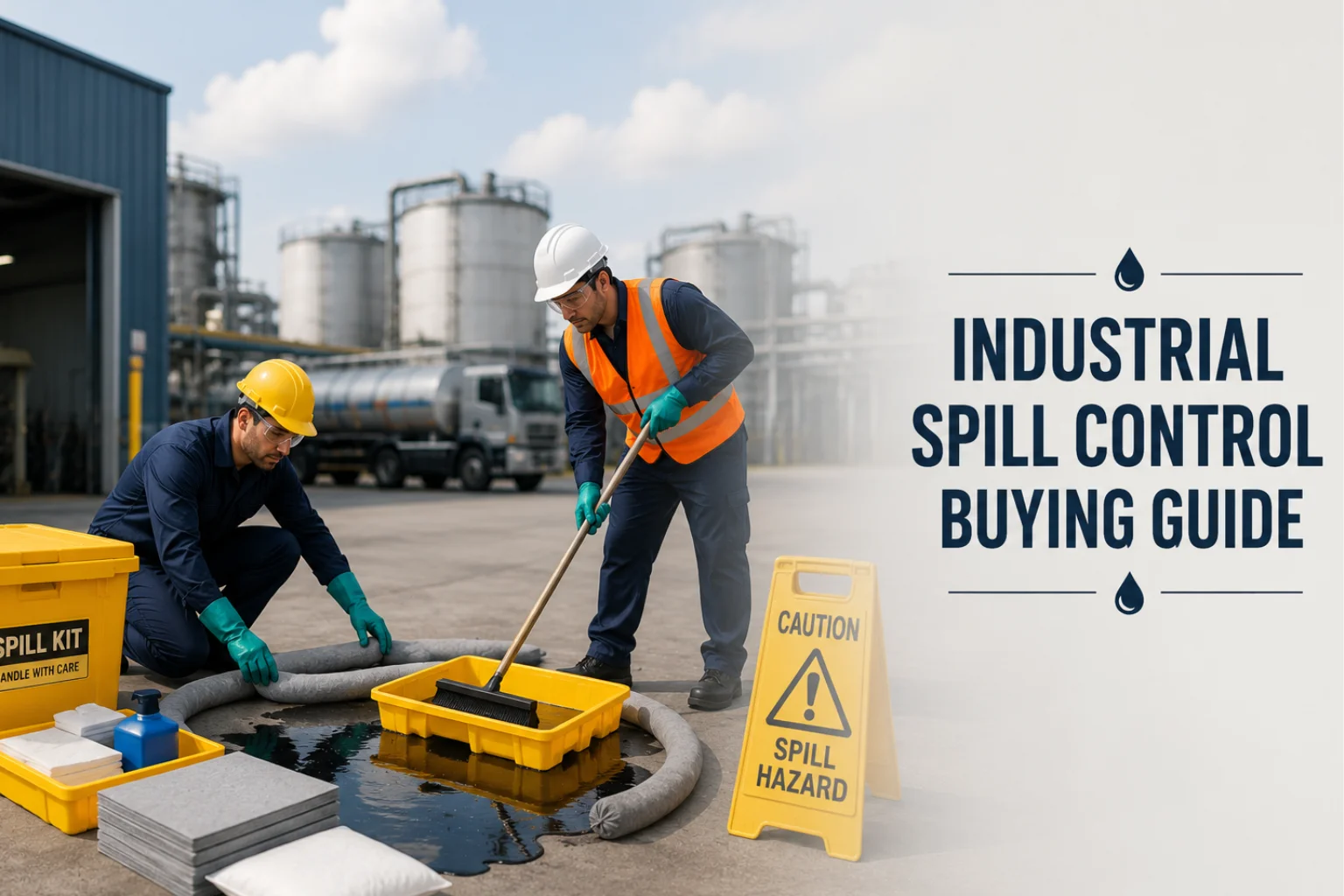
A spill kit that looks fine on a catalog page can fail fast on the floor if it does not match the liquid, the layout, or the response time your site actually deals with. This industrial spill control buying guide is built for buyers who need practical decisions, not guesswork – whether you are sourcing for a warehouse, plant, lab, marine operation, or maintenance team.
Start with the spill risk, not the product name
The fastest way to buy the wrong spill control product is to start with a broad label like “universal absorbent” and work backward. Industrial spill control should be selected based on what can spill, where it can spill, how much can spill, and who will respond first.
For many sites, the real issue is not a major emergency. It is repeated small to medium spills around drums, transfer points, forklifts, generators, maintenance bays, chemical storage areas, and loading zones. That changes what you should prioritize. A plant with frequent oil drips may need daily-use absorbent pads and socks near equipment. A chemical dosing area may need stronger compatibility, sealed disposal bags, and clear PPE requirements. A marine operator may need fast-deploy containment and oil-only products that perform around water.
Buying by hazard profile makes the rest of the decision simpler. It also helps avoid overbuying high-spec products for low-risk areas or underbuying for locations where one incident can shut down operations.
The core categories in an industrial spill control buying guide
Most industrial buyers will assess four main product groups: absorbents, spill kits, containment, and response accessories. The right mix depends on routine use versus emergency readiness.
Absorbents for day-to-day control
Absorbent pads, rolls, pillows, socks, and loose absorbents are the front line for frequent spills and leaks. Pads and rolls suit wide surface coverage and wipe-up work. Socks are better for surrounding leaks, protecting drains, or stopping spread under machinery. Pillows work well under persistent drips or in tight spaces where liquid collects.
The material matters. Universal absorbents are useful where liquids vary, but they are not always the best value if the spill type is predictable. Oil-only absorbents are the better choice for hydrocarbons, especially in outdoor or marine settings where water repellency matters. Chemical absorbents are designed for more aggressive liquids and should be selected when compatibility and worker safety are a concern.
Spill kits for rapid response
A spill kit brings absorbents, disposal bags, PPE, and basic response tools together in one package. For many buyers, this is the most efficient way to standardize preparedness across multiple areas.
The key question is not just kit size. It is whether the kit matches the likely spill scenario. A small mobile kit may be enough for service vehicles, laboratories, and low-volume maintenance areas. Larger wheeled kits are more appropriate for warehouses, production floors, loading docks, and fuel handling zones where response speed and absorbent capacity matter.
Secondary containment for prevention
Spill control is not only about response. Containment pallets, drum bunds, portable bunds, and drip trays reduce the chance that a leak becomes an incident. These products are often the difference between a manageable cleanup and a reportable event.
If your operation stores drums, IBCs, or liquid chemicals, prevention products should be part of the buying decision from the start. They support cleaner housekeeping, reduce cleanup frequency, and help protect against runoff, drain entry, and floor contamination.
Response accessories that complete the system
Many spill events are slowed down by missing basics. Disposal bags, drain covers, caution signs, PPE, shovels, chemical-resistant gloves, and replacement absorbents are not add-ons in practice. They determine whether your team can respond immediately or waste time finding supplies.
How to choose the right absorbent type
This is where many purchasing decisions go wrong. “One product for everything” sounds efficient, but it often increases waste and cost.
Universal absorbents are a practical option for mixed industrial environments where oils, coolants, water-based fluids, and light chemicals may all appear. They are flexible and easy to deploy, which makes them a strong choice for maintenance teams and general factory use.
Oil-only absorbents are more specialized and often more cost-effective in fuel, lubricant, hydraulic oil, and marine environments. If the spill risk is mostly petroleum-based, buying universal products instead can mean paying for versatility you do not need.
Chemical absorbents should be treated with more caution. They are the right choice for corrosives, solvents, and unknown liquids, but they should be selected alongside proper PPE and disposal planning. If your site handles aggressive chemicals, the absorbent is only one part of the response system.
Capacity is not just about liters
A kit rated for a certain volume can still be the wrong fit. Buyers should think about spill size in terms of both total capacity and deployment practicality.
A large spill kit stored in one central room may look good on paper, but it may not help if the first responder is 200 feet away from the incident. In larger facilities, it often makes more sense to place smaller kits at multiple risk points and support them with larger central stock. That approach improves response time and limits spread.
You should also account for repeat use. If small leaks happen weekly, your site needs replacement absorbents and a replenishment plan, not just sealed emergency kits. A site that treats every minor leak as a one-time event usually ends up with empty kits, missing PPE, and delayed reordering.
Match the product to the environment
Site conditions change product performance. Indoor warehouses, outdoor yards, marine locations, laboratories, food production areas, and heavy industrial plants do not need the same setup.
Outdoor environments may require products that resist wind, rain, and uneven ground. Marine applications call for oil-only absorbents and containment options suited to water exposure. Busy logistics and manufacturing sites often benefit from wheeled kits, high-visibility containers, and absorbents that can be deployed quickly without specialized training.
For chemical storage and laboratory settings, compatibility and packaging become more important. You may need sealed containers, clearer labeling, and stronger PPE integration. For operations with limited space, compact wall-mounted or corner-positioned kits may work better than larger bins that obstruct movement.
Compliance, disposal, and internal procedures
A good industrial spill control buying guide should not stop at product selection. You also need to think through what happens after the spill is contained.
Used absorbents may become hazardous waste depending on the liquid involved. That affects how they are bagged, labeled, stored, and removed. Procurement teams should align product choices with site disposal procedures so responders are not left with materials they cannot legally or safely handle.
Internal response procedures matter too. If a spill kit contains products your team has never used, the purchase is incomplete. Standardizing kit contents across similar areas can make training easier and reduce confusion during an actual event.
What commercial buyers should ask before ordering
Before placing an order, it helps to ask a few operational questions. Are you buying for routine cleanup, emergency readiness, or both? Are the main liquids oils, coolants, solvents, acids, or mixed chemicals? Is the risk concentrated in one area or spread across a large facility? Will first response be handled by trained operators, maintenance staff, or a specialist team?
The answers affect not just product type but pack size, storage method, refill strategy, and purchasing frequency. A low-cost kit is not a value buy if it needs replacing too often or fails to meet site demands. On the other hand, premium chemical-response products may be unnecessary for low-risk utility rooms.
This is where working with a supplier that understands both stocked inventory and application fit can save time. For procurement and EHS teams, speed matters, but so does getting the specification right the first time.
Industrial spill control buying guide for smarter purchasing
The best buying decision usually balances three things: the actual spill risk, the speed of response required, and the total cost of staying ready. That means looking beyond unit price to include refill frequency, placement, disposal requirements, and whether products are readily available when stock runs low.
For multi-site buyers or growing operations, standardization can reduce complexity. Using consistent kit formats, absorbent categories, and containment solutions across similar locations makes restocking easier and helps teams respond with more confidence. Ocean Safety Supplies supports this kind of practical readiness with stocked inventory, broad category coverage, and supply built around urgent industrial demand.
Industrial spill control is not a category to buy once and forget. The right setup supports cleaner operations, faster incident response, and fewer disruptions when something leaks, drips, tips, or fails. If your spill control products match your real risks, your team will feel the difference long before the next incident tests them.