

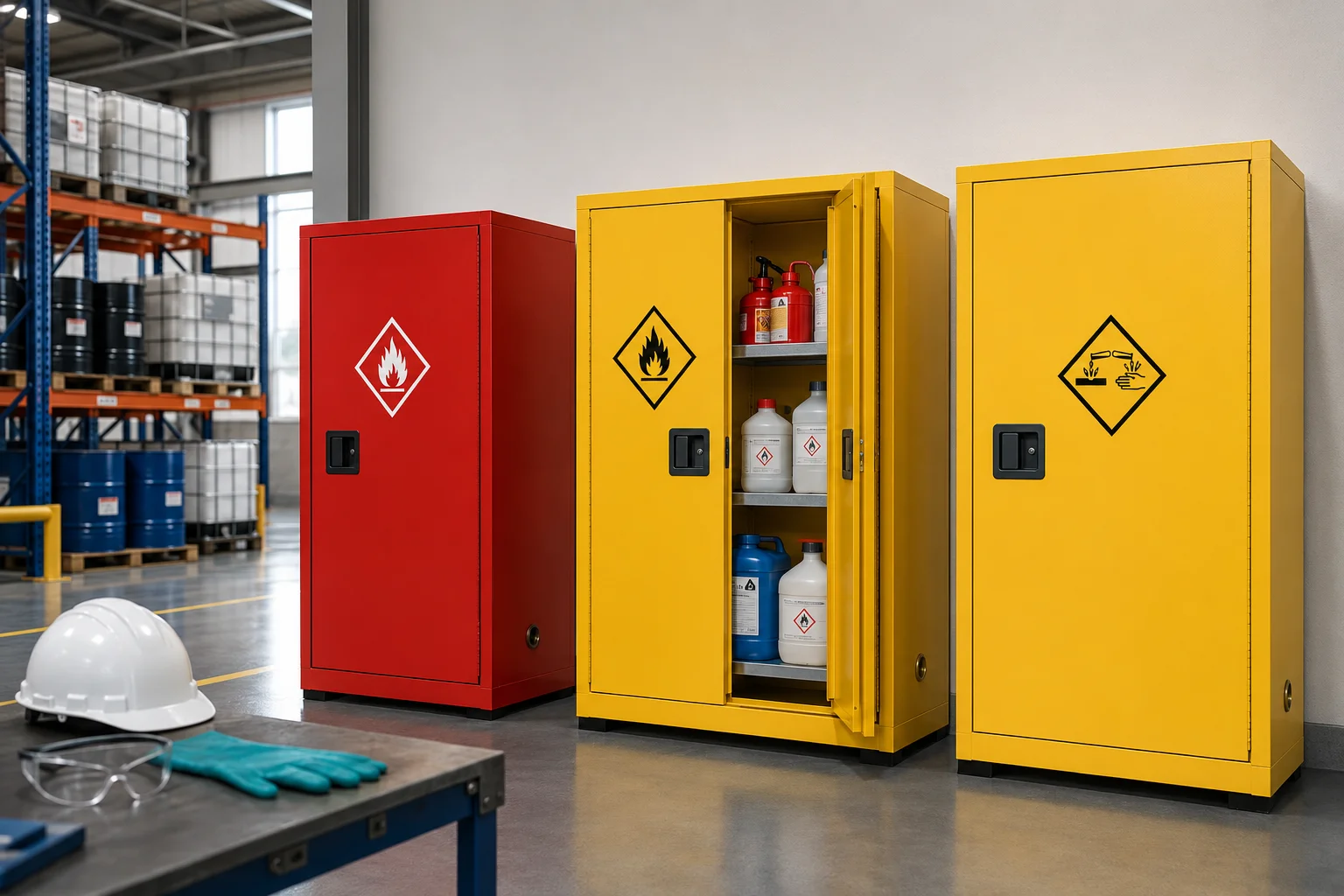
A safety cabinet is not simply a place to put hazardous materials out of sight. The wrong cabinet can leave a facility with incompatible chemicals stored together, insufficient fire protection, or a capacity problem that encourages containers to be left on benches and floors. Knowing how to choose safety cabinets starts with what you store, how much you keep on hand, and the conditions in which your team uses those materials.
For facility managers, EHS teams, and procurement professionals, the best choice is usually the one that supports daily work without compromising regulatory requirements or emergency readiness. That means looking beyond cabinet size and price to the hazard class, construction standard, placement, and operating practices around it.
Start With the Material Hazard, Not the Cabinet Color
Safety cabinets are designed around specific hazards. A yellow cabinet may be associated with flammable liquids, while other colors are often used for corrosives, acids, bases, pesticides, or toxic materials. Color coding can help staff identify storage at a glance, but it is not a substitute for checking the cabinet’s intended use and the chemical’s Safety Data Sheet (SDS).
Review every product planned for storage, including solvents, fuels, paints, aerosols, cleaning chemicals, acids, alkalis, and waste containers. Identify its primary hazard, flash point where applicable, corrosive properties, and known incompatibilities. Then group materials according to the SDS and your site’s chemical segregation plan.
This step matters because a cabinet does not make incompatible materials safe to store together. For example, acids and bases may each require corrosive storage but should generally be segregated. Oxidizers should not be placed with flammable solvents simply because space is available. Where multiple chemical families are present, separate cabinets or purpose-designed internal segregation may be necessary.
Match the Cabinet Type to the Risk
Flammable liquid safety cabinets are built to reduce the risk of fire exposure and help contain spills from containers stored inside. They are appropriate for many solvents, fuels, paints, and other combustible liquids, subject to the product SDS, local rules, and the cabinet’s stated rating.
Corrosive safety cabinets need interior materials, shelves, and spill containment that can withstand the specific chemical group being stored. A standard steel flammable cabinet may not be suitable for aggressive acids or alkalis without a compatible liner or corrosion-resistant construction. For highly corrosive materials, polyethylene cabinets and trays can be a better fit, depending on the chemical.
Specialty cabinets for pesticides, toxic substances, gas cylinders, or lithium-ion batteries address different operational risks. Do not assume all “hazardous material cabinets” deliver the same protection. Request product specifications and confirm that the cabinet is designed for the materials and quantities your facility intends to store.
Confirm Applicable Codes and Listings Before Purchase
A cabinet should support your compliance program, not create an unresolved question during an inspection. In the United States, flammable liquid storage is commonly evaluated against OSHA requirements, NFPA 30 guidance, fire code provisions, and the requirements of the authority having jurisdiction. The exact obligations can vary by facility type, jurisdiction, occupancy, and the quantities stored.
Look for cabinets manufactured and tested to recognized standards relevant to their use. For flammable liquids, many buyers specify cabinets that meet NFPA 30 and OSHA requirements and carry an appropriate third-party listing or approval. Review the manufacturer’s documentation rather than relying only on a product description or color designation.
Also confirm the allowable quantities for your work area. Maximum container capacities, permitted storage outside a dedicated liquid storage room, and limits per control area can affect whether you need one cabinet, several cabinets, or a separate storage solution. Your fire marshal, EHS lead, insurer, or code consultant can help resolve site-specific questions before equipment is installed.
Size the Cabinet for Real Inventory and Real Workflows
Capacity is one of the most common purchasing mistakes. A cabinet that fits current stock exactly will quickly become overloaded when production demand changes, a new contractor arrives, or waste containers accumulate. Overfilled shelves also make it harder to inspect labels, retrieve containers safely, and notice leaks.
Start with an inventory count by container size and chemical compatibility group. Include both unopened stock and in-use containers that need secure storage at the end of a shift. Add sensible contingency space for replenishment and for properly managed hazardous waste, where compatible and permitted.
Cabinets are often available in compact under-counter units, countertop models, and larger floor-standing configurations. A small cabinet can be the right answer for a laboratory workstation or maintenance bay with limited use quantities. Larger cabinets suit centralized stores, workshops, warehouses, and production areas with regular solvent or paint consumption. The trade-off is straightforward: centralized storage can simplify inventory control, while smaller point-of-use cabinets can reduce unnecessary handling and travel across the facility.
Check shelf load ratings and the number of adjustable shelves, not only the total gallon capacity. Heavy metal cans, drums, or dense chemical containers can exceed a shelf’s intended load long before the cabinet looks full. If your operation uses 5-gallon containers or larger packages, confirm dimensions, shelf spacing, and safe manual handling procedures.
Evaluate Construction, Spill Control, and Door Design
Industrial-grade safety cabinets should be selected for the conditions they will face. In a busy maintenance shop, loading area, or marine facility, cabinets may encounter frequent opening, vibration, humidity, forklift traffic, and accidental impacts. Construction quality directly affects service life and containment performance.
For flammable liquid cabinets, assess features such as double-wall steel construction, a liquid-tight sump, reinforced shelves, proper grounding provision, and clearly marked hazard labeling. The sump should provide enough leak containment for the cabinet’s intended application. It is not a replacement for sound container handling or secondary containment where larger-volume storage requires it.
Door style changes how the cabinet works in the field. Manual-close doors stay open while staff retrieve materials and must be closed after use. Self-close doors shut automatically when released, which can reduce the chance that a cabinet is left open. Self-latching doors may be required by local codes or site policy. There is no universal answer, but facilities with high traffic, multiple shifts, or inconsistent access control often benefit from self-closing designs.
Vent connections deserve similar care. Many cabinets include vent bungs, but that does not mean they should automatically be vented. Improperly venting a flammable storage cabinet can affect its fire performance and introduce other hazards. Follow the manufacturer’s instructions and consult your EHS or fire safety professional before connecting ventilation.
Plan the Location Before the Cabinet Arrives
A compliant cabinet in the wrong location still creates risk. Place it where authorized users can access materials without carrying them through unnecessary pedestrian routes, but away from ignition sources, heat, vehicle impact zones, emergency exits, and areas where a release could reach drains or waterways.
Measure the installation space with doors fully open. Allow room for users to lift containers safely, conduct inspections, and respond to a small spill. In tight spaces, a cabinet door that blocks an aisle or exit can become an operational problem immediately.
Consider the floor condition and surrounding protection. The cabinet must sit level and stable, with enough load-bearing capacity for the cabinet plus full inventory. In areas exposed to vehicles, bollards or barriers may be needed. Near environmentally sensitive drains, use suitable spill control measures and keep compatible absorbents nearby.
Grounding and bonding requirements should be evaluated where flammable liquids are transferred. The cabinet itself is only one part of safe liquid handling. Approved dispensing cans, bonding equipment, spill kits, fire extinguishers, eyewash equipment, and trained personnel all contribute to a safer process.
Make Inspection and Maintenance Part of the Purchase Decision
The right cabinet is one your team can inspect and maintain without disruption. Build cabinet checks into routine EHS inspections. Look for damaged labels, corrosion, dented doors, blocked closing mechanisms, leaking containers, overloaded shelves, and accumulated liquid in the sump.
Keep an updated chemical inventory and ensure every stored container is labeled. Remove expired, unknown, or no-longer-needed materials through an approved waste process rather than allowing the cabinet to become long-term chemical storage. Good housekeeping preserves usable capacity and makes emergency response faster.
If several departments share the cabinet, assign ownership. Someone should be responsible for access, inspections, restocking of nearby spill response supplies, and escalation when storage limits are approached. A cabinet performs best when it is treated as part of the facility’s safety system, not as a standalone purchase.
Before placing an order, provide your supplier with the material types, container sizes, estimated quantities, available footprint, and any compliance specification your site must meet. That information makes it possible to select a cabinet that fits the work, arrives ready for installation, and gives your team a safer place to operate from the first shift onward.