

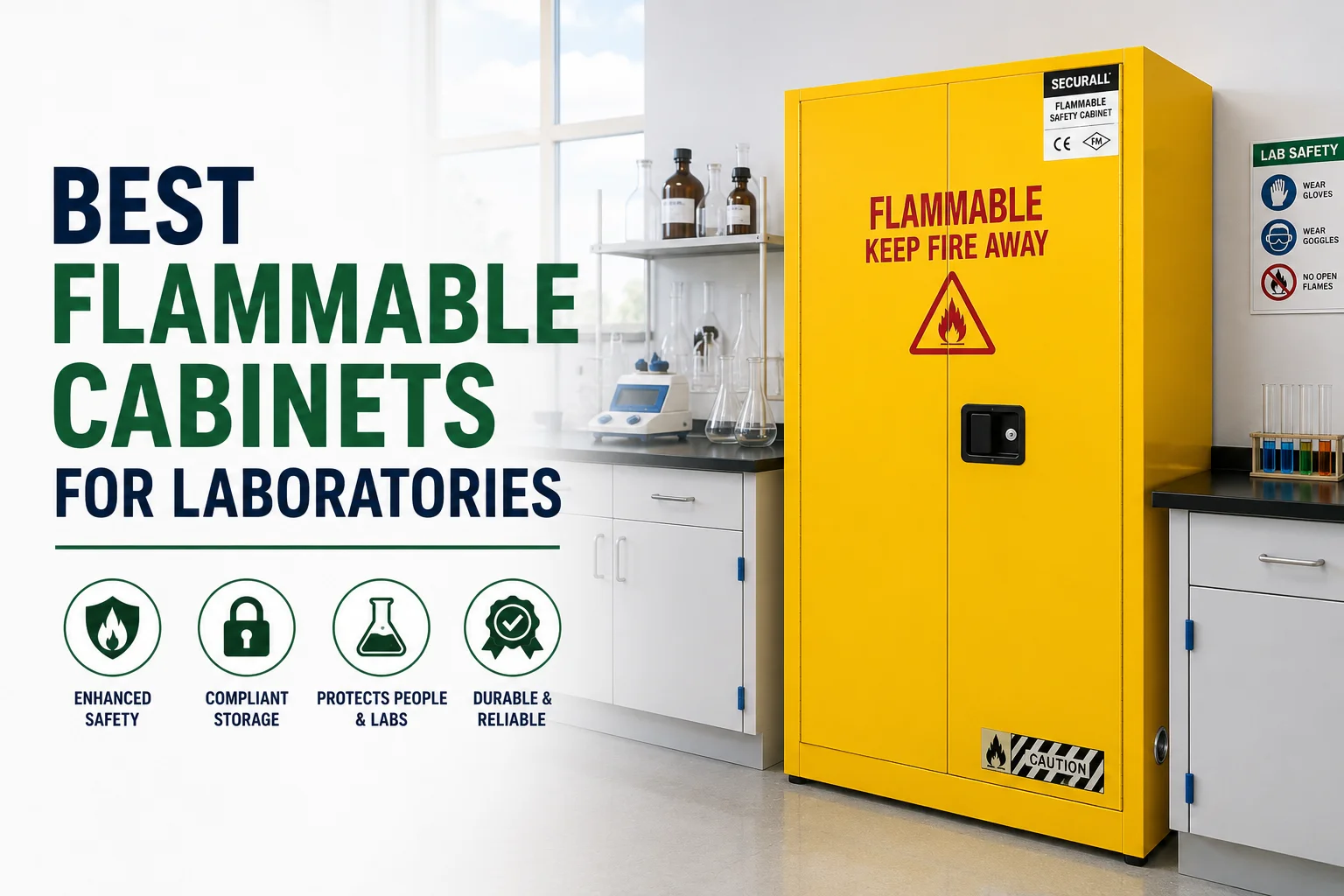
A leaking solvent bottle under a bench can turn a routine lab shift into an incident report fast. Choosing the best flammable cabinets for laboratories is not just about ticking a compliance box – it is about controlling ignition risk, organizing volatile liquids properly, and keeping daily work moving without compromise.
Laboratory buyers usually do not need the biggest cabinet on the market. They need the right one for their chemical volumes, room layout, workflow, and inspection requirements. That is where many purchasing decisions go wrong. A cabinet that looks suitable on paper can become a problem if it is too deep for the room, too small for actual container sizes, or poorly matched to how the lab handles flammable liquids every day.
What makes the best flammable cabinets for laboratories?
The best flammable cabinets for laboratories balance fire protection, chemical compatibility, access control, and practical storage capacity. In a lab environment, that balance matters more than raw volume alone. Research spaces, QA labs, teaching labs, and industrial testing facilities all store flammable liquids differently, so the right cabinet depends on use case.
A good cabinet should first support recognized safety requirements for flammable liquid storage. Buyers should look for construction quality, clear hazard labeling, secure door closure, leak-retaining sump capacity, and shelves designed to handle chemical containers without sagging or instability. Double-wall steel construction is a common benchmark because it helps reduce heat transfer during a fire event and provides the durability needed for daily industrial use.
Usability matters just as much. If staff cannot easily open the cabinet, identify contents, or place containers without awkward lifting, they will work around the cabinet instead of using it correctly. That creates risk. In laboratories, the best storage solution is usually the one that is both compliant and simple enough to support consistent behavior.
Capacity should match actual lab demand
One of the first decisions is cabinet size. Small undercounter cabinets can work well for point-of-use storage where only limited quantities are needed near benches or equipment. They help reduce travel time, keep flammables close to the work area, and fit into tighter layouts. The trade-off is obvious – once solvent volumes grow or multiple users share the same cabinet, they fill up quickly.
Mid-size and full-height cabinets make more sense for central storage, shared laboratory zones, or facilities with broader chemical inventories. These units can accommodate larger containers and more SKUs, which helps with segregation and stock control. The downside is footprint. In many labs, floor space is expensive, and a tall cabinet placed in the wrong location can affect traffic flow, egress, or access to emergency equipment.
This is why experienced buyers start with a realistic storage profile rather than a catalog dimension. Look at current container sizes, reorder frequency, number of users, and expected growth. A cabinet that is slightly oversized is often better than one that reaches capacity within months, but going too large can encourage mixed storage or poor internal organization.
Door style, shelving, and daily access
Cabinet selection is often treated as a fire safety issue only, but daily access is where performance shows up. Laboratories with frequent solvent use may prefer manual-close doors for faster access during repeated handling. Facilities with stricter controls or lower-frequency access may lean toward self-closing designs to reduce the chance that doors are left open after use.
Neither option is automatically better in every setting. It depends on user discipline, supervision, and site procedures. Self-closing doors add a layer of protection, but some teams find them less convenient during active tasks. Manual-close doors can work well if the lab has strong operating discipline and routine checks.
Shelving also deserves closer attention than it usually gets. Adjustable shelves allow labs to accommodate mixed bottle sizes and safety cans without wasting vertical space. Shelf load rating matters when storing dense liquids. Spillage management is another practical point. Cabinets with integrated sump capacity make cleanup easier and help contain minor leaks before they spread into the lab.
Material quality and fire-resistant construction
For most laboratory applications, welded steel cabinets remain the preferred choice because they offer dependable strength, impact resistance, and long service life. Powder-coated finishes help protect against corrosion and routine wear, which is useful in environments where cleaning is frequent and container movement is constant.
Construction details separate commercial-grade units from lighter-duty alternatives. Look at hinge quality, door alignment, latch mechanism strength, and shelf support design. A cabinet may meet the basic description of flammable storage, but poor build quality usually shows up quickly in busy operations. Doors begin to sag, closures become unreliable, and shelves flex under normal loads.
For procurement teams, this is where total value matters more than purchase price alone. A low-cost unit that creates maintenance issues, fails inspections, or needs early replacement is not a savings. Industrial-grade cabinets tend to deliver better long-term performance, especially in labs with repeat handling, multiple users, and strict housekeeping expectations.
Compliance matters, but so does fit-for-purpose selection
The best flammable cabinets for laboratories should support applicable fire code, workplace safety, and hazardous storage requirements. Buyers should confirm that the cabinet is manufactured and labeled for flammable liquid storage and that its specifications align with local regulatory expectations and internal EHS standards.
That said, compliance is only the starting point. A technically compliant cabinet can still be a poor fit if it does not support the actual workflow. For example, a unit placed too far from the use area may encourage staff to leave solvents out on benches. A cabinet with inadequate shelf spacing may result in unstable bottle placement. A model without suitable lock control may not meet site security needs.
Laboratory managers and EHS teams usually get the best result when they review both regulatory requirements and operating habits together. The right question is not just, “Is this cabinet approved?” It is also, “Will this cabinet be used correctly every day?”
Venting, grounding, and installation decisions
Venting is one of the most misunderstood aspects of flammable cabinet selection. Many buyers assume every cabinet should be vented, but that is not always the best approach. In some installations, venting can affect cabinet performance if it is done improperly or without reference to site requirements. The decision should follow local codes, the nature of the chemicals stored, and guidance from the facility’s safety team.
Grounding provisions may also be important where flammable liquids are dispensed or transferred. Labs handling static-sensitive solvents or using metal safety cans should review whether grounding and bonding practices need to be part of the cabinet area setup. The cabinet itself is only one part of safe storage. Placement, electrical controls, ignition source separation, and emergency response readiness all matter.
Installation should never be an afterthought. Cabinet location should support easy access while maintaining clear aisles, emergency equipment visibility, and safe distances from heat sources where required. This is especially relevant in compact labs where every square foot is contested.
Choosing between standard and specialized laboratory setups
Not every lab needs a highly specialized cabinet configuration. Standard flammable storage cabinets are suitable for many laboratories storing common solvents, fuels, paints, or alcohol-based reagents in manageable quantities. These are often the most efficient choice when buyers need proven performance, straightforward compliance support, and reliable stock availability.
Specialized needs arise when storage conditions become more specific. That may include unusually small footprints, undercounter integration, heavy use at point of work, or tighter segregation demands between chemical classes. In those cases, the best option may be a cabinet selected around layout and process rather than headline capacity.
This is where working with a supplier that understands industrial safety applications makes a practical difference. Ocean Safety Supplies supports buyers who need more than a generic product list – especially when speed, stock availability, and fit-for-purpose guidance affect project timelines.
What procurement teams should compare before ordering
When comparing cabinets, focus on the factors that affect performance over time: construction standard, capacity, shelf configuration, door type, sump design, lockability, labeling, and footprint. Also consider whether the cabinet will serve a single lab room, multiple users, or a broader facility storage function.
Lead time matters too. Many laboratory purchases happen because an audit finding, process change, or expansion has made storage capacity urgent. A cabinet that is ideal in theory but unavailable when needed may not solve the problem. For many organizations, immediate supply and dependable delivery are part of the buying decision, not an afterthought.
A practical review with EHS, lab operations, and procurement usually avoids the most common mistakes. It keeps the decision focused on what the site needs now, while still allowing room for future growth.
The right flammable cabinet should make the lab safer without making work harder. If it fits the room, supports compliance, and gets used properly every day, it is doing exactly what it should.