

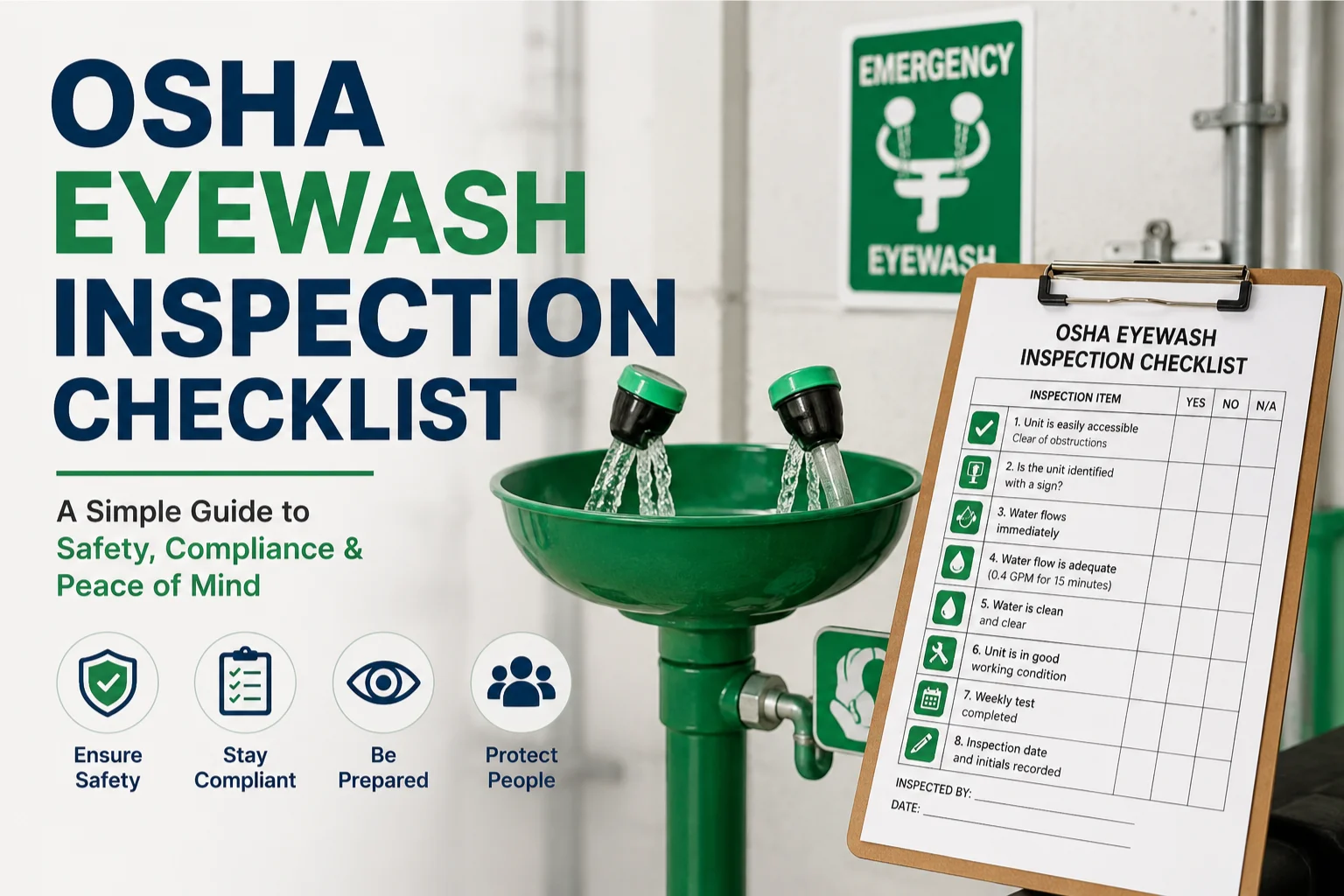
Seconds matter when a worker gets a chemical splash in the eyes. An OSHA eyewash inspection checklist helps teams confirm that an emergency eyewash station is accessible, operating properly, and ready for immediate use instead of becoming another item that looked fine until an incident exposed a gap.
For safety managers, maintenance teams, and procurement leads, the issue is not only compliance. It is operational readiness. If an eyewash station has low flow, contaminated water, blocked access, or missing signage, the problem shows up at the worst possible time. A practical inspection routine reduces that risk and gives your site a clear standard for weekly checks, corrective action, and replacement planning.
What an OSHA eyewash inspection checklist should cover
A useful checklist should do more than create a paper trail. It should help your team verify the actual condition of the unit, the surrounding area, and the supporting maintenance record. OSHA requirements are often considered alongside ANSI guidance, so inspections should be approached with both daily site realities and recognized performance expectations in mind.
At a minimum, your checklist should confirm that the eyewash station can be reached quickly, activated easily, and flushed long enough to support an emergency response. It should also capture whether the unit is clean, free of leaks, supplied with water, and protected from issues such as sediment buildup or freezing where relevant.
Weekly eyewash inspection points
For most plumbed units, the weekly inspection is the baseline. This is where many problems are caught early, especially after maintenance work, layout changes, or periods of low use.
1. Access and visibility
Start with the area around the station. The path should be clear and unobstructed. Stored materials, pallets, carts, or waste containers should never block access. Signage should be visible and recognizable from the normal work area, and lighting should allow workers to find the unit quickly during an emergency.
This sounds basic, but blocked access is one of the most common failures in active facilities. Warehouses, production floors, labs, and workshops all change over time. A station that was compliant when installed can become difficult to reach after equipment moves or temporary storage becomes permanent.
2. Activation and hands-free operation
The unit should activate in one motion and stay on without the user needing to hold a valve open. During inspection, test the activation mechanism and confirm it operates smoothly. If it sticks, requires excessive force, or does not remain on, the station needs corrective action immediately.
This is one of those details that cannot be treated as minor. In a real incident, an injured worker may have limited vision, pain, and urgency. A complicated or inconsistent activation mechanism creates delay when time is critical.
3. Water flow and spray pattern
Flush the station and observe the water flow. It should deliver a controlled, even pattern to both eyes. Weak flow, sputtering, misaligned heads, or inconsistent pressure may indicate blockage, supply problems, or internal wear.
The check is not just whether water comes out. The question is whether the station can support a proper rinse. If one nozzle is flowing harder than the other, if the streams do not align, or if debris alters the pattern, the station may not perform as intended.
4. Cleanliness of nozzles and bowls
Inspect nozzle heads, dust covers, bowls, and surrounding surfaces. Dust covers should be present and open automatically when the unit is activated. Mineral deposits, corrosion, dirt, and residue all need attention because they can affect hygiene and performance.
In dusty industrial settings or corrosive environments, buildup happens faster than many teams expect. That is why weekly flushing matters. It helps clear stagnant water and can expose contamination before it becomes a larger maintenance issue.
5. Water quality and drainage
When the unit is flushed, check for discoloration, sediment, odor, or other signs of poor water quality. Confirm that drainage is functioning and that runoff does not create a slip hazard. If water pools around the unit, the inspection should trigger a facility correction, not just a note on the form.
This point often depends on the site. Older piping, low-use branches, and hard water conditions can affect what you see during testing. If repeated flushing does not clear the line, the problem may require plumbing review rather than a simple station adjustment.
6. Leaks, damage, and general condition
Look over the full assembly for leaks, cracked components, corrosion, loose fittings, or physical damage. Pay attention to valves, pipe joints, push handles, pedals, and mounting points. Damage from forklifts, carts, or routine plant traffic is not unusual, particularly in mixed-use work areas.
A damaged unit should not stay in service on the assumption that it still works well enough. Emergency equipment is not the place for temporary fixes that linger.
Portable and self-contained units need a different checklist
An OSHA eyewash inspection checklist for self-contained units should include all the access and activation checks above, but the maintenance details are different. The flushing fluid or preserved water must be checked according to the manufacturer’s instructions. Expiration dates, solution condition, fill levels, and sealed components all matter.
This is where some sites slip into a false sense of security. A portable eyewash can look ready even when the fluid is overdue for replacement or the unit has not been serviced on schedule. If you rely on self-contained equipment for remote work areas, temporary operations, or locations without plumbed supply, inspection discipline becomes even more important.
Recordkeeping is part of the inspection
A checklist only has value if it creates a usable record. Every inspection should document the date, location, inspector name, condition found, and any corrective action taken. If there was a deficiency, the record should show when it was corrected and by whom.
This matters for internal accountability as much as for compliance review. It gives safety teams evidence that stations are not just installed but maintained. It also helps procurement and operations identify patterns, such as repeated failures at certain units, frequent parts replacement, or infrastructure issues affecting multiple stations.
Common inspection failures that deserve fast action
Most eyewash problems are not dramatic. They are small failures that build up over time. Missing dust covers, partially blocked access, poor drainage, scale on nozzles, inconsistent flow, and incomplete logs are all common examples.
The trade-off for busy facilities is obvious. Teams often try to keep inspections quick, but when checks become rushed, the same units get signed off without being truly tested. A better approach is to keep the checklist concise while making sure it covers actual function, not just visual appearance.
How to make the checklist work across multiple sites
Standardization helps, especially for companies managing warehouses, manufacturing plants, laboratories, construction projects, or marine operations. Use the same inspection format across facilities, but allow space for site-specific conditions such as freeze protection, corrosive atmospheres, or mobile work zones.
Responsibility should also be clear. If one team performs the weekly flush, another team repairs deficiencies, and a third group stores the records, gaps appear fast. The smoother model is simple: assign inspection ownership, define response times for defects, and make replacement parts or full units easy to source.
That last point is often overlooked. If a station fails inspection and your site has to wait too long for parts, the equipment remains out of service longer than it should. Stock availability and supplier responsiveness are part of readiness, not separate from it.
A practical OSHA eyewash inspection checklist template
Use this as a working framework for weekly inspections:
- Station is clearly identified with visible signage
- Path to station is unobstructed
- Area lighting is adequate
- Unit activates in one motion
- Water flows properly to both nozzles
- Spray pattern is even and usable
- Unit remains on hands-free once activated
- Nozzles, bowl, and covers are clean and intact
- Water appears clean, with no sediment or odor concerns
- Drainage works and does not create a slip hazard
- No leaks, cracks, corrosion, or loose fittings observed
- Inspection record completed with corrective actions noted
For self-contained units, add checks for solution level, expiration date, fluid replacement schedule, and manufacturer servicing requirements.
When inspection results point to replacement
Not every problem should be repaired. If a unit has recurring flow issues, heavy corrosion, damaged components, or an outdated design that no longer suits the hazard area, replacement may be the better decision. This is especially true where chemical exposure risks are significant and downtime is hard to manage.
For buyers reviewing equipment across a facility, it helps to treat eyewash stations as part of a larger emergency response category, not as isolated fixtures. Placement, durability, maintenance burden, and speed of supply all affect lifecycle value. Ocean Safety Supplies supports this kind of practical readiness with industrial-grade emergency eyewash solutions and dependable product availability for fast-moving operations.
A checklist is only useful if it leads to action. If your inspection process shows blocked access, weak flow, overdue servicing, or repeat defects, that is your signal to correct the issue before an emergency decides the cost for you.