

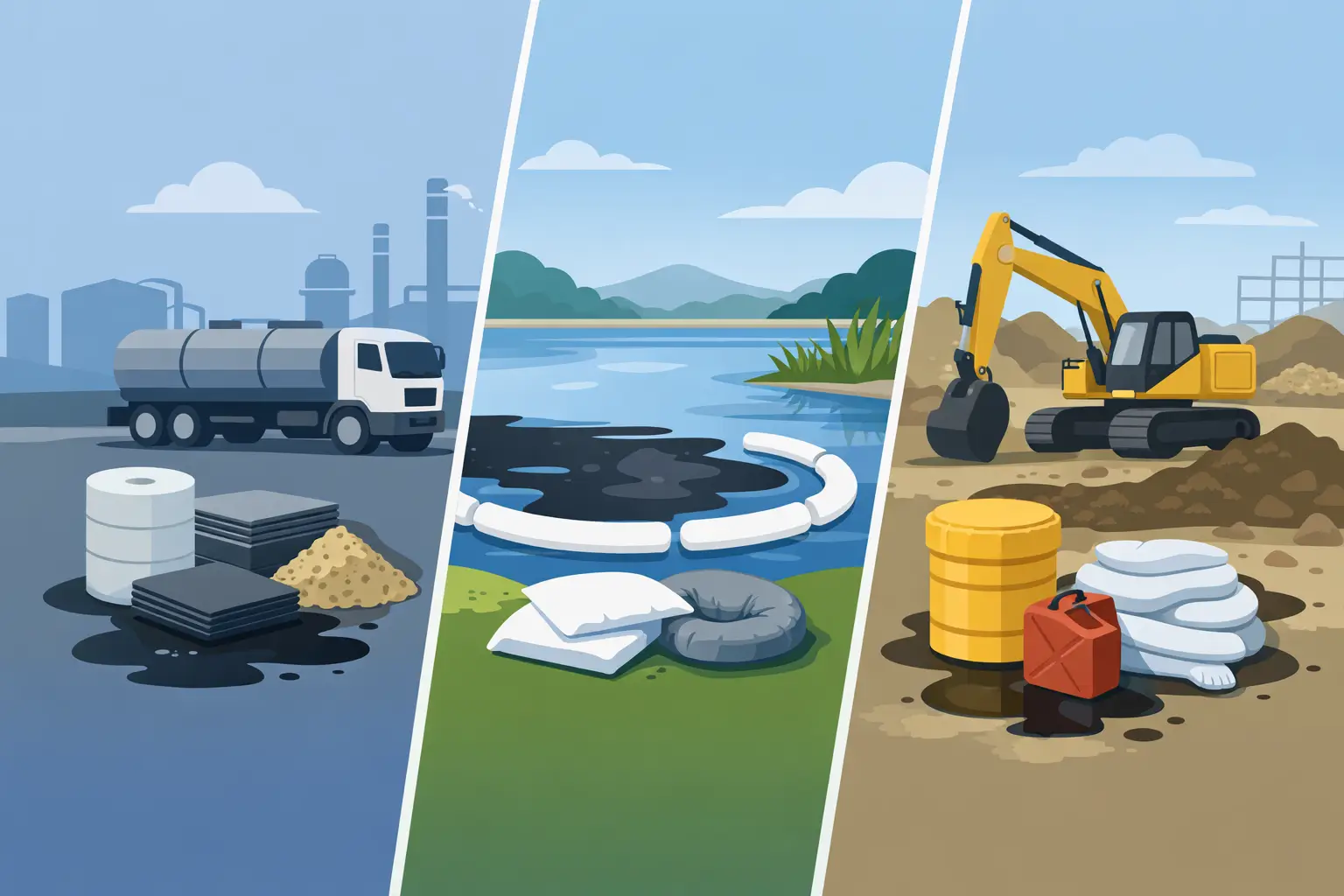
A leaking drum, refueling hose failure, or equipment seal leak can put fuel across a work area in minutes. The best absorbents for fuel spills are not simply the products that hold the most liquid on paper. They are the materials that match the fuel, surface, spill volume, and response conditions at your site – while helping your team isolate the hazard quickly and manage waste correctly.
Fuel spills create two immediate concerns: slip exposure and fire risk. Gasoline, diesel, kerosene, jet fuel, and mixed hydrocarbons can spread rapidly, particularly across smooth concrete, coated floors, loading bays, and marine decks. A properly selected absorbent solution gives operators a practical first response before a small release becomes a larger operational, environmental, or compliance issue.
Best Absorbents for Fuel Spills: Start With Oil-Only Materials
For most petroleum-based spills, oil-only absorbents are the preferred first choice. These products are designed to absorb oils, fuels, and other hydrocarbons while repelling water. That makes them highly effective around outdoor work areas, docks, marine vessels, stormwater-sensitive zones, and wet industrial surfaces.
Oil-only pads are a dependable option for routine drips, minor leaks, and final wipe-down work. Place pads under pumps, valves, portable generators, vehicle maintenance points, and fueling equipment where a small release is foreseeable. Their flat profile also makes them easy to stage inside spill kits, service vehicles, maintenance carts, and flammable liquid storage areas.
For a fuel spill that has already traveled across the floor, oil-only rolls can cover a wider area quickly. Teams can tear off the required length, lay it over the liquid, and replace saturated sections as needed. Rolls are especially useful in workshops, warehouses, loading areas, and industrial plants where spill patterns may be irregular.
Oil-only socks and booms serve a different but equally critical function: containment. Use them to surround a spill, protect floor drains, block doorways, and prevent fuel from reaching waterways or sensitive equipment. On water, floating oil-only booms can help contain surface fuel while allowing water to pass through. They are an essential part of marine spill response planning, but they should be selected for the anticipated current, wave action, and duration of deployment.
Match the Absorbent Form to the Spill
No single absorbent format is right for every incident. Facility managers and EHS teams should build their stock around likely spill scenarios instead of relying on one general-purpose product.
Pads and rolls are best for thin, spread-out fuel spills and controlled cleanup. They provide coverage, are easy to deploy, and help leave a cleaner surface after the main volume has been collected. Heavyweight pads are often worthwhile in high-traffic maintenance environments because they can retain more liquid and reduce the number of replacement pads needed.
Socks are best for containing and directing fuel. Position them around leaking machinery, along thresholds, or in a ring around pooled liquid. They are not usually the most efficient material for absorbing the whole spill volume, so pair them with pads, rolls, or pillows.
Pillows are designed for higher-volume collection in a concentrated area. They work well under leaking tanks, dispensing points, hydraulic equipment, and damaged containers. A pillow placed inside secondary containment can help manage an active leak while the source is repaired or the container is transferred.
Loose absorbents, including granular materials, can be useful on rough concrete, uneven pavement, and outdoor surfaces where pads cannot make full contact. However, they bring trade-offs. Granules may be harder to recover completely, can create dust, and often increase the volume of contaminated waste. They are generally less suitable near drains, water, food production zones, or areas where cleanup residue could affect equipment.
Sweep or particulate absorbents are often selected for vehicle workshops and loading yards because they can be spread quickly over pooled liquid. Confirm that the product is compatible with the fuel involved and that your cleanup team has the tools to collect it safely. For many indoor applications, pads and socks provide a cleaner, more controlled alternative.
Do Not Use Universal Absorbents by Default
Universal or maintenance absorbents are designed to collect a broad range of non-aggressive liquids, including oils, coolants, water-based fluids, and some solvents. They can be practical for mixed-use workshops where the spill is not known to be fuel-only.
However, universal absorbents also take up water. In rain-exposed locations, near washdown areas, or during marine response, they can become saturated with water before they capture enough fuel. This increases waste weight and can reduce the available capacity during an emergency.
Oil-only absorbents are the better operational choice when the liquid is confirmed as diesel, gasoline, fuel oil, jet fuel, lubricating oil, or another hydrocarbon. Universal materials remain useful as a backup in general-purpose spill kits, but they should not replace dedicated oil-only stock in fuel handling areas.
Consider Fuel Type, Surface, and Fire Risk
Diesel and fuel oil are often less volatile than gasoline, but both can spread and enter drains quickly. Their heavier, more persistent nature may require more absorbent capacity, particularly where the spill collects around equipment bases or in uneven surfaces.
Gasoline requires additional caution because vapors can ignite. Absorbents help control liquid movement, but they do not remove the ignition hazard. Stop the release if it is safe to do so, isolate ignition sources, restrict access, and follow your emergency response procedure. Do not use ordinary cleaning methods, wash fuel toward a drain, or rely on absorbents alone when vapors may have accumulated in enclosed areas.
The surface matters as much as the fuel. Smooth sealed concrete responds well to pads and rolls. Cracked pavement and rough ground may need loose absorbent after perimeter control has been established with socks. On water, floating oil-only pads, sweeps, and booms are appropriate, while shorelines may require specialized response materials and a more structured recovery plan.
Build a Spill Kit Around Real Response Needs
A spill kit should let the first person on scene contain, absorb, and report a release without searching across the facility for missing items. The right capacity depends on the largest credible spill, not the average daily drip.
For a small maintenance area, a compact oil-only spill kit may include pads, a few socks, disposal bags, ties, gloves, and basic instructions. Fuel storage areas, loading bays, generator rooms, and fleet yards normally require larger kits with additional containment socks, pillows, and enough absorbent to manage a meaningful release.
A practical fuel spill response setup typically needs these five elements:
- Oil-only pads or rolls for absorption and surface finishing
- Oil-only socks or booms to contain the release and protect drains
- Pillows for active leaks and concentrated pooling
- Appropriate PPE, including chemical-resistant gloves and eye protection
- Waste bags, labels, and tools for controlled collection
Where fuel is transferred near drains, keep drain covers or temporary drain seals close to the spill kit. The fastest containment action may be protecting the drain before beginning full absorption. Secondary containment pallets, drip trays, and portable bunds also reduce the chance that a container failure becomes a floor spill in the first place.
Capacity Is More Than the Number on the Label
Absorbency ratings help buyers compare products, but real-world performance varies. A pad may absorb less when fuel is moving quickly, when it is placed on a rough surface, or when operators must replace it before full saturation to avoid tracking liquid across the site.
Buyers should allow a response margin rather than stocking exactly for the listed capacity. Consider the largest container in use, the maximum transfer quantity, the distance to drains or water, and whether the site operates outdoors during wet weather. A kit that handles a 20-gallon spill in controlled conditions may not be enough for a 20-gallon release during rain or on broken pavement.
Product construction also affects usability. Perforated rolls provide flexibility for different spill sizes. Laminated pads can resist tearing in high-traffic areas. Fine-fiber products may be more effective for sheen and small residuals, while thicker, heavier materials suit larger pools. The right choice depends on whether your team needs speed, durability, capacity, or all three.
Manage Used Absorbents as Contaminated Waste
Once absorbents contact fuel, they must be handled as contaminated material. Place used pads, socks, pillows, and granules into compatible disposal bags or containers, label them as required, and store them securely pending disposal. Disposal requirements vary by location, fuel type, contamination level, and local regulations.
Do not place fuel-saturated absorbents into ordinary trash unless your approved waste procedure specifically permits it. Keep disposal records where required, and train employees on who is authorized to arrange waste collection. Good spill readiness includes the final stage of the job, not just the first five minutes of response.
The most effective spill supplies are the ones your team can identify, reach, and use under pressure. Stock dedicated oil-only absorbents where fuel is stored, transferred, serviced, or transported, and review kit contents after every incident. That simple discipline keeps a minor leak from becoming an avoidable shutdown.