

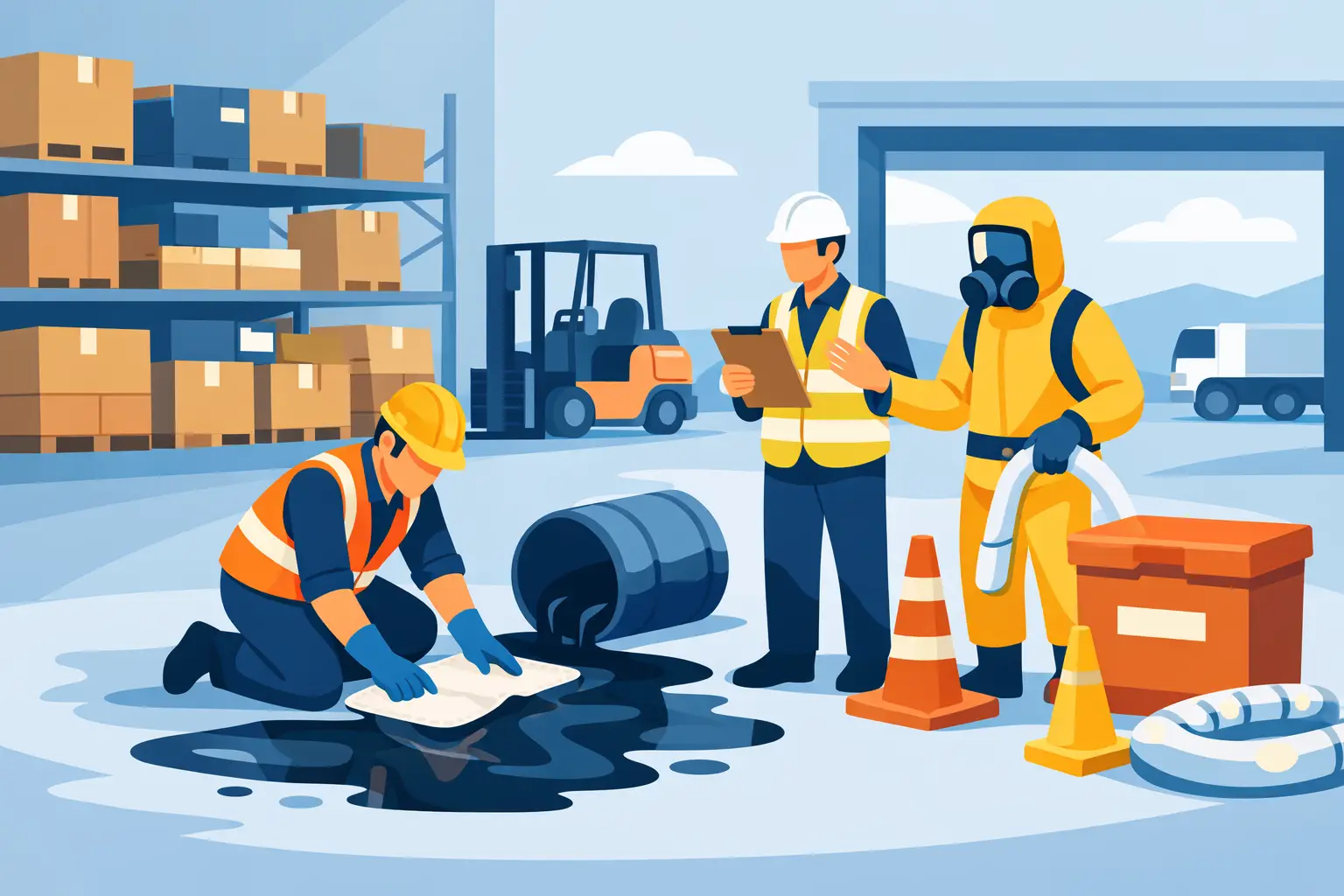
A leaking 55-gallon drum can turn a normal receiving shift into a safety, inventory, and compliance problem within minutes. This warehouse spill response case study examines a representative industrial scenario: a forklift contacts a drum of non-flammable hydraulic oil during put-away, damaging the lower rim and releasing product onto the concrete floor.
The incident was contained before oil reached a nearby floor drain or traveled beneath palletized stock. That result was not based on luck. It came from accessible spill equipment, a trained response team, and a clear decision to control the source before attempting to clean the floor.
Warehouse Spill Response Case Study: The Incident
The warehouse handled packaged maintenance fluids, cleaning chemicals, and general industrial supplies. Its receiving area had active forklift traffic, a drain approximately 20 feet from the incident location, and pedestrian access to staging lanes. A forklift operator noticed a fresh oil trail after positioning a pallet of drums and immediately stopped movement in the area.
The shift supervisor was notified, and the team established a temporary exclusion zone. This first action mattered because a small oil spill presents more than an environmental concern. Forklift tires can spread it across a large section of floor, while foot traffic can create slip hazards and carry contamination into offices, loading areas, or customer shipments.
The supervisor confirmed the product from the drum label and safety data sheet. Because the material was hydraulic oil rather than a corrosive or highly hazardous chemical, the team could use general-purpose oil absorbents and standard personal protective equipment. If the liquid had been an unknown chemical, solvent, acid, or oxidizer, the response would have required a different spill kit, stronger protective measures, and possible escalation to specialist support.
The First 10 Minutes: Stop, Protect, Contain
The response team followed a practical sequence: stop the release, protect people, and contain the liquid. A worker placed a compatible drum plug over the damaged area while a second worker positioned a large overpack drum beside the pallet. The damaged drum was carefully transferred into the overpack to prevent continued leakage during handling.
At the same time, absorbent socks were laid in a wide arc between the spill and the floor drain. This was the critical containment line. Drain protection mats were kept available as an added safeguard, but the socks were deployed first because they could be quickly shaped around the flow path and uneven floor surface.
The team then placed absorbent pads directly over the pooled oil. Pads were selected instead of loose absorbent because the spill was localized and the warehouse needed to control debris, keep cleanup organized, and minimize material tracking. Loose absorbent can be effective for irregular surfaces or larger volumes, but it may create dust and increase cleanup time in a busy indoor facility.
No one attempted to wash the oil toward the drain. Water can spread contamination, create a larger disposal burden, and increase the chance of an off-site release. The team treated the drain as a protection priority, not a disposal route.
Equipment That Made the Difference
The warehouse had placed a wheeled 95-gallon spill kit near the receiving area, rather than storing all spill supplies in a remote maintenance room. That decision reduced response time and allowed the first employees on scene to act while the supervisor assessed the situation.
The kit contained universal absorbent pads and socks, disposal bags, gloves, goggles, caution tape, and basic drain protection. The team also had an overpack drum and compatible drum plug within the hazardous-material storage area. A spill kit alone is useful, but it is not always enough for a leaking drum. Facilities that receive or store drums should plan for source control and damaged-container recovery, not just floor cleanup.
For this type of operation, readiness usually depends on four equipment groups:
- Spill kits with absorbent pads, socks, pillows, and disposal bags for quick control and cleanup.
- Drain covers or drain protection mats for areas where a release could enter a drainage system.
- Overpack drums, drum plugs, and handling tools for damaged or leaking containers.
- Secondary containment pallets and portable bunds to reduce the consequence of a drum failure before it becomes an emergency.
Product selection should match the materials stored on site. Universal absorbents are suitable for many everyday industrial liquids. Oil-only absorbents are preferable where oil and water separation matters, such as outdoor yards, marine work, or stormwater exposure. Chemical spill kits are required for acids, caustics, and other aggressive liquids that may react with standard absorbent materials or require specialized protective equipment.
Cleanup, Disposal, and Return to Service
Once the leak was stopped and the drain protected, the team worked inward from the perimeter. Used pads were collected with non-sparking tools and placed in labeled disposal bags. The bags, damaged drum, and contaminated protective equipment were staged for disposal according to the facility’s waste procedures and the product’s safety data sheet.
The area was not reopened immediately after the visible oil was removed. The supervisor inspected the concrete for residual slickness, checked forklift tires and pallet jack wheels for contamination, and confirmed that the drain cover had not allowed any liquid past its edge. A final dry absorbent pad test helped verify that the surface was no longer transferring oil.
Only after the area was dry, the damaged drum was secured, and the response materials were contained did the supervisor remove the exclusion zone. This controlled return to service prevented a secondary slip incident and reduced the risk of spreading oil into other areas of the building.
What the Warehouse Changed After the Spill
The response was effective, but the post-incident review still identified improvements. The pallet had been moved through a high-traffic receiving lane before the drum condition was fully checked. The warehouse added a visual drum inspection at receiving and required damaged or questionable containers to move directly to a designated containment area.
The site also adjusted spill-kit placement. One kit was already near receiving, but a second, smaller spill kit was installed by the loading dock. Spill supplies should be located where releases are most likely, not simply where storage space is convenient. Receiving, chemical storage, battery-charging areas, maintenance bays, and waste accumulation points often need their own response equipment.
Training was refreshed with a short hands-on exercise. Employees practiced identifying the product, setting a perimeter, placing absorbent socks around a drain path, and selecting the correct absorbent. Practical drills reveal issues that a written procedure may miss, including whether the kit is accessible, whether employees know the location of overpacks, and whether response roles are clear on different shifts.
Finally, the facility created a replenishment rule: every spill response triggers a kit inspection before the shift ends. Used pads, socks, gloves, bags, and drain protection must be replaced immediately. A partially empty spill kit creates false confidence, especially when the next event occurs after hours or during a busy delivery window.
Lessons for Warehouse and EHS Teams
This case shows that effective spill response is a warehouse operating capability, not just a compliance item on a checklist. The best equipment cannot compensate for slow decisions, while good training is weakened by a spill kit that is locked away, incomplete, or stocked with the wrong absorbents.
The right setup depends on the materials, quantities, traffic patterns, and drainage risks at each facility. A warehouse storing a few pails of lubricant needs a different response plan than a distribution center receiving bulk chemicals or operating near stormwater drains. However, the core principle remains consistent: contain the source, isolate the area, protect drains, recover the material, and restore readiness immediately.
For procurement and operations teams, the practical next step is to inspect the areas where a spill would cause the most disruption and confirm that the correct spill kits, absorbents, drain protection, containment, and replacement stock are available there. Ocean Safety Supplies can support that readiness with industrial-grade spill response and containment equipment selected for the demands of active warehouses.