

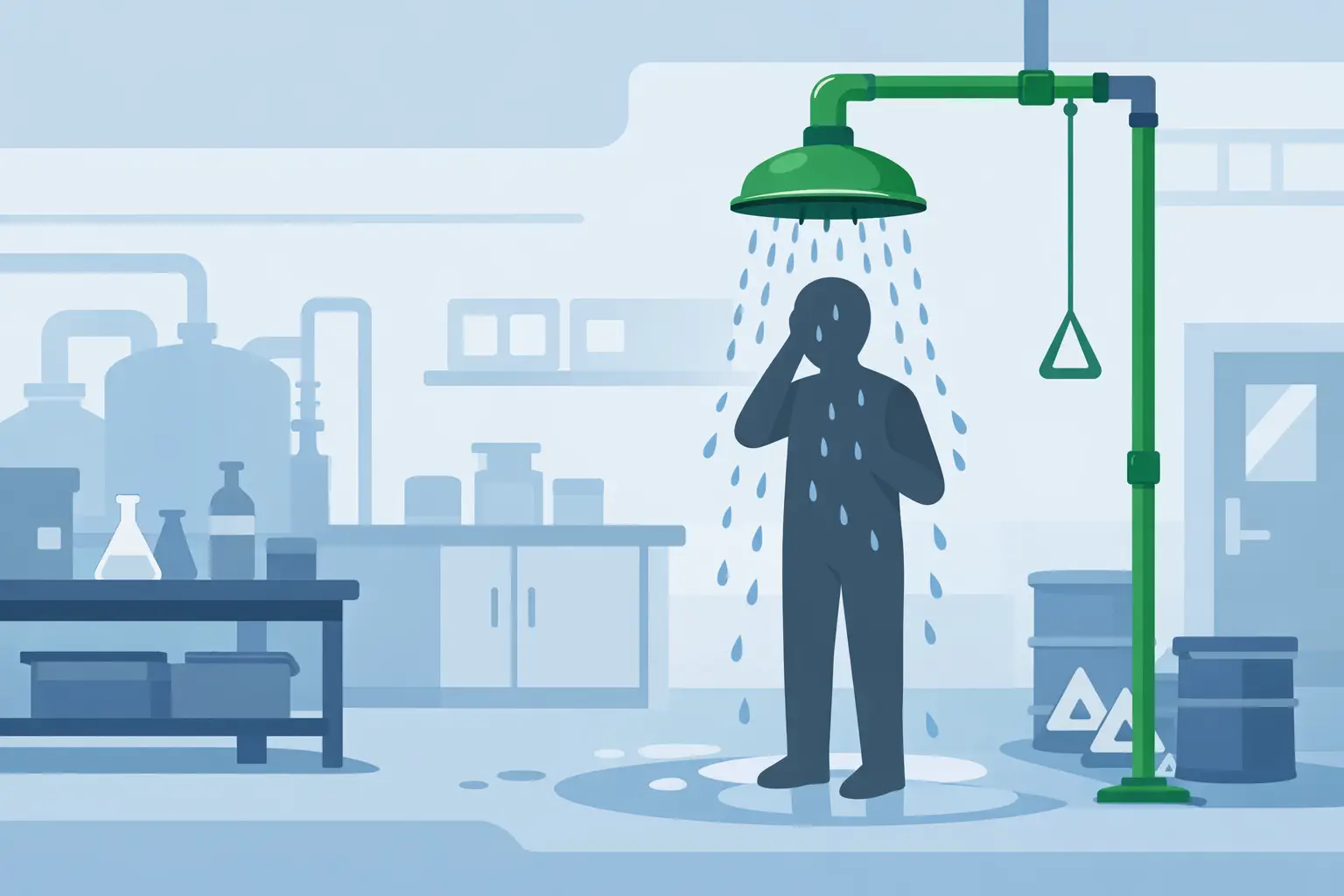
A chemical splash does not allow time to search for equipment, open doors, or move around stored materials. The question of where install emergency shower equipment should be answered during facility planning, not after an incident. The correct location is the one that gives exposed personnel an immediate, unobstructed route to drenching water while supporting inspection, drainage, and reliable operation.
For facilities handling corrosives, solvents, fuels, cleaning chemicals, battery electrolyte, or other hazardous substances, emergency showers are a core part of site readiness. Placement must reflect the actual hazard, the work being performed, and the layout workers must navigate under stress.
Where to Install an Emergency Shower for Fast Access
Install an emergency shower within the work area where a hazardous material exposure could occur. In many facilities, this means close to chemical dispensing stations, process tanks, drum decanting areas, laboratories, battery charging rooms, maintenance bays, and waste handling points.
A commonly used benchmark under ANSI/ISEA Z358.1 is that emergency flushing equipment should be reachable within 10 seconds of travel. The standard is not simply a distance rule. Ten seconds can mean a short distance on a clear, level floor, but much less distance where workers wear restricted PPE, work around machinery, negotiate steps, or may have impaired vision following a splash.
The route must be direct and free from obstacles. Do not place an emergency shower beyond a locked door, through an office, behind racking, or on the other side of a busy vehicle aisle. Personnel should not need to pass forklifts, climb stairs, move pallets, or make sharp turns to reach it. A worker who has been exposed to a corrosive chemical may be unable to see clearly, so the approach needs to remain obvious even in low visibility.
Where multiple hazard zones exist, one centrally located shower may not provide adequate coverage. A large warehouse with chemical storage at opposite ends, for example, may require separate units. The practical decision is based on exposure points, not the convenience of plumbing installation.
Match the Location to the Hazard
The installation location should be selected after reviewing each task that can create a splash, spill, or body exposure. This includes normal operations, maintenance, sampling, cleaning, transfer work, and emergency spill response.
Laboratories and chemical rooms
In laboratories, install the shower close to benches, sinks, chemical storage, and preparation areas where splashes are likely. It should not be inside a narrow equipment room or behind bench seating. A combination emergency shower and eyewash station is often appropriate when chemicals can affect both the body and eyes.
Keep the area under and around the unit clear. Laboratory carts, waste containers, gas cylinders, and temporary deliveries often migrate into open floor space. Marking the area and incorporating it into routine housekeeping checks helps preserve access.
Manufacturing and process areas
Manufacturing sites may need emergency showers near chemical dosing systems, mixing vessels, plating lines, wash stations, and production equipment using acids, alkalis, solvents, or hot process fluids. Consider where operators stand while connecting hoses, opening valves, sampling product, or changing drums. Those positions are frequently the true exposure locations.
Avoid installing the shower where a release could block access to it. If a spill from a process tank can spread across the path to the unit, position the shower on the safe side of the operation while keeping it within rapid reach.
Warehouses and distribution facilities
For warehouses, place emergency showers close to hazardous material storage, battery charging, chemical repacking, and spill response stations. A unit hidden in a distant restroom or maintenance office is not a practical emergency response measure for a warehouse associate handling damaged containers.
In battery charging areas, consider the risks from electrolyte, corrosive materials, and hydrogen generation. The shower must remain accessible without requiring staff to enter a congested charging layout. Dedicated, clearly marked space is essential.
Outdoor and remote work areas
Outdoor transfer points, tank farms, loading docks, construction zones, and marine operations require extra planning. Freezing temperatures, high heat, dust, salt exposure, and unreliable water supply can affect equipment performance. Self-contained or portable emergency showers may be suitable where plumbed units are impractical, provided they deliver the required flushing duration, flow, and water condition for the hazard and applicable requirements.
Outdoor equipment also needs protection from vehicle impact and weather without placing it inside an enclosure that slows access. In remote locations, confirm how workers will summon assistance after activating the shower.
Plan the Area Around the Shower
An emergency shower is only as effective as the space around it. Provide a clear access path and enough open floor area for a worker to reach and activate the unit immediately. The activation handle, pull rod, or valve must be easy to identify and operate in one motion.
Use highly visible safety signage. Facility lighting should make the unit recognizable at all times, and supplemental illumination may be needed in outdoor or low-light areas. Green safety signs, floor markings, and directional indicators can help workers locate the equipment quickly, especially in large plants or warehouses.
Do not use the shower area for storage, even temporarily. This includes absorbent drums, spill kits, empty pallets, toolboxes, and cleaning equipment. Spill kits should be readily available nearby, but they should not obstruct the route or reduce the clearance required to use the shower.
Drainage requires careful consideration. Emergency shower testing and activation can release substantial water. A floor drain may help manage water, but the drainage arrangement must not create slip risks or allow contaminated runoff to enter an unsuitable drainage system. Sites handling hazardous chemicals should assess whether wastewater containment or controlled disposal is required.
The surrounding floor should provide stable footing when wet. For areas with corrosives or flammable liquids, select compatible materials and assess whether electrical equipment, ignition sources, or sensitive production systems need additional protection from discharge water.
Water Supply, Temperature, and Performance Matter
A convenient location is not enough if the shower cannot provide sufficient water. Plumbed emergency showers should be connected to a dependable supply capable of delivering the required flow for the required duration. Water pressure, pipe sizing, supply isolation valves, and simultaneous use of connected eyewash equipment all need to be considered before installation.
Water should be tepid so an exposed worker can remain under the flow for the recommended flushing period. Water that is too cold can discourage use or cause cold stress, while excessively hot water may worsen injury. In hot climates, stagnant water in exposed pipework can become uncomfortably warm, so temperature management should be part of the design review.
Install supply valves so they remain open during normal operation and are protected from accidental shutoff. Where isolation is necessary for maintenance, use a controlled procedure that ensures the equipment is returned to service promptly and clearly identified if unavailable.
For combination units, confirm that the eyewash or eye/face wash can operate correctly at the same time as the shower if your applicable standard and risk assessment require it. A system that performs well during a single-device test may not meet site needs during an actual exposure event.
Avoid Common Placement Mistakes
The most frequent mistake is treating an emergency shower as a compliance item that can be placed wherever water piping is easiest to access. Low-cost installation can become a costly failure if the unit is too far away, blocked by inventory, or unable to deliver usable water.
Other recurring issues include installing a unit behind a door, locating it beside moving equipment, allowing parked forklifts to block the path, and placing it where discharge creates an uncontrolled contamination route. Another concern is relying on an eyewash bottle or portable eyewash as a substitute for a properly selected emergency shower. These products serve different purposes and should be chosen according to the hazard assessment.
Before finalizing the location, walk the route from each exposure point. Do it while wearing the PPE used for the task. Check whether doors, hose lines, temporary barricades, or normal production activity interfere with access. This simple field check often identifies problems a floor plan will miss.
Commission, Inspect, and Keep It Ready
After installation, test the equipment and document its performance. Verify activation, flow pattern, water temperature, accessibility, signage, drainage, and visibility. Train employees on the unit location and on the expectation to start flushing immediately after exposure.
Weekly activation checks, regular inspections, and scheduled maintenance help prevent clogged nozzles, closed valves, damaged handles, and stagnant water from compromising the unit. Inspection records also give EHS and operations teams confidence that emergency equipment remains ready between audits and incidents.
Emergency shower placement is a site-specific decision, but the objective is straightforward: get water to an exposed worker without delay. Ocean Safety Supplies can help facilities select industrial-grade emergency shower and eyewash equipment suited to their hazards, available utilities, and operational layout. A properly located, clearly maintained unit gives your team a practical response option when seconds matter.