

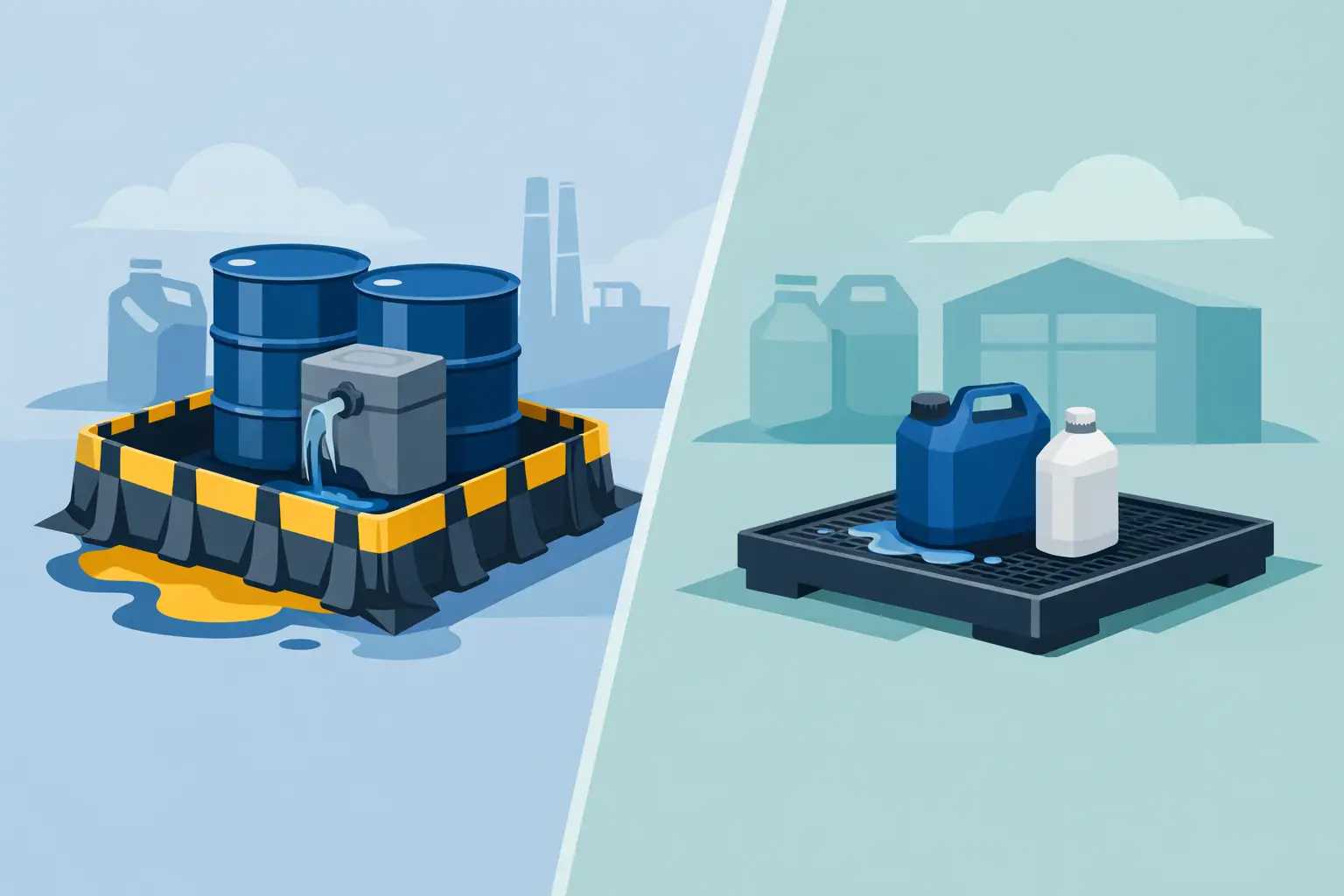
A leaking hydraulic hose beneath a mobile generator needs a different control measure than a few drops of oil below a drum tap. Selecting the wrong containment product can leave a site short on capacity, create handling problems, or add unnecessary cost. When comparing portable bunds versus drip trays, the practical question is not which product is better overall. It is which one matches the liquid volume, equipment footprint, work duration, and level of spill risk at your location.
Both products support cleaner, safer operations by containing drips, leaks, and accidental releases before they reach floors, soil, drains, or waterways. Their strengths, however, are very different. Understanding those differences helps facility managers, EHS teams, maintenance crews, and procurement teams specify the right equipment with confidence.
Portable Bunds Versus Drip Trays: The Core Difference
A portable bund is a flexible, temporary secondary containment area. It typically uses chemical-resistant fabric or reinforced material with foam, collapsible, or removable sidewalls. Equipment, containers, or vehicles can be positioned inside the bund to contain leaks and larger spills across a defined footprint.
A drip tray is a rigid, shallow containment tray designed for localized drips, small leaks, and routine fluid handling. It is commonly placed below drum taps, pumps, small containers, machinery, or maintenance points. Its compact profile makes it easy to position where minor releases are expected.
Put simply, a drip tray controls small, predictable releases at a specific point. A portable bund creates a larger containment zone for higher-risk, temporary, or mobile work. Neither should be treated as a substitute for good storage, inspection, and transfer practices. They are secondary controls that reduce the consequences when primary controls fail.
When a Drip Tray Is the Right Choice
Drip trays are usually the most efficient option where the risk is limited to small-volume drips or seepage. A drum dispensing area is a common example. Placing a correctly sized tray under the tap and connection point captures residual product during dispensing without taking up unnecessary floor space.
They also suit stationary equipment with known leak points, such as small pumps, compressors, generators, lubrication stations, and fluid transfer containers. Because trays are rigid and low profile, they are simple to inspect. Operators can quickly see whether liquid has collected and arrange disposal or cleanup before the tray becomes overfilled.
For indoor workshops, laboratories, maintenance rooms, and warehouses, a drip tray can be a practical housekeeping control. It helps protect coated floors, reduces slip hazards, and prevents small quantities of oil or chemicals from migrating toward drains. The key limitation is capacity. A shallow tray may manage routine drips well but can be overwhelmed by a split hose, failed valve, or overturned container.
Material compatibility also matters. The tray must be suitable for the liquid in use, whether that is oil, fuel, coolant, solvent, corrosive chemical, or another hazardous substance. A tray that is physically the right size but made from an unsuitable material does not provide dependable containment.
When Portable Bunds Make Better Operational Sense
Portable bunds are designed for situations where the spill footprint may be larger, less predictable, or temporary. They are frequently used beneath mobile plant, tankers, generators, pumps, IBCs, maintenance equipment, and containers being handled outdoors. A bund can create a protected work zone on concrete, compacted ground, or another appropriate level surface.
Their greatest advantage is coverage. Rather than catching liquid only at one drip point, a portable bund contains releases across the full area occupied by equipment. This is particularly useful during refueling, vehicle servicing, hose connection, decontamination work, chemical transfer, and emergency response operations.
For sites with changing work areas, portable bunds offer meaningful flexibility. Many models can be folded or rolled for storage and transported to the point of use. Foam sidewalls allow vehicles or equipment to enter without a hard ramp, while removable-wall options can be selected where repeated vehicle access is required. The right design depends on traffic, load, frequency of access, and the risk of damaging the sidewall.
Portable bunds are not automatically the right answer for every large container. Their capacity must be checked against the anticipated release volume and the requirements that apply to the operation. A bund should also be sized to allow safe placement of equipment without stressing seams, walls, or entry points. If rainwater can enter an outdoor bund, teams need a controlled inspection and drainage process to preserve usable containment capacity and avoid releasing contaminated water.
Choose by Spill Scenario, Not Product Name
The most reliable selection process begins with the credible spill scenario. Consider what could leak, how much could be released before intervention, and where that liquid could travel. A small tray under a fitting may be adequate when the maximum credible release is limited to residual drips. It is not adequate under a fuel transfer setup where a hose failure could release a much larger volume.
Start by assessing the liquid itself. Oils and fuels may require different materials and cleanup methods than acids, alkalis, or solvents. Then assess the container or equipment: its total volume, valves, hoses, fittings, and likely failure points. Finally, look at the environment around the work. Outdoor activities near drains, unprotected ground, docks, or watercourses generally demand a higher level of containment planning than controlled indoor tasks.
Footprint is equally important. A drip tray should extend beyond the anticipated drip area and allow containers or equipment to sit stable within its boundaries. A portable bund needs sufficient internal space for the full equipment arrangement, safe operator access, and any hoses or connections that could leak. Measuring the actual setup before ordering avoids a common problem: a containment product that technically fits the equipment but leaves no room for safe work.
Capacity, Access, and Daily Use
Containment capacity should never be guessed. Check the product’s stated capacity, then compare it with the credible release volume and applicable site or regulatory requirements. Do not assume that a tray or bund will retain its full nominal capacity under real operating conditions. Equipment displacement, uneven surfaces, rainfall, and accumulated liquid can all reduce available space.
Access requirements often decide the outcome between the two options. If technicians need to step into an area occasionally to service a small machine, a low-profile drip tray may be convenient. If a forklift, vehicle, or wheeled equipment must enter the containment area, a portable bund with appropriate wall construction and access provisions is usually more suitable.
Routine inspection is part of the product decision. Drip trays need frequent emptying and cleaning because their low walls can fill quickly. Portable bunds require inspection for punctures, seam damage, sidewall condition, and pooled liquid. For both, staff should know who is responsible for inspection, what triggers cleanup, and how collected liquids and contaminated absorbents will be managed.
Avoid Common Containment Mistakes
The most frequent error is using a drip tray where secondary containment capacity is actually required. This often happens when the tray is selected based on the visible size of a container rather than the volume that could escape. The opposite mistake is specifying a large portable bund for a fixed, low-risk drip point, creating an awkward work area that employees may avoid using.
Another mistake is treating containment as a one-product solution. A portable bund may contain a larger release, but spill kits, absorbents, drain protection, and trained personnel are still needed to control and recover the liquid. A drip tray may collect routine drips, but deteriorating seals or fittings still need repair. Containment equipment supports preventive maintenance; it does not replace it.
Finally, confirm the work surface. Sharp debris, rough concrete edges, and uneven ground can damage flexible bunds or compromise their performance. Use protective ground sheets where appropriate, clear the area before deployment, and position the bund where it will remain stable throughout the task.
Build the Right Spill-Control Setup
For routine dispensing and localized leaks, select a durable, compatible drip tray sized for the equipment and expected drips. For temporary operations, mobile equipment, fuel or chemical transfers, and larger potential releases, select a portable bund that provides the required footprint, access, and containment capacity.
Ocean Safety Supplies can help operations and procurement teams match containment equipment with spill kits, absorbents, drain protection, and other response supplies for a more complete site-ready solution. A clear assessment of the task before equipment arrives is the fastest way to keep a small leak from becoming a costly cleanup.