

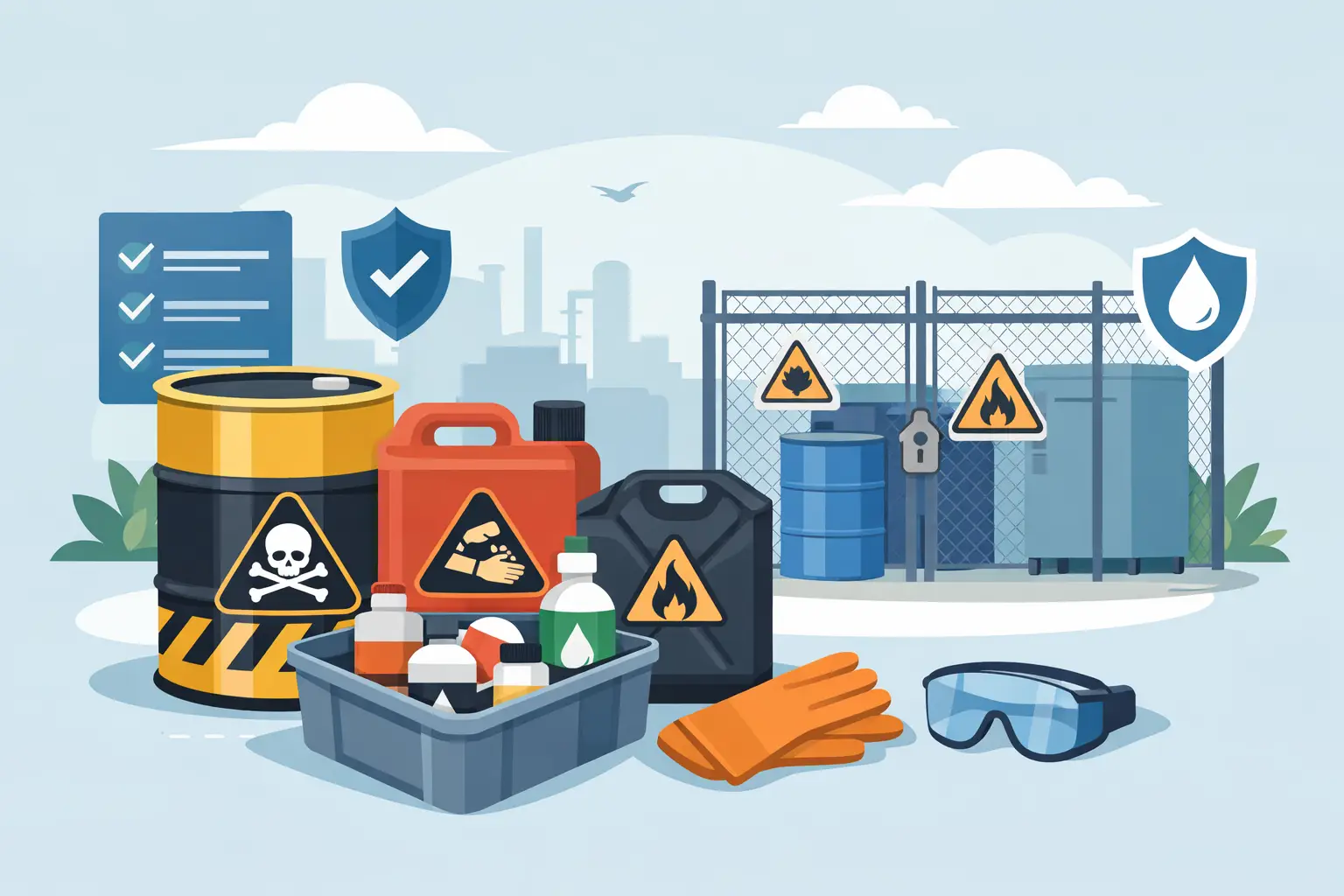
A leaking waste drum is rarely caused by one dramatic failure. More often, it starts with an unlabeled container, an incompatible liquid poured into the wrong bottle, or a full pail left without secondary containment. Knowing how to store chemical waste properly gives your team control before a small handling issue becomes an exposure, fire, release, or costly cleanup.
For facilities, warehouses, workshops, laboratories, and marine operations, chemical waste storage must be treated as an active safety process. The right container is only one part of the job. Waste also needs clear identification, chemical segregation, protected storage space, routine inspection, and a defined collection or disposal route.
Start by identifying the waste stream
Do not store waste based on what the container looks like or where it was generated. Identify what is in it first. Review the product label, Safety Data Sheet, process records, and any site waste profile information. If contents are unknown, treat the container as potentially hazardous and isolate it until a qualified person can determine its identity.
Waste streams may include used solvents, acids, alkalis, oily liquids, paint residues, contaminated absorbents, spent aerosols, batteries, chemical-contaminated PPE, and laboratory byproducts. Even waste that appears harmless can create a reaction when mixed with another material.
Keep different waste streams separate unless your approved waste procedure specifically permits consolidation. Mixing may generate heat, toxic vapors, pressure, or a flammable atmosphere. It can also make downstream disposal more complex and expensive.
How to store chemical waste in compatible containers
Use containers that are compatible with the waste and in sound condition. Compatibility matters because some chemicals can soften plastic, corrode metal, degrade seals, or react with container linings. A container that held a product previously is not automatically suitable for its waste, especially after the material has been mixed with other substances during use.
Choose a container with a secure, close-fitting lid and enough capacity to prevent overfilling. Leave appropriate headspace where temperature changes, vapor formation, or expansion may occur. Keep containers closed except when waste is actively being added. Open containers allow vapors to escape, invite contamination, and increase the chance of spills.
Never use food or drink containers for chemical waste. Avoid damaged drums, cracked jerrycans, swollen containers, missing caps, and containers with unreadable labels. Transfer compromised containers carefully into an approved overpack or replacement container, using suitable PPE and spill-control equipment.
For solid hazardous waste, use durable, sealable containers or lined drums that prevent dust, liquid drainage, and accidental contact. Contaminated rags, pads, socks, and other absorbents should be stored according to the chemical absorbed, not simply as general trash.
Label every container when waste is generated
A waste container without a clear label creates risk for every person who handles it next. Apply a durable label as soon as waste is first added. Do not rely on memory, temporary notes, or an unlabeled bottle stored “just for the day.”
Your site labeling procedure should typically identify the waste description, primary hazards, accumulation start date where required, and responsible department or contact. Use wording that clearly describes the contents, such as “Used flammable solvent,” “Waste acidic solution,” or “Oil-contaminated absorbent.” Avoid vague labels such as “waste,” “chemical,” or “miscellaneous.”
If local, state, federal, port, or client requirements prescribe specific wording, hazard symbols, or dates, follow those requirements. Waste regulations depend on the material, quantity, site type, and jurisdiction. A practical storage system should support regulatory compliance, but it should never replace review by your EHS team or approved waste contractor.
Segregate incompatible chemical waste
Chemical segregation prevents one leak from becoming a reaction. Store containers by hazard compatibility, not by container size or available shelf space. Flammable liquids need separation from ignition sources and oxidizers. Acids should be separated from bases, while oxidizing agents must be kept away from fuels, organic materials, and many solvents.
A simple “all waste in one corner” approach is not adequate for active industrial sites. Establish marked storage zones and use physical separation, compatible cabinets, or containment systems where appropriate. Consult Safety Data Sheets and your chemical compatibility chart when deciding where each waste stream belongs.
The following groups generally require careful segregation:
- Flammable and combustible liquid waste
- Corrosive acid and alkaline waste
- Oxidizing agents and reactive chemicals
- Toxic, environmentally hazardous, or unknown waste
Do not stack incompatible materials in the same spill pallet or place them where a single release could flow together. If space is limited, separate materials using dedicated containment units and clear signage rather than relying on staff to remember informal arrangements.
Use secondary containment for leaks and handling errors
Primary containers can fail. Secondary containment provides a controlled barrier for leaks, drips, and accidental overfills. Spill pallets, bunded trays, drum decks, and portable containment berms help prevent chemicals from reaching floors, drains, loading areas, soil, or waterways.
Select containment that is compatible with the chemicals stored and sized for the likely release scenario and applicable requirements. For drum storage, ensure the pallet or bund can hold the required volume and remains accessible for inspection. Keep rainwater, debris, and incompatible materials out of outdoor containment areas.
Position waste away from floor drains, traffic routes, heat sources, direct sunlight, and areas vulnerable to impact from forklifts or vehicles. Where vehicle movement cannot be avoided, use barriers, bollards, or a dedicated storage enclosure. A well-placed drum pallet is useful, but it cannot prevent damage from a reversing forklift.
Control fire, exposure, and environmental risks
Flammable waste needs storage appropriate for its flash point, volume, and site conditions. Use approved flammable liquid storage cabinets or dedicated hazardous-material storage areas where required, and keep ignition sources under control. Grounding and bonding may be necessary when transferring flammable liquids. Your procedure should reflect the chemical involved and the equipment used.
Corrosive waste should be stored where leaks can be contained without attacking nearby surfaces or containers. Ensure emergency eyewash and shower equipment is available where corrosive materials are handled, and keep access routes clear. For highly toxic or volatile waste, consider ventilation, restricted access, and exposure controls based on the hazard assessment.
Every waste storage point should have suitable spill-response materials nearby. Universal absorbents are useful for many routine releases, while chemical absorbents may be better for aggressive liquids. For oils and fuels near marine or drainage-sensitive areas, use oil-only absorbents and protect drains immediately. Keep waste response materials separate from clean stock so they can be deployed without delay.
Inspect storage areas on a set schedule
Chemical waste storage is not a set-and-forget task. Assign responsibility for routine checks and document them according to your site procedure. Daily visual checks may be appropriate in high-use accumulation areas, while formal weekly inspections are common for centralized storage areas.
Look for leaks, staining, corrosion, bulging, damaged labels, missing lids, overfilled containers, blocked access, full containment pallets, and signs that incompatible wastes have been placed together. Check that spill kits are complete and that emergency equipment remains accessible.
Correct issues promptly. A minor drip can often be handled with the right absorbent, replacement container, and disposal process. Leaving it until the next collection date can expose workers, damage floors, and turn a manageable release into a reportable incident.
Plan disposal before storage capacity becomes a problem
Safe storage includes knowing how and when waste leaves the site. Set accumulation limits that match your operational volume, storage space, and approved collection schedule. Do not wait until containers are overflowing or storage areas are full before contacting a licensed waste service provider.
Keep waste records organized and make sure personnel understand who can approve waste transfers, arrange collection, and sign relevant documentation. Train employees who generate waste as well as those who manage the storage area. The people closest to the process are often the first to notice an incorrect container, unusual odor, or change in waste appearance.
A dependable chemical waste area protects people, operations, and the environment at the same time. With compatible containers, clear labels, secondary containment, and ready spill-response supplies, your site is better prepared to manage routine waste safely and respond quickly when conditions change.