

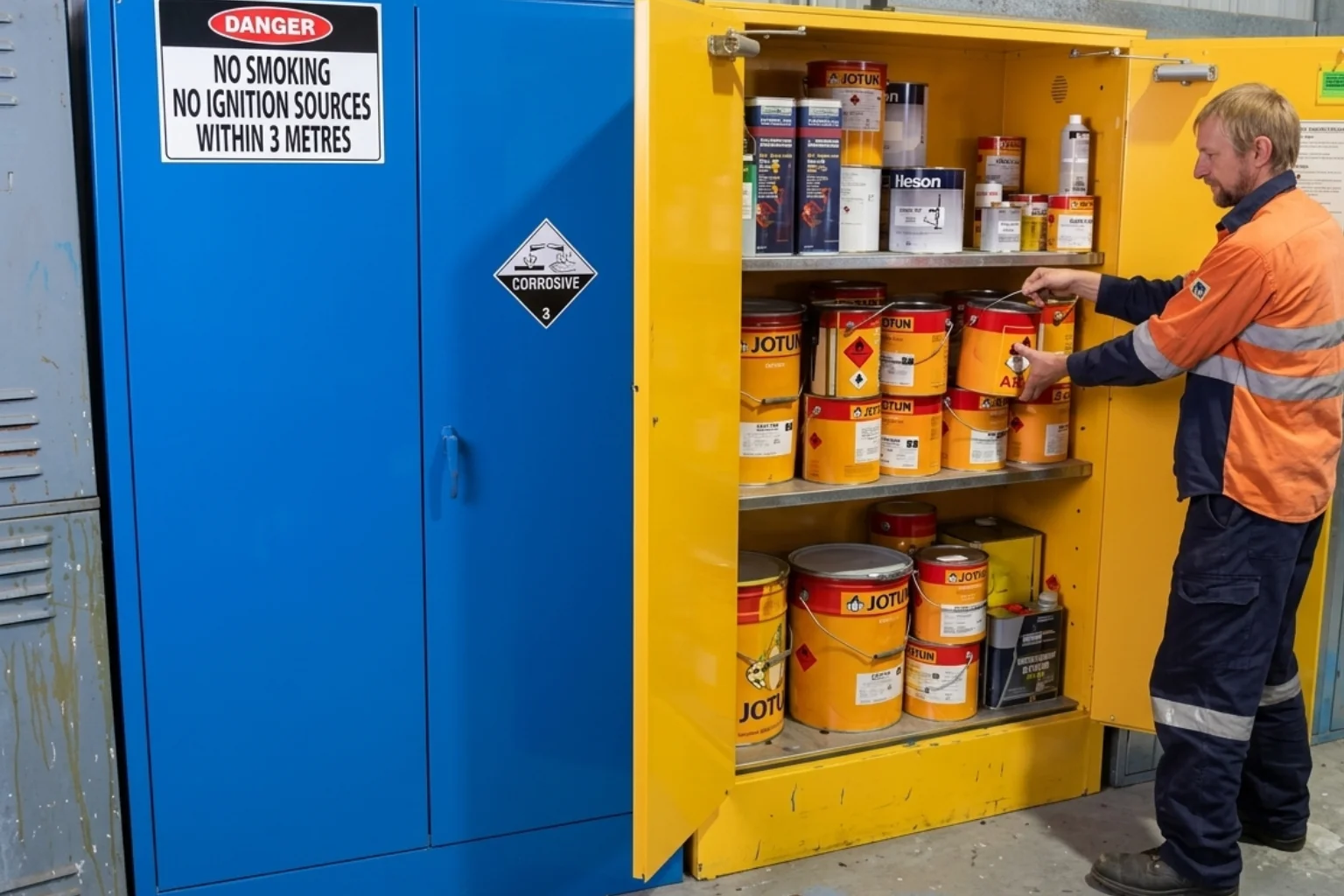
A leaking acid bottle on a crowded shop floor does not stay a small problem for long. The right safety cabinet for corrosive chemicals helps prevent container damage, reduces exposure risk, and keeps storage organized for faster, safer handling during routine operations and emergencies.
For procurement teams, EHS managers, and site supervisors, the cabinet itself is not the only decision. Material compatibility, internal sump design, ventilation approach, load capacity, and day-to-day usability all affect whether a cabinet supports safe operations or becomes another compliance gap. A cabinet that looks suitable at first glance can perform poorly if it is matched to the wrong chemicals, installed in the wrong location, or overloaded with mixed containers.
What a safety cabinet for corrosive chemicals is meant to do
A corrosive storage cabinet is designed to isolate acids or alkalis from the wider workplace, contain minor leaks, and protect containers from impact, mishandling, and environmental exposure. In practical terms, it gives your team a controlled storage point instead of leaving aggressive liquids on benches, open shelving, or general-purpose cabinets.
That matters because corrosives create two kinds of risk at once. There is the obvious personnel hazard from splashes, fumes, and contact burns, and there is also the asset and infrastructure risk. Corrosive liquids can attack shelving, flooring, nearby packaging, and even other stored chemicals if segregation is poor. A properly selected cabinet helps control both.
For many facilities, this is also a workflow decision. When corrosives are stored in a dedicated cabinet near the point of use, teams spend less time moving containers across the site. That can reduce handling incidents, especially in labs, maintenance workshops, process plants, and warehouses with frequent replenishment activity.
Not all corrosive cabinets are the same
The first mistake buyers make is assuming any hazardous storage cabinet will do the job. It will not. Corrosives need a cabinet built with materials that can tolerate the specific products you store. Depending on the application, that may mean powder-coated steel with corrosion-resistant features or polyethylene construction for higher chemical resistance.
Steel vs. polyethylene
Steel cabinets are common in industrial settings because they are durable, secure, and well suited to harsh operational environments. They work well when the stored chemicals and container condition are compatible with the cabinet finish and interior design. They also tend to integrate easily into existing storage layouts.
Polyethylene cabinets are often preferred for more aggressive acids or alkalis because the material itself resists corrosion. They are especially useful where splash risk is higher or where users want an extra margin of protection against cabinet degradation over time. The trade-off is that polyethylene models may differ in structural feel, configuration, and load profile compared with steel units.
The right choice depends on your chemical inventory, container sizes, storage duration, and handling frequency. If your site stores concentrated acids, compatibility should drive the decision more than cabinet appearance or price.
Capacity and container format
Cabinet size should match actual usage, not just available floor space. Small facilities may only need a compact under-counter or low-profile unit for limited volumes. Larger operations often need full-height cabinets that can handle multiple container types, including jerry cans or larger process bottles.
Oversizing can be wasteful if it encourages mixed storage or leaves chemicals sitting too long. Undersizing creates the opposite problem, with containers being left outside the cabinet when deliveries arrive or production demand increases. A realistic assessment of average stock, peak stock, and replenishment timing usually leads to the best result.
Key features that deserve close attention
A cabinet for corrosives should be evaluated as working equipment, not just static furniture. Small design differences can have a big effect on inspection, cleaning, and spill control.
Spill containment and sump capacity
An integrated leak-proof sump is one of the most important features. If a bottle fails, the cabinet should retain the liquid rather than letting it spread onto the floor. Check that the sump capacity is appropriate for the container sizes being stored and that it can be cleaned without unnecessary difficulty.
Removable shelves can also help, especially if they are designed to direct drips downward and allow straightforward wipe-down during maintenance.
Security and access control
Lockable doors support controlled access and help reduce casual handling by unauthorized staff. In shared work areas, that is not a minor feature. It helps procurement, EHS, and supervisors maintain accountability over what is stored, who uses it, and when stock levels change.
Door design matters too. Clear-opening doors, reliable hinges, and handles that work well with gloves improve routine use. If a cabinet is awkward to open, teams are more likely to leave containers outside it.
Labels and visibility
A corrosive cabinet should be clearly identified so staff and contractors can recognize the hazard immediately. High-visibility labeling supports safer storage and faster emergency response. It also helps visiting personnel, including maintenance teams and inspectors, understand the storage purpose at a glance.
Ventilation considerations
Ventilation is one of the most misunderstood points. Some sites assume every chemical cabinet must be vented. In reality, it depends on the chemical characteristics, the cabinet design, and site risk assessment. Improper ventilation can sometimes reduce containment performance or create other issues if it is not engineered correctly.
If corrosive vapors are a concern, review the chemical safety data and your internal controls before deciding on a vented setup. This is an area where a product-led discussion with a knowledgeable supplier saves time and avoids buying the wrong configuration.
Placement matters as much as specification
Even the best cabinet underperforms if it is installed in the wrong place. Corrosives should be stored in a location that is dry, accessible, and protected from impact, excessive heat, and unnecessary traffic. Teams need enough clearance to open doors fully and remove containers safely.
Keep the cabinet close enough to the work area to reduce carrying distance, but not so close that it interferes with exits, emergency equipment, or active production zones. If the storage point creates congestion, incidents become more likely during busy shifts.
Segregation is another priority. Corrosives should not be stored alongside incompatible materials simply because cabinet space is available. Acids and alkalis may need separation, and corrosives should never be mixed casually with flammables or general maintenance chemicals. Good storage layout supports good chemical discipline.
Buying for compliance and daily use
Many purchasing decisions focus heavily on the day of inspection. That is understandable, but daily use is what really tests a cabinet. A unit that meets site requirements on paper but slows down operators, is difficult to clean, or fails to accommodate actual containers will create workarounds.
That is why commercial buyers should look at cabinet selection through both a compliance lens and an operations lens. Ask practical questions. What containers are actually being stored? How often are they accessed? Are staff decanting liquids nearby? Is there a spill kit and eyewash provision within the broader response setup? Will the cabinet still suit the site if inventory changes next quarter?
A strong purchasing decision usually connects the cabinet to the full storage and response process, not just the shelf where chemicals sit. In many facilities, that includes secondary containment, emergency drench equipment, absorbents, and clear hazard identification across the area.
When a standard cabinet is not enough
There are cases where a standard corrosive cabinet may not fully solve the problem. High-volume storage, unusual container geometry, highly aggressive chemical profiles, or mixed operational demands can require a more specialized approach. Some sites need multiple smaller cabinets by task area instead of one large central cabinet. Others may need a bundled solution that combines cabinet storage with nearby spill control and PPE access.
This is where lead time and stock availability matter. Safety equipment is often ordered because a delivery is due, an audit is approaching, or an identified gap needs to be closed quickly. Buyers typically do not have the luxury of long procurement cycles or trial-and-error purchasing. Fast supply and practical technical guidance are part of the product value.
For industrial buyers who need dependable availability and straightforward specification support, Ocean Safety Supplies serves as a practical source for corrosive storage solutions alongside spill control and emergency response equipment. That kind of category breadth can simplify procurement when the storage cabinet is only one part of a wider site safety requirement.
How to make the right decision faster
Start with the chemical list, not the cabinet brochure. Confirm whether you are storing acids, alkalis, or both, review concentrations, and check container sizes and quantities. Then assess compatibility, required capacity, location constraints, and user access.
After that, compare cabinet construction, spill containment design, labeling, locking, and any ventilation requirement. A lower-priced cabinet is not automatically better value if it needs early replacement, limits safe handling, or fails to match the chemicals in use.
The best cabinet is usually the one that fits your chemical risk, your floor plan, and your operating routine without creating extra friction for the team. When storage is easy to use, easier to inspect, and easier to manage, compliance tends to follow. That is a solid place to be when the next delivery arrives and the next shift takes over.