

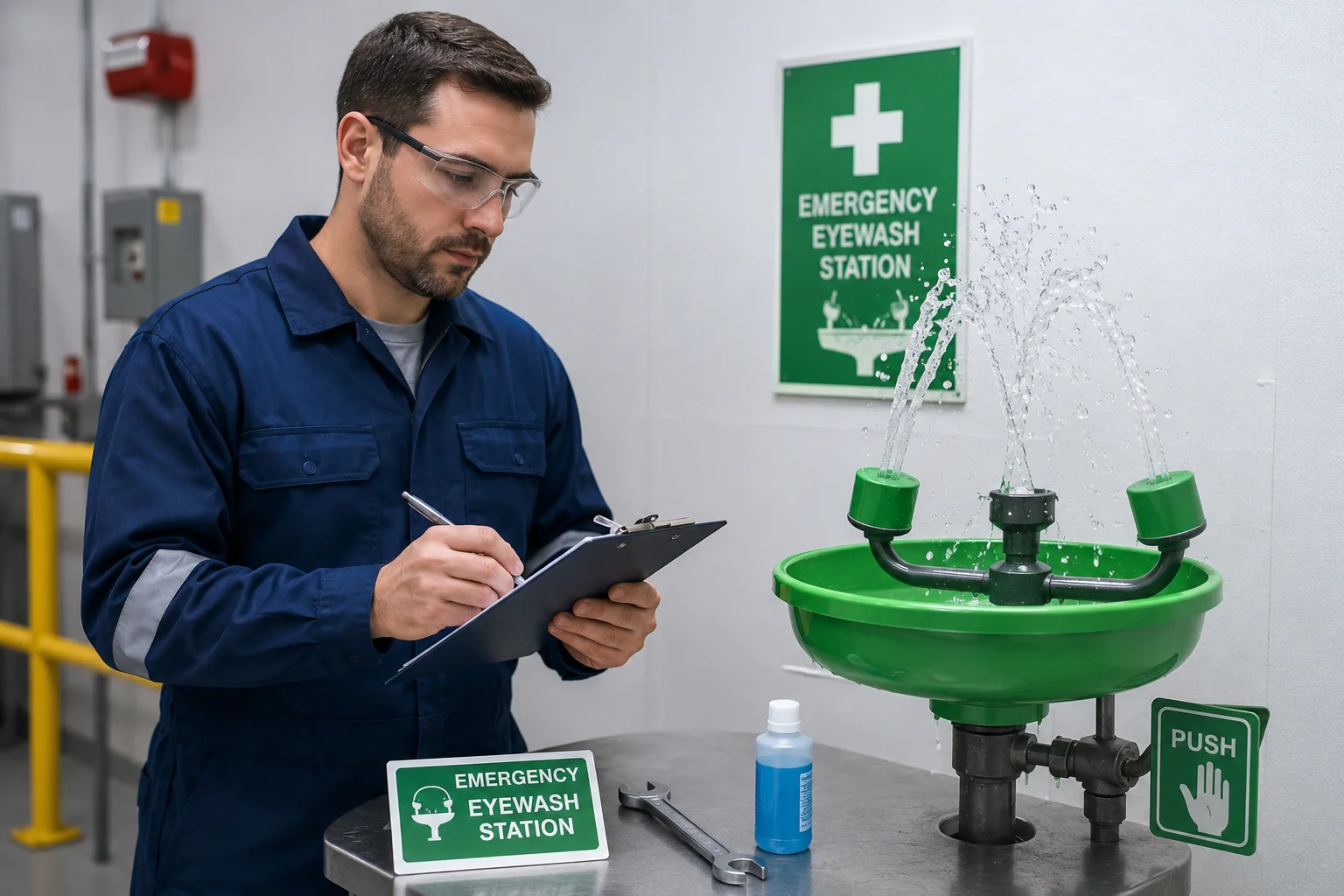
An eyewash station is only useful if it delivers clean, adequate water the moment a worker needs it. Knowing how to maintain eyewash stations is therefore a core readiness task for facility managers, EHS teams, maintenance crews, laboratories, warehouses, and industrial sites. A unit can look clean and still fail because its water supply is shut off, its spray heads are blocked, or its access route is obstructed.
A practical maintenance program keeps emergency equipment functional, supports workplace compliance, and gives personnel confidence that the station will work during a chemical splash incident. The right schedule depends on whether the equipment is plumbed, self-contained, portable, or integrated with an emergency shower, but the operating principle is the same: inspect it, activate it, clean it, document it, and correct faults without delay.
How to Maintain Eyewash Stations on a Working Site
Start by assigning ownership. Eyewash stations often become a shared responsibility between operations, facilities, and EHS, which can mean no one checks them consistently. Designate a trained person or team for weekly checks, keep a visible inspection record at each station, and ensure a backup person covers leave periods and shift changes.
For plumbed eyewash stations, activate the unit at least weekly. This flushes stagnant water from the line and confirms that the valve opens properly. The water should flow from both heads in a consistent pattern, without excessive spray, sputtering, discoloration, or debris. Let it run long enough to clear the supply line according to your site procedure and equipment instructions.
Self-contained or gravity-fed units require a different routine. Their solution must be changed, preserved, and cleaned according to the manufacturer’s stated interval. Do not assume a filled tank is ready for use. Check the solution expiration date, water level, additive ratio where applicable, and condition of the reservoir. A contaminated or expired portable unit can create a second hazard during an emergency.
Check Access Before Checking the Equipment
A technically sound station still fails its purpose if an injured employee cannot reach it quickly. Emergency eyewash equipment should be on the same level as the hazard, clearly identified, and accessible without passing through doors, stairs, stored materials, or equipment traffic. Many facilities use the benchmark of reaching the unit within 10 seconds, but actual placement should always reflect the specific chemicals, work process, and risk assessment.
During every inspection, walk the access path as an employee would. Look for pallets, carts, drums, cables, temporary barriers, parked forklifts, or locked gates. Check that the safety sign is visible and that lighting is sufficient for use during a power interruption or low-visibility condition.
The activation handle, foot pedal, or push plate must be easy to reach and operate. If a dust cover is fitted over the spray heads, it should open automatically when the station is activated. Covers that stick, crack, or remain closed need immediate replacement.
Inspect Water Flow, Temperature, and Drainage
Weekly activation is more than a quick visual test. Observe the quality of the rinse. Both streams should cover the eye and face area without creating an uncomfortable force that prevents a user from holding their eyes open. Water should start flowing promptly after activation and remain on without the user having to keep a hand on the control.
Water temperature matters because an eyewash rinse may need to continue for at least 15 minutes. Water that is excessively cold can discourage a worker from completing the rinse. Water that is too hot can worsen an injury. Many emergency eyewash programs use tepid water, commonly within a range of 60 to 100 degrees Fahrenheit, but verify the applicable standard, local requirements, and the equipment manufacturer’s specifications for your facility.
Also check the basin and drainage area. A blocked drain can cause overflow, slippery floors, water damage, and employee reluctance to test the unit. If the eyewash drains into a system that could receive contaminated rinse water, review the site’s environmental and wastewater procedures. The appropriate response depends on the chemicals handled nearby and local disposal requirements.
Clean the Station Without Damaging It
Eyewash bowls, spray heads, activation handles, signs, and surrounding walls collect dust, chemical residue, and general workplace grime. Clean these surfaces as part of routine housekeeping using products that will not corrode the unit or leave residues around the spray heads. Follow the manufacturer’s cleaning guidance, especially for stainless steel, plastic components, and self-contained reservoirs.
Never cap, tape over, or modify the spray heads to keep them clean. Use manufacturer-approved protective covers designed to open during activation. Improvised coverings can prevent water flow when seconds matter.
Where the site has airborne dust, salt exposure, oil mist, or corrosive vapors, increase inspection frequency. Marine operations, chemical processing areas, outdoor yards, and heavy manufacturing environments may need more frequent cleaning than a climate-controlled laboratory. Maintenance intervals should match operating conditions, not simply a calendar reminder.
Use a Simple Inspection Record
Documentation turns a maintenance routine into a controlled safety process. A tag or digital log should identify the station location, equipment type, date and time of inspection, inspector name, and any corrective action taken. It should also record whether access was clear, water flow was satisfactory, covers opened correctly, and the unit was cleaned.
A useful weekly check can include these four distinct actions:
- Confirm the access route, signage, and lighting are clear and visible.
- Activate the station and verify adequate flow from both spray heads.
- Inspect the valve, basin, covers, plumbing connections, and drain for leaks or damage.
- Clean the unit and record defects, repairs, or replacement needs.
For self-contained stations, add solution expiration, fluid level, reservoir condition, and scheduled change date to the checklist. If a fault is found, mark the unit out of service only when an alternative compliant station remains available for the affected work area. Otherwise, control or stop the related chemical work until emergency rinsing capability is restored.
Schedule More Than Weekly Flushing
Weekly activation is essential for many plumbed units, but it is not the complete program. Schedule periodic detailed inspections to examine mounting hardware, supply valves, pipe corrosion, valve performance, drain condition, and the integrity of any tempered-water system. Annual evaluations are a practical opportunity to confirm that the station still matches the hazards present in the area.
This matters when operations change. A station selected for occasional cleaning chemicals may not be adequate after a new process introduces corrosives, solvents, powders, or high-volume chemical transfer. Review station capacity, placement, and compatibility whenever new chemicals, production lines, storage layouts, or work areas are introduced.
Combined emergency shower and eyewash units need their own checks. Test the shower valve, shower head, pull rod, water pattern, and drainage in addition to the eyewash components. Make sure the shower can operate continuously and that its water supply is not restricted by a closed isolation valve or damaged piping.
Train Employees to Use the Equipment
Maintenance cannot compensate for unfamiliar users. Employees working around hazardous materials should know where the nearest eyewash station is, how to activate it, and why they should begin flushing immediately after an exposure. They should also understand that medical evaluation may still be required after rinsing, depending on the material involved and the site’s emergency procedures.
Training should be practical. During inductions, toolbox talks, and drills, show workers the clear route to the station and demonstrate the activation control. Do not turn emergency equipment into a storage point or a noticeboard. Keep the area obvious, open, and ready for use at every shift.
Reliable eyewash readiness comes from routine discipline rather than a last-minute inspection before an audit. For facilities managing multiple hazards and locations, standardize the checklist, keep critical replacement parts available, and source equipment that fits the site’s actual exposure risks. Ocean Safety Supplies supports industrial teams with emergency response and workplace safety equipment selected for dependable day-to-day readiness.