

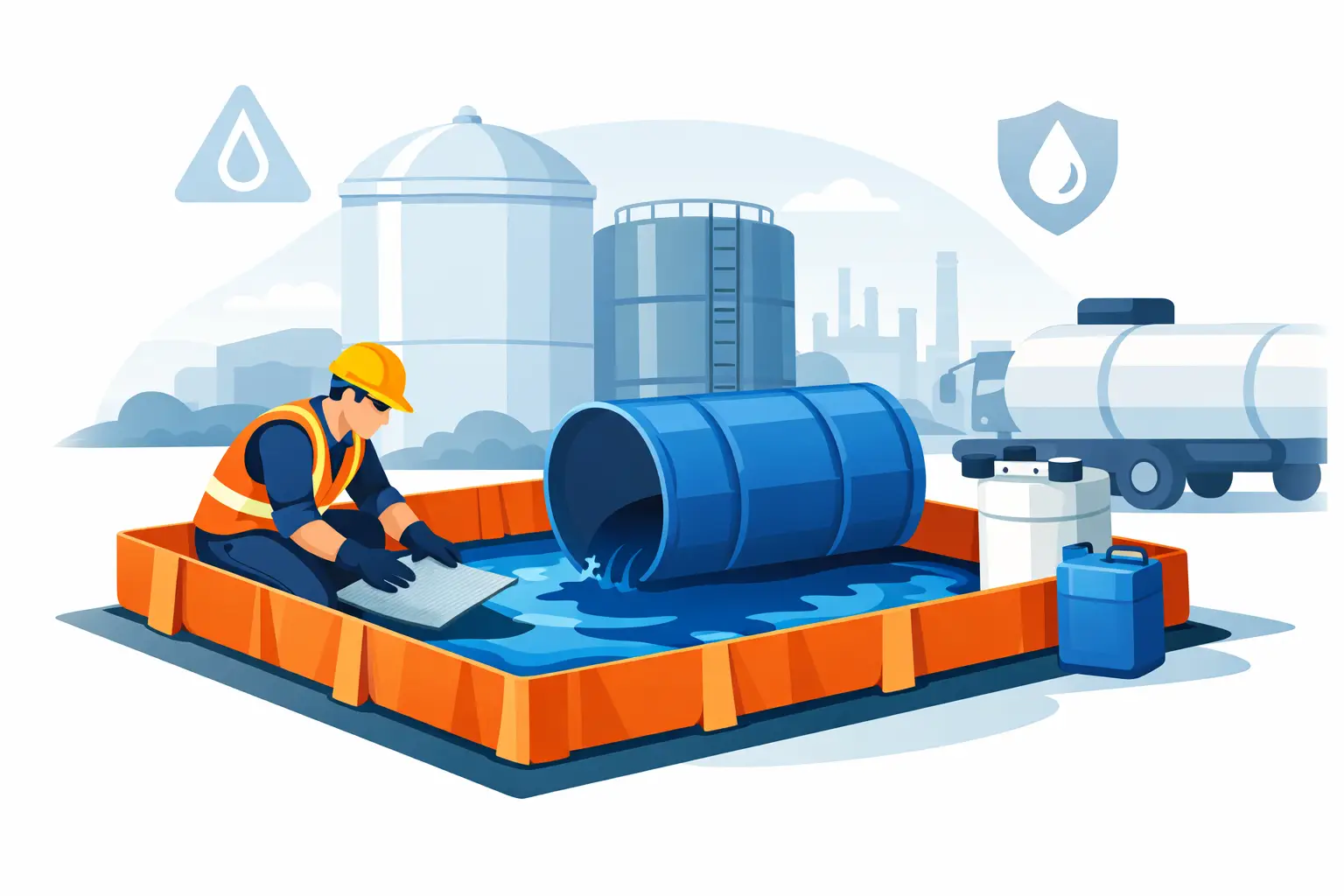
A leaking drum, hose connection, or transfer pump can turn a clean work area into a spill response zone within minutes. Knowing how to use portable bunds gives operations teams a fast way to create temporary secondary containment around liquid handling activities, helping prevent hazardous materials from reaching drains, soil, traffic areas, or neighboring work zones.
Portable bunds are not a substitute for safe handling procedures or permanent containment where it is required. They are a practical, deployable control for maintenance work, temporary storage, refueling, decanting, emergency response, and other activities where the spill risk moves with the job.
What a Portable Bund Does
A portable bund is a flexible containment barrier that creates a contained floor area for liquids. Most designs use chemical-resistant fabric with foam, collapsible, or rigid sidewalls. When positioned correctly, the bund holds leaked or spilled liquid until it can be absorbed, recovered, or transferred into a suitable waste container.
For facility managers and EHS teams, the main advantage is speed. A portable bund can be brought to the point of work rather than moving drums, equipment, or vehicles to a fixed containment area. This makes it useful for planned work and unplanned incidents, particularly where access is limited or operations cannot be shut down for long.
The right product depends on the material being handled, expected liquid volume, equipment footprint, and traffic conditions. A low-wall foam bund may be suitable for stationary drums and small containers. A drive-over bund with reinforced edges may be needed when forklifts, service vehicles, or mobile equipment must enter the containment area.
Choose the Correct Bund Before Deployment
Capacity is the first decision. The bund must be large enough to contain the maximum credible spill, not merely the volume normally expected during a task. Consider the largest container, hose, tank, or component that could fail, as well as rainwater if the bund will be used outdoors.
Check the bund’s chemical compatibility against the liquid involved. Oils, fuels, coolants, solvents, acids, alkalis, and other chemicals can affect fabrics and coatings differently. If the material is unknown, consult the safety data sheet and your site chemical inventory before selecting a containment solution.
Footprint matters just as much as capacity. Allow enough clear space for drums, pumps, dispensing equipment, absorbents, and personnel to work without stepping over the walls or crowding containers against the edge. When a pallet jack or forklift is required, select a bund designed for the wheel load and access method. Do not assume a lightweight spill tray can support vehicle traffic.
Also inspect the work surface. Portable bunds perform best on relatively flat, clean ground. Sharp objects, exposed bolts, broken concrete, or debris can puncture the base and compromise containment. On rough or abrasive surfaces, use an appropriate protective groundsheet where compatible with the bund system.
How to Use Portable Bunds Step by Step
Before starting a transfer, maintenance task, or cleanup operation, establish the containment area first. It is far easier to place equipment into a clean bund than to position a bund around an active leak.
- Inspect the bund before use. Unfold it fully and check the base, seams, corners, wall supports, and drain fittings for cuts, wear, contamination, or damage. Remove it from service if integrity is in doubt.
- Prepare the location. Sweep away stones, metal fragments, and other sharp debris. Keep the bund clear of floor drains, trench drains, doorways, and high-traffic routes whenever possible.
- Deploy and shape the walls. Lay the bund flat, then raise or position the sidewalls according to the design. Foam-wall models generally rise when liquid enters, while bracketed or rigid-wall models may need to be assembled and secured.
- Place equipment carefully. Set drums, containers, pumps, or machinery within the containment area. Keep valves, bungs, couplings, and likely leak points inside the bund, not over the edge.
- Stage spill response materials nearby. Keep compatible absorbent pads, socks, pillows, drain covers, waste bags, and personal protective equipment within reach. The bund contains the liquid, but it does not remove the source of the leak.
- Monitor throughout the task. Check hoses, fittings, liquid levels, and bund walls during transfers and maintenance. Stop work immediately if the bund approaches its usable capacity or if liquid begins to migrate outside the contained area.
This sequence is especially relevant during drum dispensing. A drum may sit inside the bund while a pump or tap is fitted, but the discharge container and hose connection must also remain within the containment footprint. A common failure is protecting the drum while leaving the receiving container outside the bund.
Use Portable Bunds During Emergency Response
During a spill, personnel safety comes first. Identify the material where possible, isolate ignition sources for flammable liquids, use the required PPE, and follow the site’s emergency response procedure. If the release is beyond the capacity of available equipment or presents an immediate danger, escalate to the appropriate emergency responders.
For a manageable liquid spill, position the portable bund to stop migration at the source or to create a controlled recovery area. If equipment is still leaking, it may be possible to place a small container, damaged component, or leaking drum inside the bund after the immediate flow is controlled. Use absorbent socks to slow liquid movement while the bund is being deployed.
Do not drag a bund through a spill if doing so will spread contamination. Where practical, contain the leading edge of the spill first, protect drains, and then move the source into containment. This approach reduces the chance that a recoverable leak becomes a larger environmental release.
Manage the Liquid Inside the Bund
Once liquid is contained, remove it safely and in accordance with site waste procedures. Small quantities may be absorbed using compatible pads, rolls, pillows, or granular absorbents. Larger volumes may need to be pumped or vacuumed into labeled recovery drums or tanks.
Avoid overfilling the bund while waiting for cleanup. Its stated capacity is not a target operating level. Leave a safety margin for personnel movement, uneven surfaces, and further leakage. If rainwater has accumulated in an outdoor bund, inspect it for contamination before any disposal decision is made. Water that has contacted oil, chemicals, or residues should be managed as potentially contaminated waste until assessed under your environmental procedures.
Never drain liquid from a portable bund directly to a stormwater system, sanitary drain, or open ground unless your organization has confirmed that it is permitted and uncontaminated. Drain protection should be part of the response plan from the beginning, not an afterthought once a spill reaches the edge of the work area.
Cleaning, Storage, and Routine Inspection
After use, decontaminate the bund using a method compatible with both the spilled material and the bund fabric. Collect wash water and residues where required. Folding and storing a contaminated bund can transfer hazardous residues to vehicles, storage rooms, and the next job site.
Allow the bund to dry fully before folding it along the manufacturer’s intended lines. Store it in a clean, dry, accessible location with spill response equipment, rather than in a remote storeroom. A portable bund is most valuable when the team can reach it quickly.
Include portable bunds in routine inspection programs. Check for punctures, brittle material, degraded seams, missing supports, and chemical staining. Record inspections where your site procedures require it, particularly for equipment assigned to hazardous-material response or regulatory compliance activities.
Build Portable Containment Into Normal Work
Portable bunds work best when teams treat them as standard task equipment, not as equipment reserved for major spills. Use them beneath temporary pumps, during oil changes, under mobile generators, around leaking equipment awaiting repair, and during drum transfer or chemical decanting. The right deployment can reduce cleanup time, protect drainage systems, and show that spill prevention is being managed at the point of risk.
For operations that need dependable containment, Ocean Safety Supplies can help match portable bund capacity, wall style, and chemical compatibility to the task. Keep the selected bund close to the work, keep absorbents ready, and make containment the first setup step before liquid handling begins.