

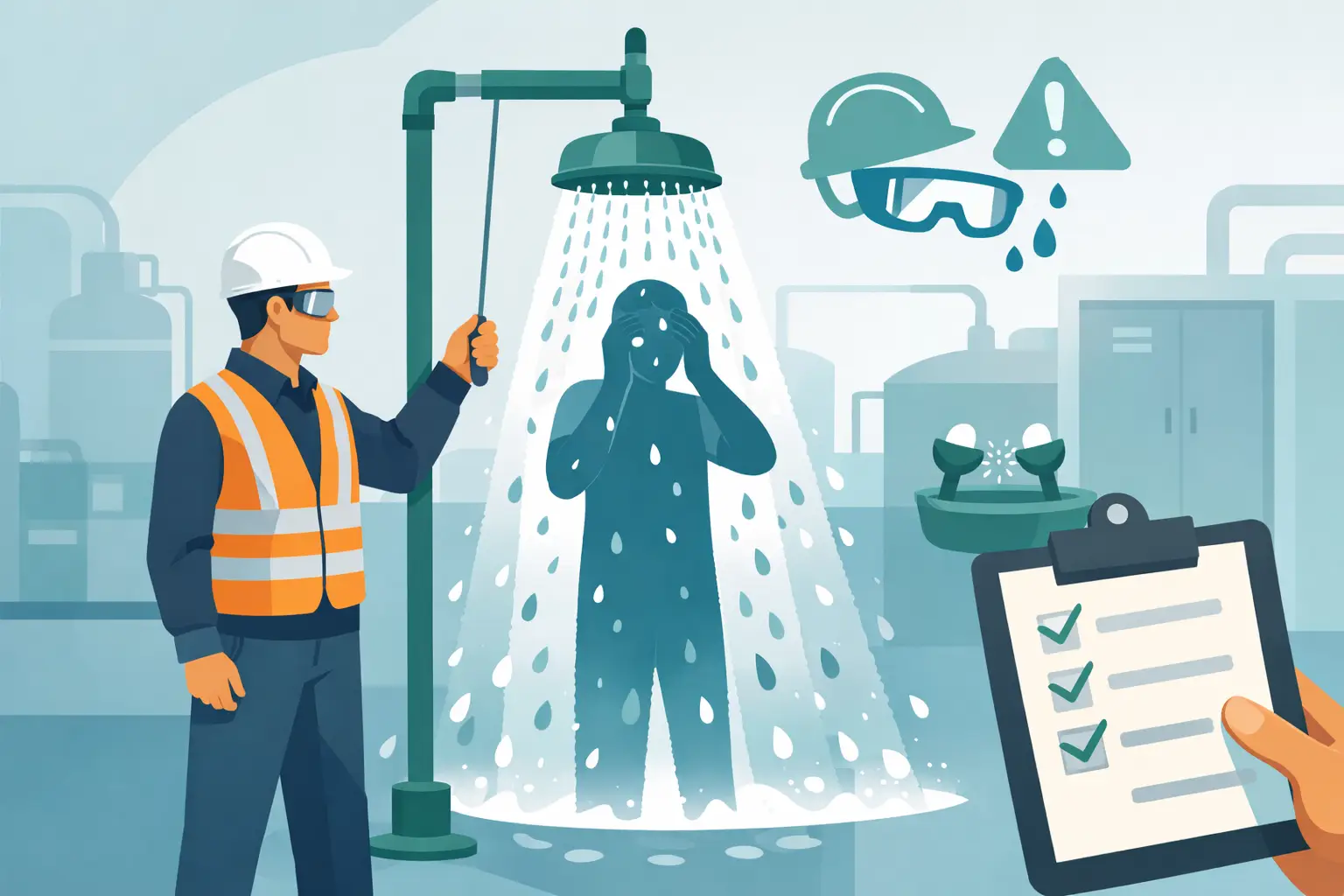
A safety shower is only useful if it delivers the required water immediately, at the right flow and temperature, when someone has been exposed to a hazardous substance. A unit that looks clean but has a stuck valve, blocked spray head, corroded pipework, or excessively hot water can create a serious emergency response failure. That is why safety shower testing should be treated as a scheduled operational control, not a box-ticking exercise.
For facility managers, EHS officers, maintenance teams, and laboratory supervisors, the objective is straightforward: confirm that emergency drench equipment is accessible, functional, and ready for a full decontamination response. The best testing routine combines frequent activation checks, documented inspections, prompt repairs, and suitable replacement equipment or parts when a unit no longer performs as required.
What Safety Shower Testing Should Confirm
A proper test does more than prove that water comes out. It confirms that the shower can be reached without delay, that the valve opens fully, and that the water pattern covers the user effectively. It also identifies gradual problems that are easy to miss during normal operations, including mineral buildup, sediment, leaks, low pressure, damaged signage, and obstructions created by stored materials.
For plumbed emergency showers, widely used ANSI/ISEA Z358.1 guidance calls for equipment to be located so it can be reached within 10 seconds by an injured person. The standard also sets performance criteria for flow, spray coverage, flushing duration, and tepid water. Your site may be subject to additional federal, state, local, client, or industry requirements, so the applicable rules, risk assessment, and manufacturer instructions should always define the final testing program.
A drench shower must provide enough water for a person to remove contaminants from the body quickly. In many applications, that means sustaining a flow of at least 20 gallons per minute for 15 minutes. Low flow may leave hazardous chemicals on clothing or skin. Excessively high pressure can make it difficult for an injured person to remain under the water stream, particularly if they are disoriented or in pain.
Water temperature also matters. Water that is too cold can discourage a user from flushing for the required duration. Water that is too hot can worsen an injury. Where a site handles corrosives, solvents, or other materials with serious exposure risks, a properly selected tempering solution and reliable water supply are central to emergency readiness.
Weekly Activation Checks for Plumbed Units
For most permanently plumbed safety showers, weekly activation is a practical minimum and aligns with commonly applied ANSI/ISEA guidance. The purpose is to flush stagnant water, verify valve operation, and expose visible issues before an emergency occurs. A short test may be sufficient for this routine check, provided it activates the equipment properly and is recorded.
Before activation, make sure the discharge area will not create a slip, flooding, contamination, or electrical hazard. Some sites use purpose-designed drainage, while others need a controlled collection or cleanup arrangement. Never direct test water into a drain if it may have contacted chemicals or contaminated surfaces. Follow the facility’s wastewater and environmental procedures.
During the test, verify that the pull rod, push plate, or other actuator is clearly visible and can be operated in one motion. The valve should open promptly and remain open without the operator having to hold it. Observe whether the water reaches the expected spray pattern and whether there are leaks at pipe joints, valves, fittings, and the shower head.
The surrounding access route deserves the same attention. Pallets, drums, cartons, mobile equipment, and temporary work can slowly reduce access to an emergency station. Keep the path clear, ensure signage remains visible, and confirm adequate lighting. A shower positioned behind a locked door, stock rack, or process barrier is not ready for an emergency, regardless of its condition.
Monthly and Annual Inspection Tasks
Weekly activation is not a substitute for a more detailed inspection. A monthly review can examine conditions that are not obvious during a quick flush, such as damaged pipe supports, corrosion, missing safety identification, defective floor drainage, or changes in nearby hazards.
An annual inspection should be more comprehensive and should confirm the unit’s performance against the relevant standard, manufacturer requirements, and site specifications. This may include checking flow rate, spray coverage, water temperature, valve operation, pipe condition, drainage, and accessibility. Annual work is also the right time to review whether the shower’s location still suits the hazards on site.
For example, a manufacturing line may have added a new chemical dosing point, or a warehouse may have changed its storage layout. In those cases, an existing emergency shower may no longer be within a practical travel distance. A new or relocated unit may be needed. The correct solution depends on the chemical hazards, floor plan, water infrastructure, occupancy, and the likelihood of simultaneous incidents.
Self-contained or portable safety showers require a different approach. Their tank level, water quality, charging method, temperature control, battery or alarm functions, and service interval must be checked according to the manufacturer instructions. Unlike plumbed units, these systems may need regular water replacement and disinfection controls. They can be a practical solution where permanent plumbing is not available, but they should not be selected solely for convenience if their capacity or maintenance demands do not match the hazard assessment.
A Practical Test Record That Supports Compliance
A test record gives supervisors evidence that emergency equipment has been checked consistently and makes repeat failures easier to spot. The record does not need to be complicated, but it should be specific enough to support corrective action and audit review.
Include the unit identification and location, test date and time, name of the person completing the test, and the condition observed. Record whether access was clear, the valve opened fully, water flowed correctly, leaks were present, signage was visible, and any corrective work was required. If a defect is found, document the immediate risk control, the person responsible for repair, and the completion date.
A simple pass or fail system can work well for routine checks, but avoid recording a pass when there is a known unresolved issue. If a shower has poor flow, obstructed access, or a faulty valve, mark it clearly, escalate it, and arrange repair. Depending on the severity of the fault and the materials handled nearby, the affected area may need temporary controls, alternative emergency equipment, or suspended chemical work until readiness is restored.
Common Failures Found During Testing
Most safety shower problems develop gradually. Mineral deposits can restrict the shower head. Corrosion can affect valves and pipework. Temperature control valves can drift out of range. Infrequently used equipment may release discolored water or have sluggish valve movement during activation.
Operational failures are just as common. A shower can be blocked by inventory, used as a hanging point for hoses or PPE, or hidden behind a changed layout. Signage may fade, and new employees may not know where emergency equipment is located. Testing should therefore include a quick review of the complete emergency response area, not just the shower hardware.
Where a safety shower is combined with an eyewash or eye/face wash station, test each component individually. The required flow, coverage, and activation needs differ. Do not assume that a working drench shower means the eyewash function is ready, or vice versa.
Keep Repairs and Replacement Practical
When a test reveals a defect, speed matters. Small parts such as valves, shower heads, actuators, signs, drain covers, and temperature-control components should be sourced to suit the equipment model and service environment. For heavily corroded, outdated, or repeatedly unreliable units, replacement can be more cost-effective than repeated repairs.
Choose emergency showers based on the actual hazard and operating conditions. Indoor laboratories may need compact combination stations. Industrial process areas may require high-visibility, corrosion-resistant units with appropriate drainage. Remote or temporary worksites may need self-contained equipment supported by a disciplined maintenance program. Ocean Safety Supplies can support buyers with emergency shower and eyewash equipment suited to routine compliance needs and demanding industrial environments.
A scheduled test is a small operational task, but it protects a critical response capability. Give each shower a clear owner, keep the route open, document every check, and act immediately on defects. When an exposure occurs, no one should have to wonder whether the water will flow.