

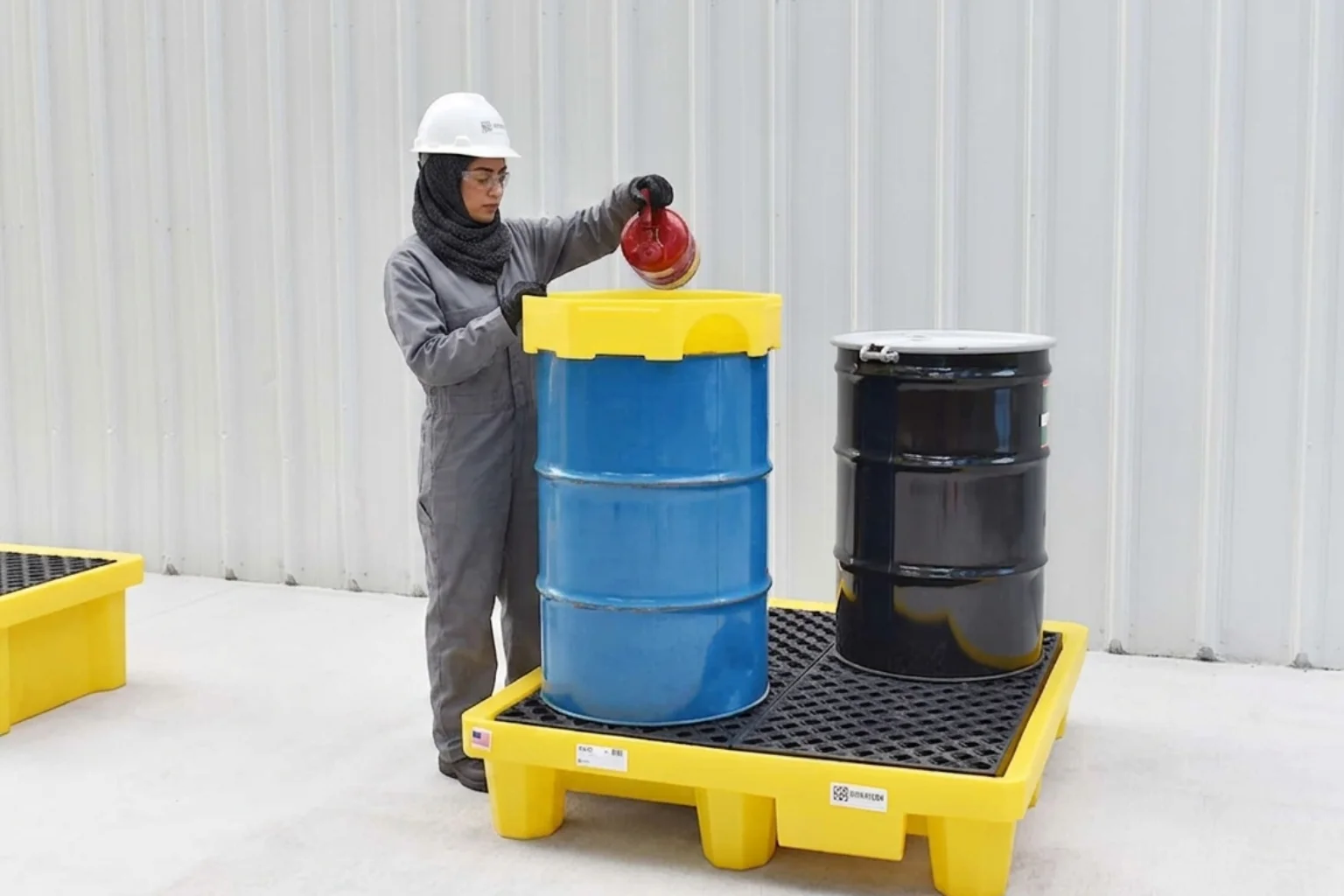
A leaking drum rarely gives you much warning. One damaged base ring, one overfilled container, or one forklift impact can turn routine storage into a cleanup, a reporting issue, and a production delay. That is why a drum spill containment pallet is not just a storage accessory – it is a control measure that helps protect people, floors, inventory, and the surrounding environment.
For warehouses, plants, workshops, laboratories, and marine operations, the right pallet supports daily handling while providing secondary containment where spills are most likely to happen. It also helps teams store hazardous liquids more responsibly without slowing down operations. For busy procurement and EHS teams, the real question is not whether you need one. It is which type fits your drums, your handling method, and your site conditions.
What a drum spill containment pallet actually does
A drum spill containment pallet is designed to hold drums above a sump that captures leaks, drips, and small spills before they spread across the work area. In practical terms, it creates a controlled storage point for oils, chemicals, solvents, fuels, and other regulated liquids.
That matters for more than housekeeping. Once liquids reach a floor drain, loading bay, or outdoor runoff path, the incident becomes more serious. Cleanup costs rise quickly. Slip hazards increase. Damaged packaging can contaminate adjacent stock. In regulated workplaces, poor secondary containment can also create compliance issues that are easy to avoid with the right setup.
Not every site needs the same configuration. A maintenance room storing two drums of oil has a different risk profile from a chemical warehouse with multiple transfer points. The best containment pallet is the one that matches both the stored liquid and the way the area actually operates day to day.
How to choose a drum spill containment pallet
The starting point is drum count and drum size. Most buyers are looking at 55-gallon drum storage, but the layout still varies. A single-drum pallet works well for point-of-use applications, maintenance corners, and small chemical stations. Two-drum and four-drum units are more common in central storage areas where space efficiency matters.
Capacity is the next check. The sump must be large enough to contain leaks based on site requirements and the liquid volume being stored. This is where buyers sometimes focus only on footprint and forget the containment volume underneath. A compact pallet may save space, but if the sump capacity is too low for the application, it may not meet internal standards or external expectations.
Material selection also matters. Polyethylene pallets are widely used because they resist corrosion and perform well with many chemicals. They are a strong choice for aggressive liquids, washdown areas, and environments where rust is a concern. Steel units can make sense where very high load strength or specific fire-related storage considerations apply, but they are not ideal for every chemical environment. Compatibility should always come before price.
Then there is load handling. If drums are loaded by forklift, the pallet must support that method safely. If teams are rolling drums into place manually, low-profile designs can reduce strain and make transfers easier. In high-traffic areas, a heavier-duty construction may be worth the investment because the pallet is part of the workflow, not just part of storage.
Drum spill containment pallet options by application
For indoor warehouse storage, four-drum polyethylene pallets are often the most practical choice. They give operations teams a centralized storage point, keep leaking containers off the floor, and simplify spill response. If the area handles multiple liquid types, using separate pallets by chemical family can help reduce mixing risks and improve identification.
For dispensing or decanting areas, low-profile units and models with optional ramps are often more suitable. The risk here is not only from slow leaks but from overfills, splashes, and transfer errors. A pallet used at a dispensing station needs to support access as much as containment.
For laboratories, utility rooms, and smaller process areas, compact one-drum and two-drum options often make more sense than trying to force a large pallet into limited space. Smaller units can also be placed closer to the point of use, which reduces the chance that a drum is temporarily stored on bare concrete because the main containment area is too far away.
For outdoor or semi-covered locations, weather exposure changes the conversation. Rainwater can fill an open sump and reduce available containment capacity. In those cases, teams may need covered solutions, more frequent inspections, or a different storage strategy altogether. Outdoor use is possible, but it should never be treated the same as dry indoor storage.
Common buying mistakes to avoid
One common mistake is choosing based only on drum quantity. A four-drum pallet may seem like the efficient option, but if your team needs regular access to each drum for pumping or rotation, the layout can become awkward. Convenience matters because when storage is hard to use, people work around it.
Another mistake is overlooking chemical compatibility. A pallet that performs well for oils may not be the right fit for corrosives. The stored product, exposure duration, and cleaning routine all affect service life. If there is any doubt, product guidance should be confirmed before purchase.
Height is another detail that gets missed. Some containment pallets sit higher than expected, which can complicate drum handling and make pump access less comfortable. Low-profile models solve that issue in many settings, but they may involve trade-offs in capacity, clearance, or handling style.
Buyers also sometimes forget about expansion. If the current need is two drums but the process is growing, it may be more cost-effective to standardize around a larger format now, especially if space is available. On the other hand, overbuying can waste floor space in tightly managed facilities. The right answer depends on growth plans and storage density.
Placement, inspection, and day-to-day use
Even the best drum spill containment pallet will underperform if it is badly placed. It should sit on a stable, level surface in an area that supports safe drum movement. Placing it near active vehicle routes, sharp turns, or congested aisles increases the chance of impact.
Inspection should be simple and regular. Teams should check for liquid buildup in the sump, visible cracks, bowed grates, blocked access, and any sign that drums are being stored beyond rated capacity. If the pallet is being used for routine dispensing, inspection frequency should be higher because the chance of minor spills is higher.
Good housekeeping makes a difference here. A containment pallet is not a substitute for spill prevention. Drums should still be closed properly, labeled clearly, and handled with the right equipment. Secondary containment works best when it supports a disciplined storage system, not when it is expected to fix poor drum management.
Why procurement teams look at more than price
From a purchasing standpoint, a drum spill containment pallet is a practical line item with a larger operational impact. The low-cost option is not always the low-cost decision if it cracks early, does not fit the application, or creates handling issues that slow work down.
Commercial buyers usually care about three things beyond unit price: product availability, technical fit, and delivery speed. If a site audit is coming up or an incident has already exposed a gap, waiting weeks for stock is rarely acceptable. Standardized product selection, reliable lead times, and straightforward support matter because containment needs are often tied to immediate operational risk.
That is where a supplier with stocked inventory and practical product guidance adds value. Ocean Safety Supplies supports buyers who need industrial-grade spill control products without long delays or unnecessary back-and-forth. For procurement teams managing multiple safety categories, that kind of responsiveness helps simplify the job.
A better fit means better compliance and less disruption
The right containment pallet makes daily operations easier. Drums are stored where they should be stored. Leaks are captured before they spread. Cleanup stays smaller, and the surrounding work area stays safer and more organized.
There is no single best drum spill containment pallet for every facility. The right choice depends on what you store, how many drums you handle, whether you dispense from them, and how your team moves materials around the site. When those factors are matched correctly, the pallet stops being a basic accessory and becomes part of a more reliable spill control system.
If you are selecting containment for a new area or replacing underperforming units, start with the real operating conditions, not just the catalog size. That is usually where the best buying decision begins.