

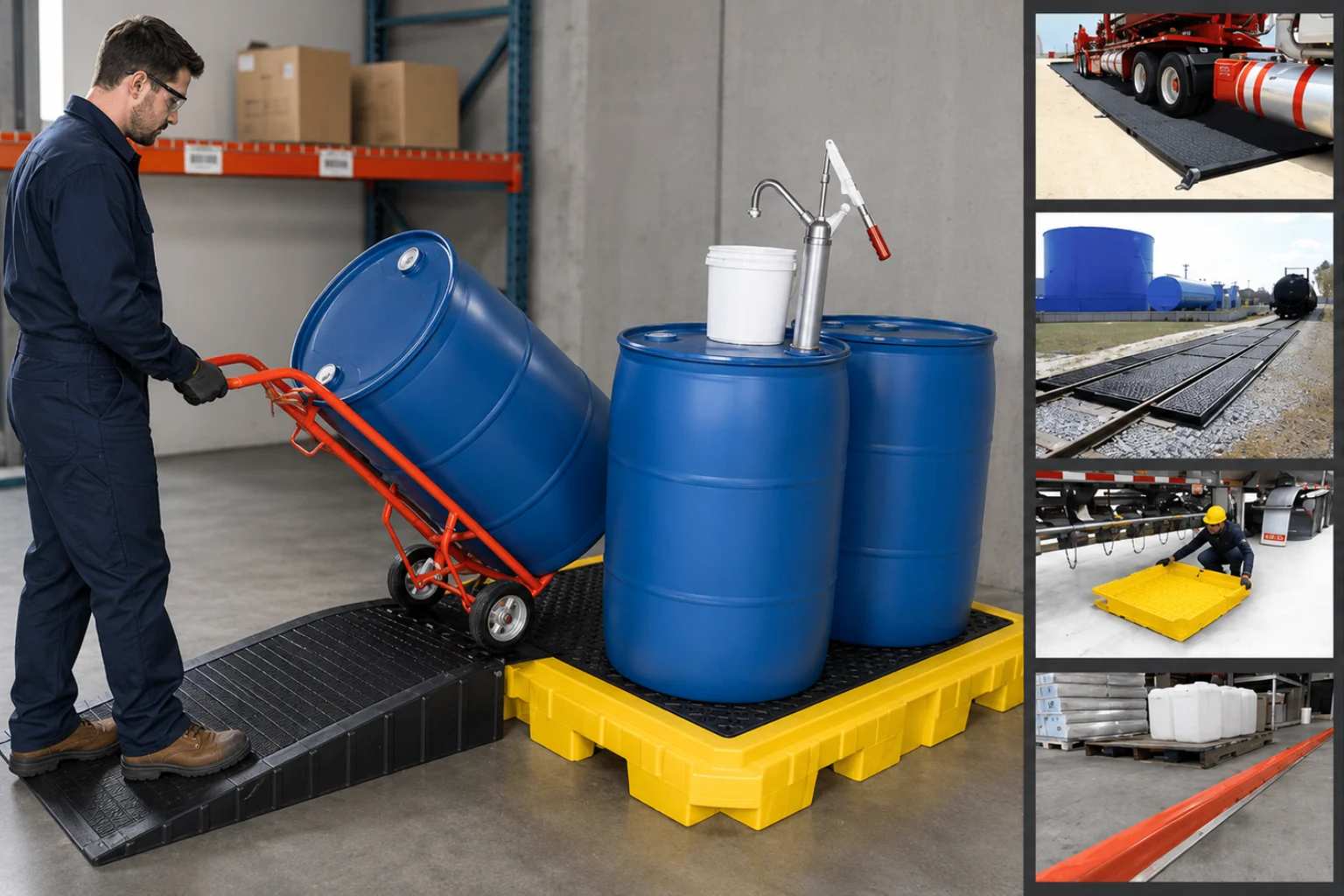
A leaking drum rarely causes problems on its own. The real disruption starts when product reaches the floor, spreads into traffic areas, enters a drain, or forces a shutdown while your team scrambles for containment. A secondary containment pallet is designed to stop that chain reaction at the source, giving operations, maintenance, and EHS teams a controlled way to manage liquid storage risk before a small leak turns into a reportable incident.
What a secondary containment pallet actually does
A secondary containment pallet sits beneath drums, pails, or intermediate bulk containers and captures leaks, drips, and spills from the primary container. In practical terms, it creates a built-in spill control zone where hazardous liquids, oils, chemicals, and other regulated fluids are stored.
For most buyers, the purpose is straightforward. You want to protect the floor, keep liquids out of drains, reduce cleanup time, and support compliance. Just as important, you want a storage setup that works in daily operations rather than one that looks right on paper but slows down handling, inspection, and product access.
That is why pallet selection should not be based on size alone. The right unit has to match the liquid being stored, the number and type of containers, the available floor space, and the way your team moves material through the site.
Where secondary containment pallets are used
Secondary containment pallets are common in warehouses, maintenance bays, chemical storage rooms, workshops, manufacturing plants, laboratories, loading areas, and marine or offshore support operations. Any location storing liquid containers above bare concrete or near drainage points should evaluate whether spill capture at the storage point is necessary.
The use case changes by industry. A factory may need drum pallets for lubricants and waste oil. A lab may require smaller footprint units for corrosives. A logistics yard may need forkliftable designs for easier repositioning. A marine operator may prioritize corrosion resistance and rapid deployment in exposed environments. The product category is the same, but the working conditions are not.
How to choose a secondary containment pallet
The fastest way to make a poor buying decision is to treat all spill pallets as interchangeable. They are not. Capacity, load rating, chemical compatibility, and handling method all affect whether the unit will perform safely over time.
Start with the containers you store
Begin with the most basic question: what is sitting on the pallet? A two-drum setup, a four-drum setup, and an IBC tote all require different dimensions and sump capacities. Overloading a pallet, even if the footprint seems to fit, creates risk for both containment and handling.
You also need to consider whether containers are static or frequently moved. If drums stay in one place for long periods, a low-profile unit may improve access and reduce lifting strain. If your site rotates stock often, forklift pockets or a more mobile configuration may make better operational sense.
Check sump capacity, not just deck space
A larger top deck does not automatically mean better protection. The sump capacity determines how much liquid the pallet can hold if a container leaks or fails. For regulated storage, this matters as much as the number of containers being supported.
Buyers sometimes focus on fitting the maximum number of drums into a small area. That can work, but only if the containment volume remains appropriate for the liquid load and the applicable site requirements. If your team stores mixed products or higher-risk liquids, more reserve capacity is often worth the extra footprint.
Match the material to the chemical
Most secondary containment pallets are made from polyethylene or steel, and that choice should be driven by the liquid, not just the budget. Polyethylene is widely used because it offers strong resistance to many chemicals, does not corrode, and performs well in general industrial environments. It is often the practical choice for acids, alkalis, and a broad range of hazardous liquids.
Steel units may be selected for certain flammables or where higher structural strength is needed, but they are not the universal answer. Chemical compatibility, exposure conditions, and site standards all need to be checked before purchase. If you store aggressive chemicals, compatibility should be confirmed up front rather than after the pallet is in service.
Think about how operators actually use it
A pallet that meets containment requirements but is awkward to load will eventually create shortcuts. Grating that is difficult to remove slows cleaning. High deck heights can make drum handling less efficient. Tight spacing between containers can limit inspection visibility and increase the chance of knocks during transfer.
This is where operational practicality matters. The best containment pallet is the one your team will use correctly every day. For busy facilities, easy-access grates, stable load surfaces, and forkliftable designs can make a noticeable difference.
Compliance matters, but daily usability matters too
Most companies purchase secondary containment pallets because they need to reduce environmental exposure and support safe storage practices. Compliance is a major part of that decision. If a leak reaches a drain or leaves the storage area, the cost can go far beyond product loss.
Still, compliance should not be treated as a paperwork exercise. A pallet that is technically suitable but difficult to inspect, clean, or position often underperforms in real conditions. Good containment supports both regulatory expectations and routine site discipline. It helps operators identify leaks early, keeps storage organized, and makes spill response faster if an incident occurs.
For procurement teams, this means the lowest purchase price is not always the lowest operating cost. A better-fit unit can reduce damaged flooring, absorbent usage, cleanup labor, and downtime over the life of the product.
Common buying mistakes to avoid
One common mistake is choosing based only on current storage needs. If your site is expanding chemical inventory or moving from pails to drums or IBCs, undersized containment quickly becomes a replacement issue.
Another is ignoring the environment around the pallet. Indoor and outdoor placement changes the requirement. Outdoor setups may need covers or additional planning to prevent rainwater from taking up sump capacity. In humid, washdown, or coastal environments, material selection becomes even more important.
A third issue is mixing incompatible liquids in the same containment zone. Even when the pallet itself is chemically resistant, the liquids stored on it may not be compatible with each other if released. EHS and operations teams should review segregation requirements before consolidating storage for convenience.
Finally, some buyers overlook load distribution. The pallet may have the right overall capacity, but uneven placement or impact from rough forklift handling can shorten service life. Training and placement standards matter just as much as the product specification.
When a standard pallet is enough and when it is not
A standard drum spill pallet is often the right answer for routine storage of oils, coolants, solvents, and maintenance chemicals in controlled indoor areas. It is a dependable, cost-effective way to add localized spill protection without changing the entire storage layout.
But some applications need more than a basic pallet. If you are storing IBC totes, handling high-value chemicals, operating in space-constrained rooms, or managing outdoor storage, a more specialized configuration may be necessary. That could mean higher capacity units, low-profile models, nestable designs for transport efficiency, or systems that integrate with broader spill control measures such as portable bunds and absorbents.
That is why experienced buyers usually look at the full storage process rather than a single SKU. The pallet should fit into how liquids are received, staged, dispensed, inspected, and replaced.
What buyers should expect from a supplier
For industrial users, product availability is not a minor detail. If a new chemical line is arriving next week or an audit has identified a storage gap, long lead times create avoidable exposure. Buyers should expect clear specifications, responsive support, and stock that can move quickly.
A capable supplier should also help narrow down options based on real operating conditions. That includes container type, liquid class, site layout, handling equipment, and urgency. Product breadth matters here because facilities rarely need one item in isolation. A spill control program often includes absorbents, drain protection, spill kits, storage cabinets, and emergency response equipment alongside containment pallets.
For companies that need dependable supply and fast turnaround, Ocean Safety Supplies supports procurement and site teams with practical product guidance and ready access to industrial spill control solutions built for working environments.
A smarter way to buy a secondary containment pallet
The right secondary containment pallet should do more than catch a leak. It should fit your containers, suit your chemicals, support your workflow, and hold up under real site conditions. When those factors line up, you get better spill control, cleaner storage areas, and fewer operational surprises.
If you are evaluating options, start with the liquid, the container, and the way the area is used day to day. That is usually where the right decision becomes clear.