

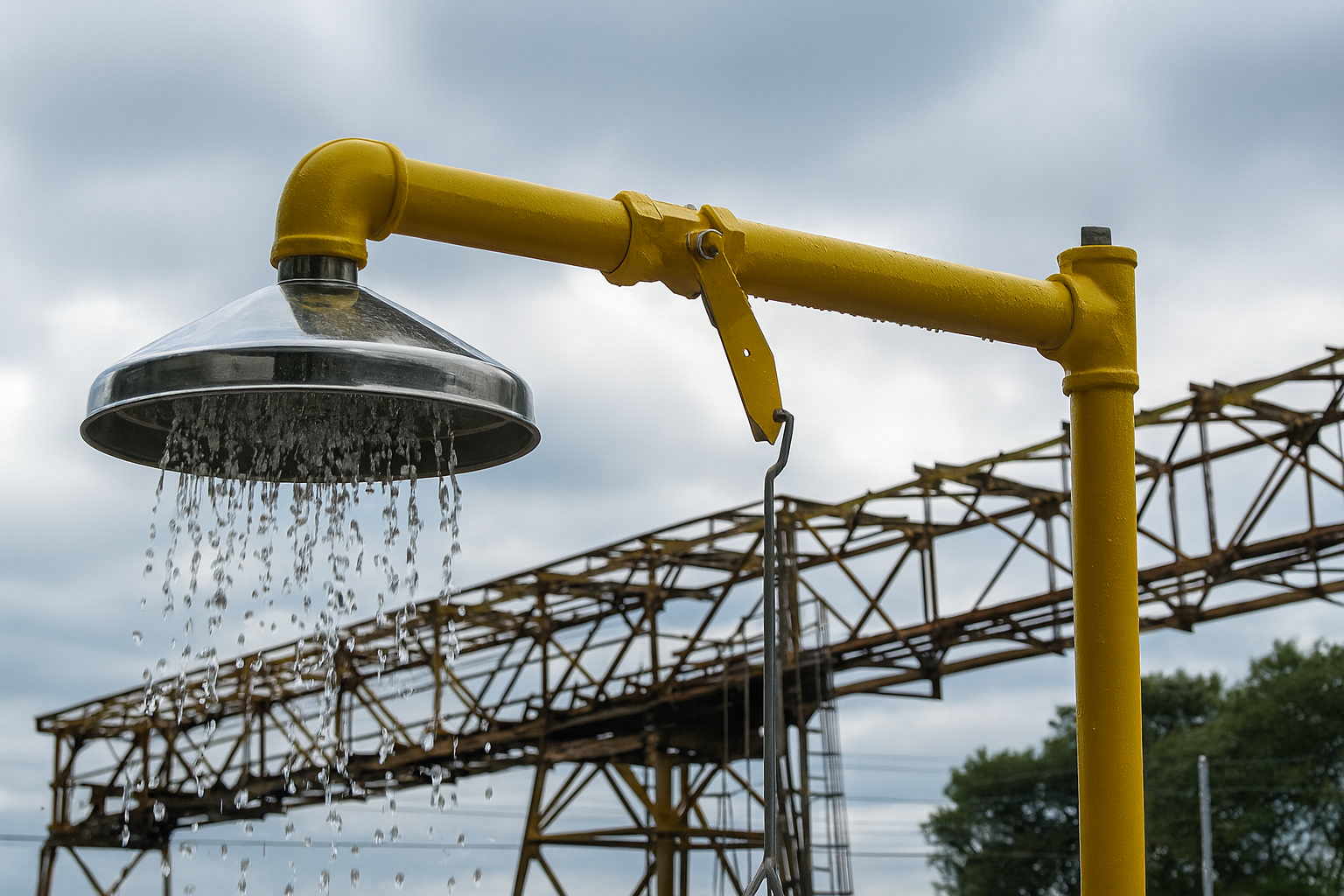
Modern workplaces don’t stand still. Teams expand, layouts shift, new machinery arrives, and chemicals change. With so much movement, one factor must remain rock-solid: employee safety.
Emergency decontamination equipment plays a critical role in protecting workers from chemical splashes, irritants, vapors, and other hazardous exposures. And in fast-changing environments, portable safety showers and eyewash stations have become one of the most reliable and flexible solutions.
Portable units adapt instantly to new risks, protect workers in temporary or remote areas, and fill compliance gaps when your operations grow faster than your infrastructure.
When Workplaces Change, Safety Requirements Change Too
A small change in your work environment can have big implications for safety compliance. Introducing new chemicals? Increasing production? Expanding your workforce? These may require additional or upgraded decontamination facilities.
For example:
- New chemicals may demand both a shower and eyewash, not just one.
- Increased output often means more exposure points across the workplace.
- A larger team may require multiple stations to ensure more than one worker can decontaminate simultaneously.
- Renovations can block access to fixed units, creating temporary hazards.
- New machinery brings new risks: heat, sparks, splashes, dust, or static electricity.
Portable units solve these challenges instantly. They can be placed exactly where needed, indoors or outdoors, without relying on plumbing or construction work.
What Audits, Inspections & Incidents Reveal
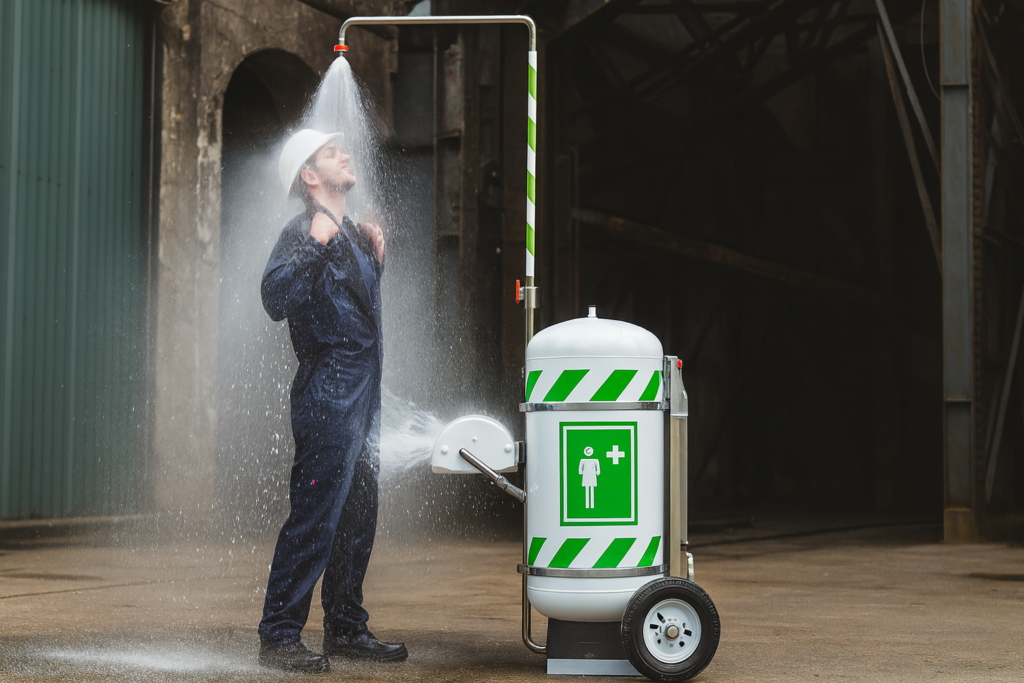
Safety audits often uncover gaps you didn’t know existed:
- Workers handling chemicals far from existing wash stations
- Only one eyewash station supporting a large team
- Staff using restrooms or garden hoses during emergencies
- Eyewash bottles with insufficient flush duration
- Drench hoses being misused as emergency showers
Portable units are a fast and compliant remedy for such situations.
Real incidents and near-misses also highlight equipment gaps. Whether a splash occurs on a mezzanine floor or at an outdoor transfer point, immediate access to emergency flushing is crucial. Portable stations ensure no one must travel far for decontamination especially when seconds matter.
Smart Placement Makes All the Difference
Even the best equipment won’t help if it’s placed poorly. Before positioning a safety shower or eyewash station, it’s important to evaluate the surrounding hazards.
Considerations include:
- Water reaching electrical equipment
- Wastewater creating slip hazards
- Chemicals nearby that react dangerously with water
- Extreme weather affecting water temperature in outdoor setups
- Privacy, especially when contaminated clothing must be removed
- Emergency team access routes
Portable stations offer enormous flexibility, you can reposition them whenever needed to ensure maximum safety, comfort, and compliance.
Why Portable Stations Are Becoming Essential
Portable safety showers and eyewash stations are now indispensable for industries like construction, chemical handling, maintenance, laboratories, mining, warehousing, and outdoor worksites.
The reasons are simple:
✅They require no plumbing
✅They can be moved as the workspace evolves
✅They stay effective during renovations or audits
✅They support temporary, seasonal, or remote work areas
✅They ensure immediate response during emergencies
In dynamic workplaces, flexibility is the new foundation of safety.
Frequently Asked Questions (FAQ)
1. What is a portable eyewash or safety shower station?
A portable unit is a self-contained emergency decontamination system that does not require plumbing. It stores a flushing solution and can be installed anywhere, making it perfect for remote or temporary work areas.
2. When should I use a portable station instead of a plumbed one?
Portable stations are ideal when work areas shift frequently, plumbing isn’t available, renovations are underway, or you have temporary job sites.
3. How long does a portable eyewash need to flush?
According to ANSI standards, emergency eyewash units must provide at least 15 minutes of continuous flushing. Many portable systems are designed to meet this requirement.
4. Are portable stations compliant with safety standards?
Most portable units are designed to meet ANSI/ISEA Z358.1 guidelines, but checking product specifications is essential.
5. Do I still need safety showers if workers use PPE?
Yes. PPE reduces risk, but accidents still happen. Eyewash stations and showers serve as critical first-aid devices when exposure occurs.
6. How often should portable units be inspected?
Weekly activation checks are recommended, along with periodic solution replacement as per the manufacturer’s instructions.
7. Can portable units be used outdoors?
Yes, but weather conditions must be considered. Water temperature can spike in heat or freeze in winter, potentially affecting safety and compliance.
8. How many stations does my workplace need?
This depends on workforce size, hazard level, number of work zones, and risk assessment findings. As a rule of thumb, stations must be reachable within 10 seconds from any hazard area.
Conclusion: Protect Your Team Before the Next Change Happens
If your facility is evolving or you’re unsure whether your current setup is compliant; a portable safety shower or eyewash station may be exactly what you need.
Reach out to us for a quick consultation
We’ll help you choose the safest, most compliant solution for your workplace.