

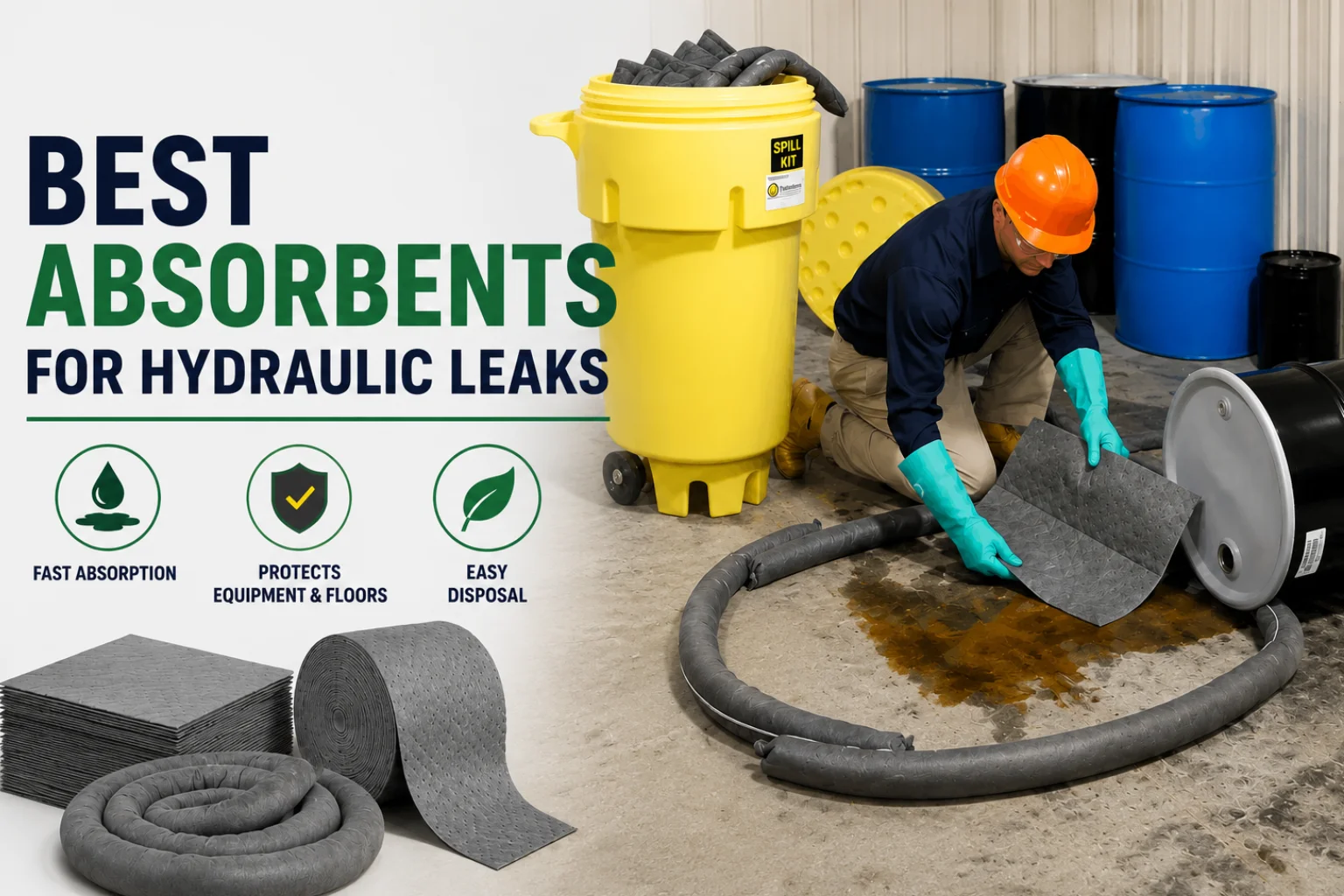
A leaking hydraulic hose can turn a safe work area into a slip hazard in minutes. Choosing the best absorbents for hydraulic leaks is not just about soaking up fluid fast – it is about matching the absorbent to the oil volume, surface type, traffic level, and cleanup speed your site requires.
What makes an absorbent effective for hydraulic fluid
Hydraulic oil behaves differently from water-based spills. It spreads quickly across smooth floors, can travel under machinery, and often leaves a slick film behind even after the visible liquid is removed. That means the right absorbent needs to do more than absorb volume. It also needs to control spread, hold together during pickup, and support a cleaner finish with less residue.
For most industrial sites, oil-only and universal absorbents are the main options. Oil-only products repel water while absorbing petroleum-based fluids, which makes them a strong choice for mixed environments, loading areas, and outdoor use. Universal absorbents can handle oils, coolants, solvents, and water-based liquids, so they are often preferred where spill types vary and teams want one product for routine response.
The best choice depends on what your operation is trying to solve. A maintenance team responding to small drips around hydraulic power units has different needs than a warehouse team managing a blown hose on a forklift in an active aisle.
Best absorbents for hydraulic leaks by application
Absorbent pads for fast surface cleanup
Pads are usually the first choice for hydraulic leaks on concrete, epoxy floors, and other flat surfaces. They are quick to deploy, easy to place directly over the spill, and simple to remove once saturated. In busy facilities, that speed matters.
Lightweight pads work well for drips, minor leaks, and preventive placement under fittings or equipment. Heavyweight pads are better for larger leaks or repeated maintenance work because they hold more fluid and reduce the number of change-outs. If the leak is active rather than static, pads can also be layered with socks to keep the spill from spreading while cleanup is underway.
Pads are especially useful when appearance matters. They leave less loose material behind than granular absorbents, which helps reduce secondary cleanup time in production and logistics environments.
Absorbent socks for containment around the leak
Socks are one of the best absorbents for hydraulic leaks when the immediate priority is stopping spread. They are designed to surround the spill, block flow paths, and contain fluid before it reaches walkways, drains, or sensitive equipment.
For hydraulic leaks under machinery, around vehicle service bays, or near storage areas, socks help create a controlled cleanup zone. They are also practical when the floor is uneven or when fluid is migrating toward doorways and expansion joints.
Socks are not usually the main product for final pickup. Their strength is containment. In most cases, they are used first, then followed by pads or pillows to recover the pooled liquid inside the contained area.
Absorbent pillows for higher-volume leaks
When a hydraulic line fails or a reservoir leak creates pooling in a confined space, pillows offer much higher absorbency per unit than standard pads. They are useful under leaking equipment, inside drip trays, or in spots where fluid is collecting steadily over time.
Pillows are a practical option for maintenance shutdowns because they can remain positioned under the leak source while work is carried out. They are less suited to wiping broad floor areas, but they perform well where a concentrated absorbent is needed without frequent replacement.
For procurement teams, pillows can help reduce overall absorbent consumption in high-volume leak points. One properly placed pillow may replace multiple pads during a single repair event.
Granular absorbents for rough surfaces and outdoor areas
Granules still have a place in hydraulic leak response, especially on rough concrete, asphalt, and exterior work zones where pads do not make full contact with the surface. They can also be useful where operators need to treat residual sheen after the bulk liquid has been removed.
The trade-off is cleanup efficiency. Granular absorbents usually require sweeping, collection, and disposal of used material, which adds labor and can create dust depending on the product type. In indoor facilities with forklifts, pedestrian traffic, or high housekeeping standards, that extra step may be a disadvantage.
Still, for yards, ramps, dock areas, and construction environments, granules are often a reliable backup option. They are also useful when spill quantities are unpredictable and teams need a flexible bulk absorbent on hand.
Oil-only or universal – which is better?
This is where many buyers pause, and rightly so. Hydraulic fluid is oil-based, but the surrounding conditions matter.
If your leak response area is exposed to rain, washdown, or standing water, oil-only absorbents are usually the better fit. They target the hydraulic oil without taking on water, which protects absorbency capacity and reduces waste. That matters in outdoor maintenance areas, transport yards, and marine-adjacent operations.
If your facility deals with mixed liquids, universal absorbents may be more practical. A maintenance shop might see hydraulic oil one day and coolant or cleaning fluid the next. In that case, standardizing on universal pads and socks can simplify training, storage, and replenishment.
There is no single answer for every site. Many operations keep both categories available, using oil-only products for external and hydrocarbon-focused risks, and universal products for indoor maintenance and general spill response.
How to choose the best absorbents for hydraulic leaks on your site
Start with spill size. Small drips and seepage are usually best managed with pads and drip management products. Moderate leaks often require a combination of socks for containment and pads for recovery. Larger failures may call for pillows or higher-capacity absorbents supported by a full spill kit.
Next, look at the surface. Smooth sealed floors favor pads because they sit flat and lift away cleanly. Broken concrete, textured surfaces, and outdoor pavement are often better handled with granules or a mixed response approach.
Then consider access and response time. If the leak happens in a narrow machinery space, pillows and socks can be easier to position than loose absorbent. If the spill occurs in a busy aisle, quick-deploy pads reduce downtime and help restore safe access faster.
Disposal should also be part of the decision. Used absorbents contaminated with hydraulic oil may need to be handled according to your local waste requirements. Products that reduce total waste volume can help lower disposal costs over time, particularly for larger facilities with frequent maintenance activity.
When a spill kit is the better buying decision
If your team is regularly handling hydraulic leaks, buying individual absorbents only solves part of the problem. A dedicated spill kit gives you a complete response setup in one location, typically including pads, socks, disposal bags, and PPE. That reduces delay during an actual leak and makes restocking more predictable.
For forklift fleets, workshops, warehouses, manufacturing lines, and field service operations, a spill kit often provides better operational control than relying on loose stock stored across different rooms. It also supports compliance and housekeeping by making spill response equipment visible and accessible.
This is where a supplier with broad stock and practical guidance adds value. Ocean Safety Supplies supports industrial buyers who need absorbents, spill kits, and related containment products ready for immediate use, not long lead times.
Common buying mistakes to avoid
One common mistake is choosing by price alone. Lower-cost absorbents may appear economical, but if they tear easily, leave residue, or require more units per spill, the total cost can be higher.
Another is using one absorbent type for every scenario. That can work in simple environments, but many operations benefit from a more targeted setup. Pads for quick response, socks for control, and higher-capacity products for active leaks create a more dependable system.
It is also a mistake to underestimate replenishment needs. Hydraulic leaks are often recurring maintenance events, not one-time incidents. If absorbents are part of routine operations, they should be stocked like any other critical safety supply.
The best absorbents for hydraulic leaks are the ones your team can deploy quickly, use correctly, and replace without delay. When absorbent selection matches the realities of your site, cleanup gets faster, floors stay safer, and operations recover with less disruption.