

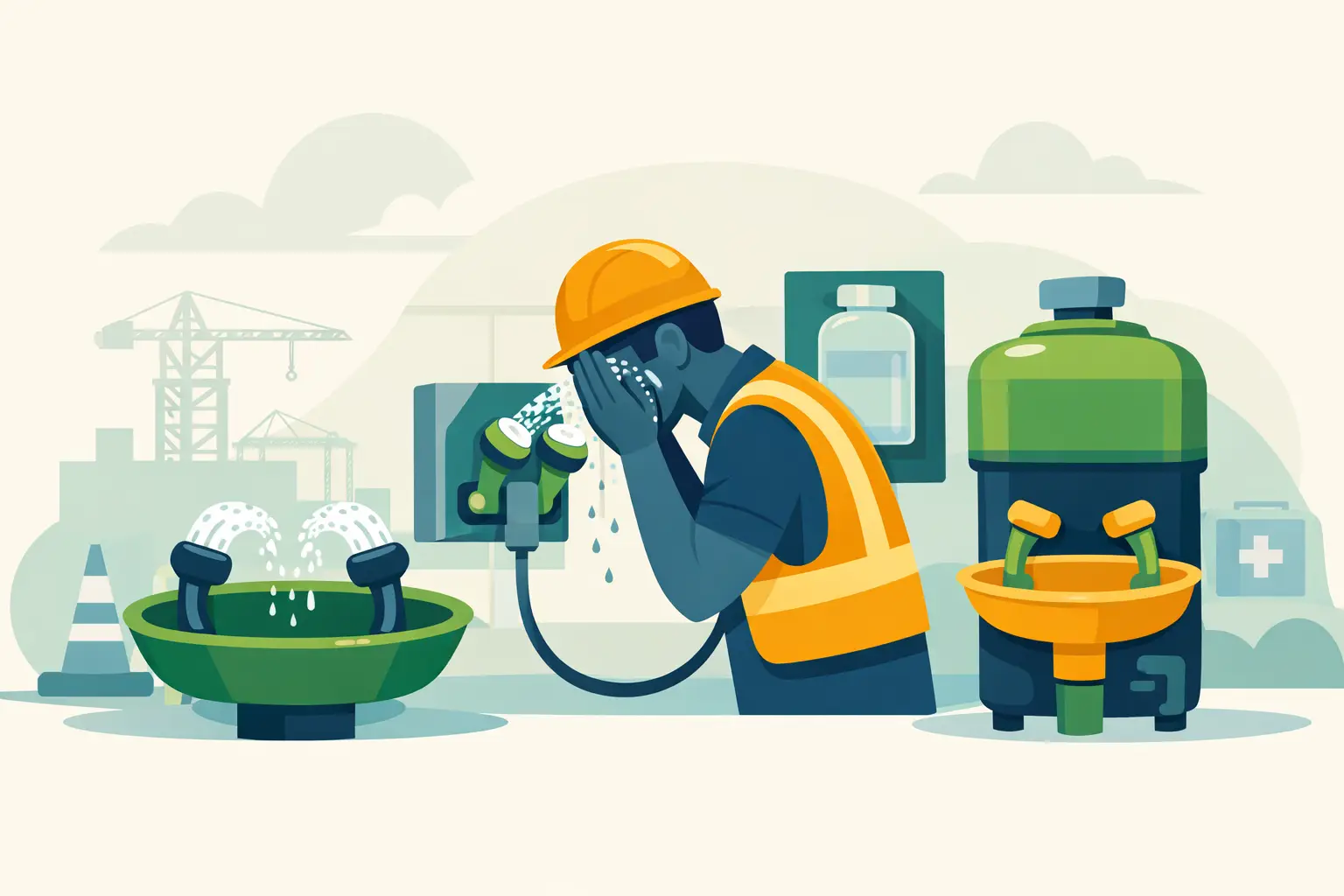
A corrosive splash does not wait for a maintenance request, a replacement part, or a trip across the facility. The best emergency eyewash solutions are the ones that deliver effective flushing immediately, match the hazards on site, and remain ready through routine inspection. For EHS teams, facility managers, and procurement professionals, the selection process is less about buying a single product and more about building a dependable emergency response point.
Choose Emergency Eyewash by Hazard and Location
An eyewash unit should be selected based on the substances employees handle, where those materials are used, and whether there is a reliable water supply nearby. A small laboratory handling irritants has different needs from a chemical blending area, battery charging station, warehouse, or outdoor maintenance yard.
Start with the safety data sheets for the chemicals in use. Identify whether exposure can cause eye irritation, corrosive burns, or facial contamination. Corrosives, strong acids, alkalis, solvents, and hazardous powders may require more than a basic eyewash. If the face and eyes can be exposed together, an eye/face wash station provides broader coverage. Where a worker may be splashed over the body or clothing, a combination emergency shower and eyewash station is often the more appropriate solution.
Location is equally critical. Emergency equipment must be reachable without delay, with a clear and unobstructed route. Common guidance under ANSI/ISEA Z358.1 calls for eyewash equipment to be accessible within 10 seconds of the hazard. The exact distance depends on the work environment, but a station that requires workers to climb stairs, pass through a locked door, or cross an active vehicle route is not a practical emergency response solution.
For high-risk corrosive processes, the unit may need to be even closer. Review site risk assessments, chemical safety data, and applicable local workplace requirements before finalizing placement.
The Best Emergency Eyewash Solutions by Application
Plumbed eyewash stations for fixed indoor hazards
Plumbed eyewash stations are a strong choice for laboratories, production lines, chemical storage rooms, and maintenance workshops with a dependable water supply. Connected directly to building plumbing, they offer continuous water flow for the required flushing period without relying on a stored tank.
These units are well suited to permanent hazard areas with regular chemical use. A quality plumbed station should activate quickly, keep the spray heads protected from dust, and allow hands-free operation once switched on. The user must be able to hold their eyelids open and move their eyes through the water stream during flushing.
The trade-off is installation. Plumbing work, drainage, tempering equipment, and floor layout all need consideration. In sites where water temperatures can become excessively cold or hot, a tepid-water solution is essential. ANSI guidance generally defines tepid flushing fluid as 60 to 100 degrees Fahrenheit. Water outside that range can discourage a full flush or create an additional risk for the injured worker.
Eye/face wash stations for splash-prone operations
A standard eyewash is designed to irrigate the eyes. An eye/face wash station uses a wider flushing pattern to cover the face as well as the eyes. This makes it a practical upgrade for drum handling, chemical transfer, plating, cleaning operations, and work involving powders or liquids that could spread across the face.
Eye/face wash stations need adequate clearance around the bowl and spray area. Workers should be able to approach the unit easily, activate it in one motion, and remain in position for the full flushing period. In busy production areas, protect the station from forklift traffic and avoid using the surrounding space for storage.
Combination shower and eyewash units for serious exposure risk
Combination units bring an emergency drench shower together with an eyewash or eye/face wash station. They are often the most suitable option where a hazardous liquid could contact the worker’s eyes, face, body, or clothing. Chemical processing areas, industrial washdown zones, battery rooms, fueling locations, and hazardous-material handling points commonly benefit from this format.
The main advantage is immediate access to both forms of flushing at one marked location. A worker can use the eyewash for a localized exposure, while a full-body splash can be addressed with the shower pull rod. For a severely contaminated worker, a drench shower can help remove chemicals from clothing before they penetrate further.
Combination units require sufficient water supply capacity and careful drainage planning. The shower must not discharge into a walkway where standing water creates a slip hazard or spreads contamination. In enclosed areas, facility teams should also plan for spill containment and safe cleanup following an activation.
Self-contained portable eyewash stations for remote areas
Self-contained eyewash stations are designed for locations without accessible plumbing. They are useful for construction projects, remote utility work, outdoor yards, temporary work zones, marine operations, and mobile response setups. A self-contained unit stores flushing fluid in an integrated tank and provides a controlled flow when activated.
Portability does not mean low maintenance. The tank capacity must support the intended flushing duration, and the fluid must be changed, treated, or maintained according to the manufacturer’s instructions. Water quality, cleaning schedules, reservoir integrity, and temperature exposure all matter. A portable unit left in direct sun, freezing conditions, or a dirty work area can quickly become unsuitable for emergency use.
For temporary projects, self-contained equipment can be the most practical answer. For a permanent high-hazard process, it is usually better treated as a supplement or interim measure while a plumbed solution is installed.
Personal eyewash bottles for immediate first aid support
Personal eyewash bottles and sterile saline bottles have a role, but they are not a replacement for compliant emergency eyewash equipment where a full flushing response is required. They can provide immediate irrigation while a worker reaches the main station, support first-aid kits, or assist in low-risk mobile work.
Their limitations are straightforward: bottle volume is limited, flow is not always continuous, and they rarely provide the duration needed for significant chemical exposure. Use them as a supplementary response item, not as the only eyewash provision in a chemical handling area.
What to Check Before Purchasing
The right unit must perform reliably at the moment it is needed. Before specifying equipment, confirm the hazard type, number of exposed employees, available water supply, drainage conditions, ambient temperatures, and installation location. For facilities working with corrosives, evaluate whether the water source and unit placement enable immediate use without workers traveling through a contaminated area.
Equipment should support hands-free flushing after activation. Controls must be easy to identify and operate, even when a worker has impaired vision. Dust covers should protect spray heads and lift away automatically when the unit is activated. Highly visible signage and adequate illumination help workers locate the station quickly, including during shift work or a power disruption.
Material selection also matters. Stainless steel is commonly selected for industrial durability and corrosion resistance. In certain chemical environments, specialized materials may be more suitable. The best choice depends on the process chemicals, cleaning methods, outdoor exposure, and expected service life.
Do not purchase solely on unit price. A lower-cost station that requires difficult installation, has no practical temperature control, or cannot be serviced consistently can create a higher operational risk over time. Specify the whole solution: station, water supply, tempering, drainage, signage, inspection plan, and replacement components.
Keep Eyewash Equipment Ready Every Shift
An emergency station is only useful when it is clean, accessible, and functioning. Plumbed equipment should be activated regularly to verify flow, clear stagnant water from supply lines, and identify faults before an incident. Self-contained units require scheduled checks of fluid condition, tank levels, expiration dates where applicable, and cleaning records.
A practical inspection program should confirm that the pathway is clear, signage remains visible, spray heads are protected, valves operate correctly, and no leaks or damage are present. Teams should also check water temperature and flow performance as part of scheduled maintenance. Annual performance inspections and employee training support a stronger readiness program, particularly where staff turnover or changing work processes are common.
Training should be direct. Employees need to know where the nearest station is, how to activate it, and why they should begin flushing immediately after an exposure. They should also understand that emergency eyewash use does not replace medical evaluation when chemical exposure is serious.
For industrial sites that need stocked equipment, practical product selection, and dependable supply support, Ocean Safety Supplies can help align eyewash stations with the hazards your team manages. The right station should feel unremarkable every day – clearly marked, properly maintained, and ready to protect someone without hesitation when the unexpected happens.