

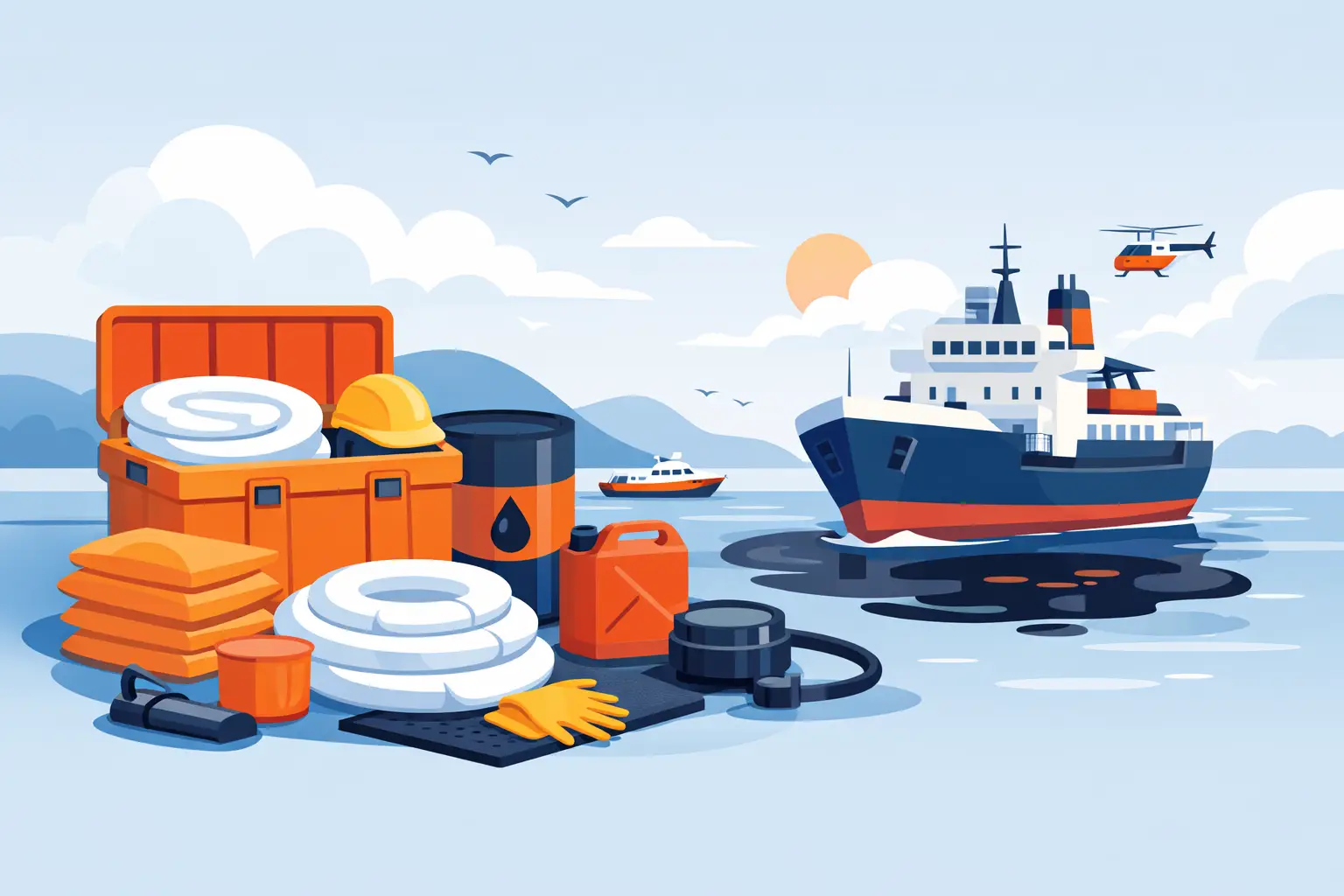
A spill response plan is only effective when the right equipment is onboard, accessible, and ready to deploy under pressure. This marine SOPEP equipment guide helps vessel operators, superintendents, and procurement teams identify the practical equipment needed to support fast, controlled action following an oil spill or transfer incident.
SOPEP, or Shipboard Oil Pollution Emergency Plan, is not simply a document kept for inspection. It establishes the vessel’s response procedures, assigned responsibilities, communication steps, and available resources for preventing oil from entering the sea. Equipment selection must match that plan, the vessel’s fuel capacity, operating profile, deck arrangement, and the likely locations of a release.
Start With the Vessel’s Actual Spill Risks
A suitable SOPEP equipment package should be built around credible spill scenarios, not a generic checklist alone. A small hydraulic oil leak on deck requires a different immediate response than a bunker hose failure, overflow during fuel transfer, or a damaged drum in a storage area.
Review where oil is received, transferred, stored, and used. Bunkering stations, manifold areas, engine rooms, generator spaces, hydraulic equipment, waste oil handling points, and deck stores should all be assessed. Consider the type of oil involved as well. Heavy fuel oil, marine gas oil, lubricants, and hydraulic fluids can behave differently on water and on deck surfaces.
The size and layout of the vessel matter. A compact workboat may need portable, rapidly deployed equipment in clearly marked lockers. A larger commercial vessel may require multiple response stations, longer containment boom lengths, dedicated pumps, and equipment staged near separate risk areas. The goal is not to carry the most equipment possible. It is to carry enough suitable equipment to control the likely release before it spreads.
Core Marine SOPEP Equipment Categories
A dependable spill response inventory normally combines containment, absorption, recovery, temporary storage, and personnel protection. These categories work together. Absorbents alone cannot contain a spreading sheen, and a boom without recovery materials may only delay the problem.
Containment Boom
Oil containment boom is often the first line of defense when oil reaches the water. It is used to surround a spill, protect a sensitive area, or guide floating oil toward a recovery point. For vessel use, the selected boom should be practical to store, carry, connect, and deploy with the crew and equipment available.
Inflatable boom can provide compact storage and effective freeboard, but it requires inflation arrangements and regular checks. Solid-flotation or foam-filled boom is faster to deploy but may require more storage space. The appropriate length depends on the vessel’s risk assessment, expected spill volume, berth arrangement, currents, wind, and available deployment method.
Do not treat boom as a one-size-fits-all product. Confirm connector compatibility, towing points, reel or storage requirements, skirt depth, and whether the crew can realistically deploy it from the vessel or alongside a berth.
Oil Absorbents
Marine-grade oil-only absorbents are designed to absorb hydrocarbons while repelling water. They are central to most SOPEP equipment kits because they can be placed quickly around scuppers, under leaks, along deck edges, and around small waterborne spills.
Absorbent pads are useful for wiping, small leaks, and routine cleanup. Rolls cover larger deck areas and can be cut to suit the task. Absorbent socks are particularly useful for surrounding a leak source, protecting drains, and forming temporary barriers on deck. Pillows provide higher absorption capacity for collecting pooled oil beneath machinery, hoses, or damaged containers.
Stocking a mix is generally more useful than relying on one absorbent format. The right balance depends on the vessel’s operating risks and storage limitations. Absorbents should be stored dry, protected from contamination, and positioned where crews can reach them without crossing the spill area.
Scupper Plugs and Drain Protection
Scuppers are a critical control point during deck spills. Once oil reaches an open scupper, it can quickly escape overboard. Scupper plugs, sealing mats, drain covers, and compatible sealing compounds should be available near bunkering and transfer locations.
Equipment selection should suit the actual scupper design. A plug that does not seal properly, or a cover that cannot sit flat on the deck, creates false confidence. Crews should know where the scupper protection equipment is stored and when it must be deployed. In many operations, scuppers should be protected before fuel transfer starts, not after a release is discovered.
Recovery Tools and Transfer Equipment
After containing the spill, crews need practical tools to collect free oil and saturated absorbents. Essential items may include non-sparking shovels, scrapers, squeegees, buckets, collection trays, hand pumps, and suitable hoses. Larger vessels or operations with greater spill exposure may also require portable skimmers, transfer pumps, floating suction systems, or recovery tanks.
Recovery equipment must be selected carefully for the liquids being handled. Pump compatibility, hose connections, power requirements, flow rate, and safe operating procedures should all be verified. A recovery pump is of limited value if there is no approved container or tank available to receive the recovered oil-water mixture.
Temporary Storage and Waste Handling
Response materials become controlled waste once they are oil-contaminated. SOPEP stocks should therefore include heavy-duty disposal bags, labeled drums, overpack containers, or other secure temporary storage suitable for used absorbents and recovered liquids.
Containers need to remain closed, upright, and protected from weather and deck movement. Consider the route from the spill location to the storage point. Handling wet, oil-soaked absorbents across a moving vessel without suitable bags or bins can spread contamination and increase slip hazards.
Waste handling arrangements should align with the vessel’s waste management procedures and port disposal requirements. The response kit supports immediate containment, but crews also need a defined process for securing and documenting the waste afterward.
Personal Protective Equipment and Safety Tools
Spill response exposes crew to slip hazards, chemical contact, sharp debris, and potentially flammable vapors. Appropriate personal protective equipment should be available with or near the SOPEP equipment, rather than stored in a separate location that delays response.
The required PPE depends on the oil type and task, but may include chemical-resistant gloves, coveralls, splash goggles, protective footwear, and face protection. For work near volatile products or confined areas, vessel procedures may call for additional controls, such as gas detection and respiratory protection.
Fire safety must also be considered. Oil spill response should not introduce ignition sources. Use suitable non-sparking recovery tools where required, follow hot-work restrictions, and ensure crew members understand the limits of their role during a major release.
Equipment Location Is Part of Readiness
The best SOPEP equipment is ineffective if it is locked away, poorly labeled, or buried beneath unrelated stores. Response equipment should be housed in weather-resistant, clearly identified containers or lockers positioned close to likely spill areas. Bunkering stations, engine room access points, and work decks commonly need dedicated supplies.
Each station should contain equipment that supports the first few minutes of response: scupper protection, absorbent socks and pads, drain covers, bags, gloves, and basic recovery tools. Larger containment boom and specialized recovery equipment can be stored centrally if crews can deploy it quickly.
Clear inventory labeling matters. Crew members should be able to identify equipment sizes, quantities, and intended use without opening every package. This also makes monthly inspections faster and helps procurement teams identify replenishment needs after drills or actual incidents.
Inspection, Drills, and Replenishment
SOPEP readiness is a maintenance discipline. Equipment should be inspected routinely for damaged packaging, degraded absorbents, missing tools, corroded fittings, expired PPE, and incomplete kit contents. Inflatable boom, pumps, hoses, connectors, and valves require functional checks, not just visual inspection.
Drills should test deployment realities. Can the assigned crew carry the boom to the waterline? Are scupper plugs the right size? Does the recovery pump connect to the available hose? Is there enough lighting for a nighttime response? These practical questions often reveal gaps that a paper review will miss.
After every drill or incident, replace used consumables immediately. A partially depleted spill kit is not a ready spill kit. Maintaining a simple inventory record supports faster reordering and gives vessel managers confidence that the equipment remains aligned with the SOPEP.
Buying SOPEP Equipment With Confidence
For procurement teams, the best approach is to source equipment as a coordinated response system rather than purchasing isolated products. Confirm the vessel’s plan requirements, risk assessment, onboard storage space, crew capability, and applicable company or flag-state standards before finalizing quantities.
Ocean Safety Supplies can support vessel operators with industrial-grade oil absorbents, containment boom, portable spill response equipment, drain protection, recovery accessories, and storage solutions. A practical supplier should help match products to the operational scenario, while also providing dependable stock availability for replenishment and urgent requirements.
Keep the response equipment visible, serviceable, and matched to the risks your crew faces at sea and alongside. When a spill occurs, readiness is measured in the equipment that can be deployed immediately, not the equipment that was intended to be ordered later.