

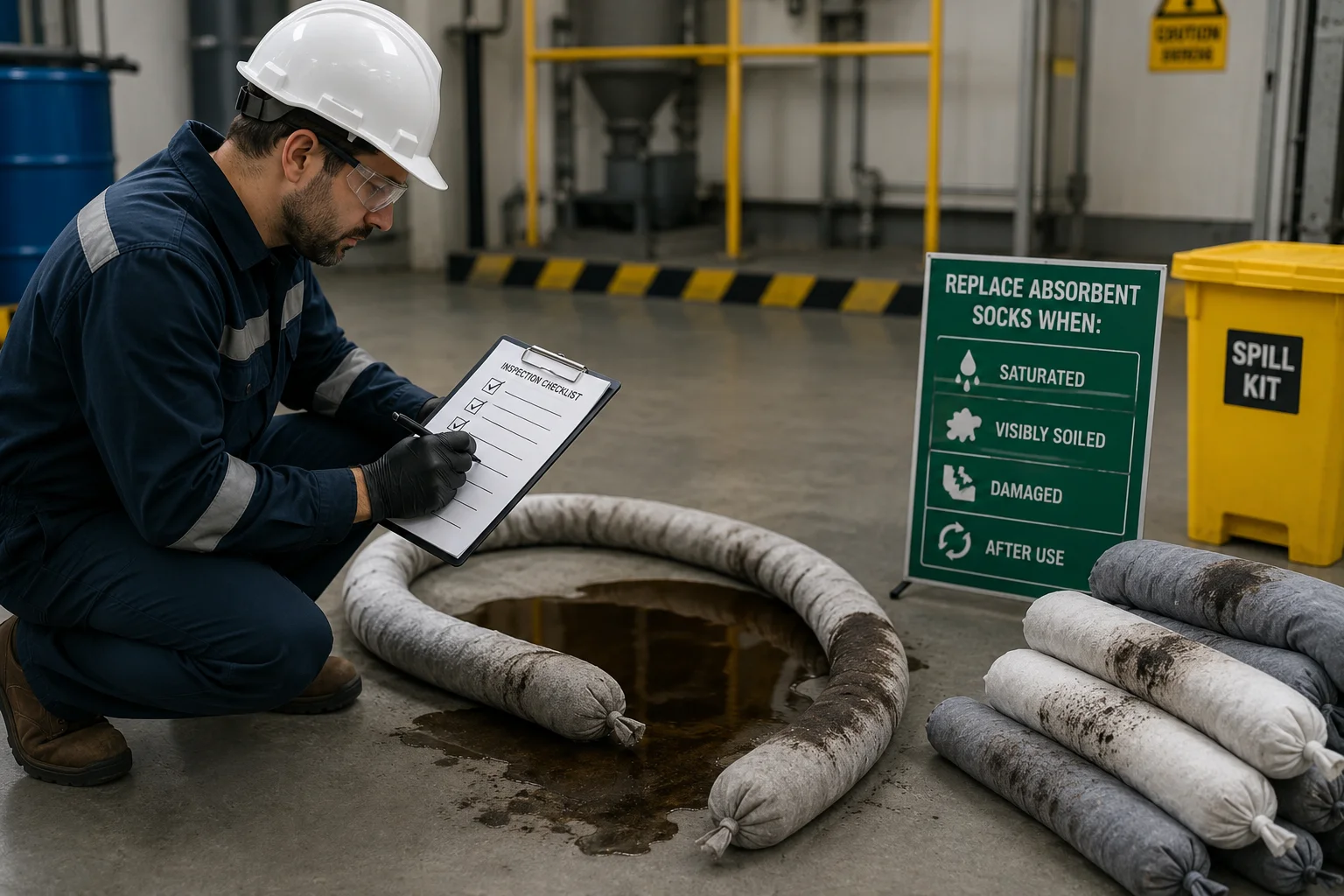
A spill-control sock is often placed at the edge of a leaking drum, around a floor drain, or along a doorway because there is no time to lose. Knowing when to replace absorbent socks is what keeps that first line of containment from becoming a source of leakage itself. A sock that looks only partly used may already be at its practical limit if liquid is wicking through it, pooling behind it, or compromising its placement.
For facility managers, EHS teams, warehouse supervisors, and emergency responders, absorbent socks should be treated as active spill-response materials, not permanent barriers. Their condition, the liquid involved, and the risk of migration all determine whether a replacement is required.
When to Replace Absorbent Socks Immediately
Replace an absorbent sock as soon as it can no longer contain liquid safely. The most obvious sign is visible saturation: the sock feels heavy, loses its shape, or releases liquid when moved. At that point, it has absorbed much of its capacity and should not be relied on to stop further spread.
However, visible saturation is not the only trigger. A sock should also be changed immediately when liquid begins to pass underneath, through, or around it. This can happen before the absorbent fill appears fully saturated, particularly when a spill is flowing quickly, when the floor is uneven, or when the sock has not been positioned tightly against the leak path.
Replace the sock if it has been displaced by traffic, equipment, wind, washdown activity, or moving liquid. A small gap can allow oil, chemicals, coolant, or other contaminants to reach drains, work areas, soil, or watercourses. Repositioning may be sufficient if the sock remains dry and undamaged. If it has already absorbed the spilled material or become contaminated, use a fresh sock instead.
Damaged socks also need immediate replacement. Torn outer fabric, exposed absorbent fill, compressed sections, or flattened areas reduce containment performance. Do not attempt to extend the service life of a damaged sock during an active response.
Signs an Absorbent Sock Is Near Capacity
Not every replacement decision is as clear as a leaking or fully soaked sock. During a slower release, such as a hydraulic drip, a leaking valve, or seepage from a container, routine checks help prevent an overflow.
Look for darkened areas, a noticeable increase in weight, soft or swollen sections, and a visible wet line on the outside fabric. With oil-only socks, the exterior may appear glossy or feel oily. With universal or chemical absorbents, changes in color and texture may be more apparent depending on the liquid.
A useful field check is to observe the area immediately behind the sock. If liquid is accumulating there instead of being drawn into the material, the sock may be nearing capacity or the flow rate may exceed what one sock can manage. In either case, add fresh containment upstream or alongside the existing barrier, then remove and replace the used sock in a controlled manner.
Do not wait for liquid to escape before acting. A replacement planned during routine inspection is safer and less disruptive than an emergency response to a breached containment line.
The Liquid Determines the Replacement Schedule
Absorbent socks are not interchangeable across every spill scenario. The material being contained affects both the sock selection and the point at which it should be removed from service.
Oil-only absorbent socks are designed for petroleum-based liquids and are commonly used around fuel, lubricants, hydraulic oil, and marine spill areas. They repel water, making them suitable for outdoor and water-based applications where oil needs to be separated from rainwater or surface water. Even so, they should be replaced once oil absorption limits their ability to contain additional product or when weather and movement have degraded their position.
Universal absorbent socks are suitable for many non-aggressive industrial liquids, including oils, coolants, solvents, and water-based fluids. Their replacement interval depends heavily on the viscosity and volume of the spill. Thin liquids can move quickly through gaps and may require more frequent changes than a slow, thick oil leak.
Chemical absorbent socks should be selected when responding to acids, bases, corrosives, or other hazardous liquids specified by the manufacturer. Replace them promptly when contaminated, even if they appear to have remaining physical capacity. Chemical exposure may affect the outer material, create a reaction risk, or make handling more hazardous. Always consult the safety data sheet and site procedures before moving used chemical absorbents.
If the liquid is unknown, treat the situation cautiously. Isolate the area, use compatible emergency-response materials where permitted by your procedures, and identify the substance before deciding on cleanup and disposal. The wrong absorbent can create unnecessary exposure or fail to provide adequate containment.
Replace Socks After Rain, Outdoor Exposure, or Heavy Traffic
Outdoor containment presents different challenges. Rain can change the movement of a spill, lift or shift lightweight absorbents, and carry contamination toward drains. An oil-only sock may continue to repel water, but it still needs replacement if it has absorbed oil, become clogged with debris, or no longer forms a close seal with the ground.
Universal and chemical socks left outdoors can take on rainwater, which reduces available capacity for the actual spill. After heavy rain, inspect all deployed absorbents around loading bays, waste-storage areas, generators, tanker transfer points, and drain protection zones. Replace any materials that are waterlogged, contaminated, or structurally weakened.
Forklifts, pallet jacks, foot traffic, and vehicle tires can flatten socks and push liquid past the containment line. Absorbent socks should not be used as a substitute for a properly protected traffic route. If a spill response must take place in an active work area, isolate the zone where possible and inspect containment frequently until cleanup is complete.
Do Not Reuse Contaminated Absorbent Socks
In most industrial applications, absorbent socks are single-use materials. Once they have absorbed oil, chemicals, fuel, or other contaminants, they should be removed from service and managed as waste according to the substance involved, local regulations, and your facility’s waste procedures.
Trying to squeeze out, wash, or reuse a contaminated sock can expose employees, spread the spill, and create a disposal problem. It also gives teams a false sense of readiness. A used sock placed back into a spill kit is not emergency inventory.
For hazardous materials, the used sock may need to be handled as hazardous waste. Labeling, temporary storage, and disposal requirements depend on the absorbed liquid and applicable regulations. Keep contaminated absorbents separated from clean stock and ensure responders have suitable gloves, protective equipment, and waste bags or containers available.
Build Replacement Checks Into Spill-Response Procedures
The best time to decide how often to inspect and replace absorbent socks is before a release occurs. Include sock checks in spill-kit inspections, particularly in high-risk areas such as chemical storage rooms, maintenance bays, fueling points, workshops, laboratories, loading docks, and marine operations.
During an active incident, assign one person to monitor containment while another manages source control, cleanup, communication, or drain protection. This prevents used absorbents from being overlooked while the team focuses on the original leak. For larger spills, staged replacement is often safer than removing an entire saturated containment line at once. Place fresh socks outside or upstream of the used line first, then collect the contaminated material.
Stock enough replacement socks for the credible spill scenarios at your site. A small leak may require only one or two socks, while a damaged hose, overturned container, or transfer failure may require several lengths of containment plus pads, pillows, drain covers, and disposal materials. Capacity planning should reflect the liquids stored onsite, container sizes, floor layout, and proximity to drainage.
Keep Clean Socks Ready for the Next Response
Absorbent socks only perform when they are dry, compatible, intact, and immediately available. Store them in clearly identified spill kits or response stations away from moisture, direct weather exposure, and unnecessary handling. Check packaging for damage and replace stock that has become wet, dirty, crushed, or exposed to chemicals before it is needed.
Ocean Safety Supplies supports industrial teams with absorbent socks and spill-control materials suited to routine leaks, hazardous-material response, and environmental protection needs. Selecting the right absorbent type and maintaining ready replacement stock helps protect people, property, drains, and surrounding areas when time is limited.
A good rule for every site is simple: replace an absorbent sock before it allows the spill to move beyond the area you intended to contain. That decision protects the response effort and keeps the next clean sock ready to do its job.