

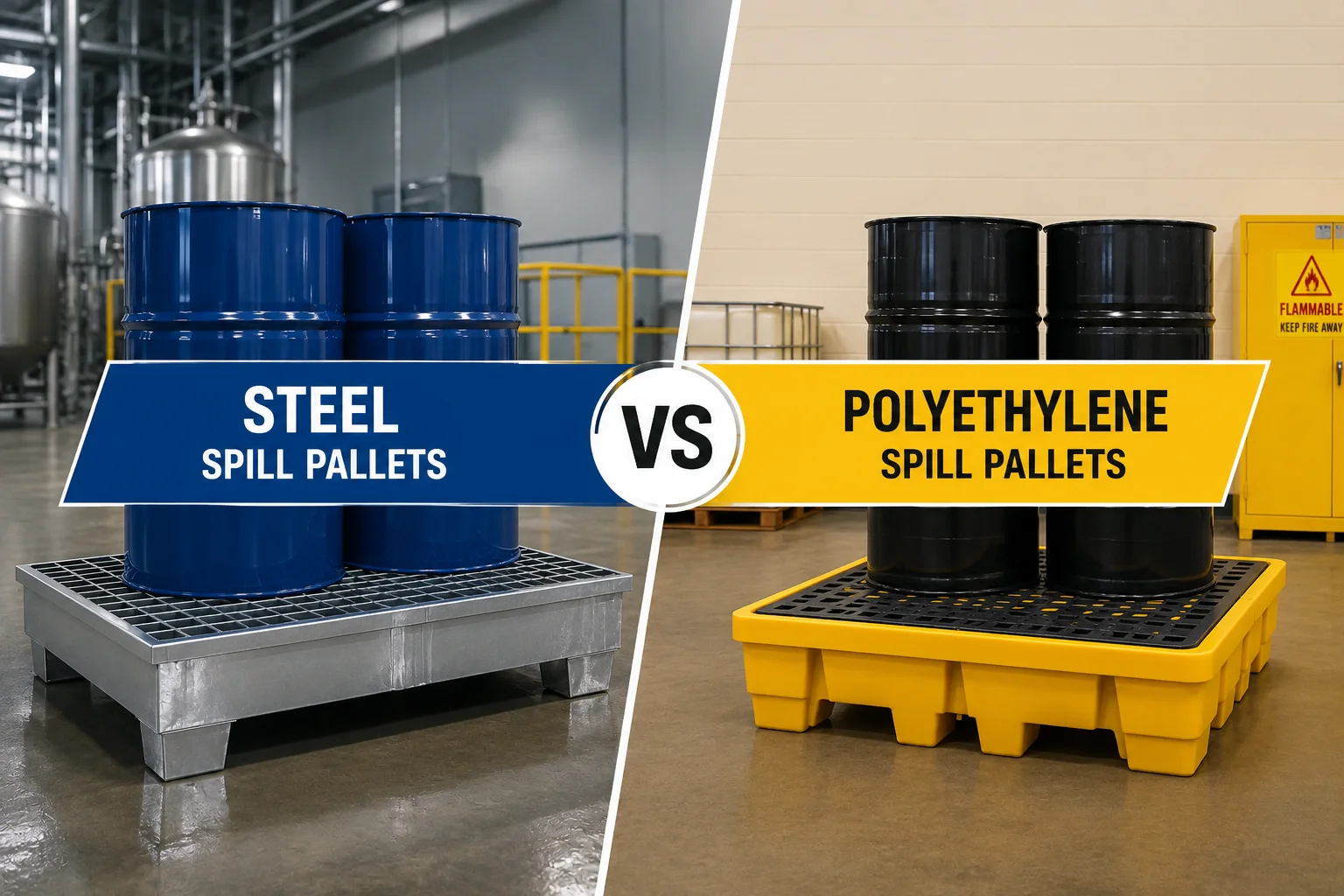
A spill pallet is often purchased after a drum leak, an audit finding, or a new chemical is introduced to the site. That is the wrong point to discover that material selection matters. When comparing steel versus polyethylene spill pallets, the right choice depends on what you store, where it is stored, how it is handled, and the hazards your containment system must manage.
Both materials can provide dependable secondary containment for drums, pails, and other liquid containers. Neither is universally better. A polyethylene pallet may be the practical standard for corrosive chemicals, while a steel pallet can be the more appropriate choice near flammable liquids, high heat, or demanding industrial traffic. The objective is simple: keep a primary-container failure from becoming a release to the workplace, drainage system, or surrounding environment.
Steel Versus Polyethylene Spill Pallets: The Core Difference
The main difference is chemical behavior and operating environment. Polyethylene spill pallets are molded from chemical-resistant plastic and are widely used for acids, alkalis, oils, coolants, and many routine industrial liquids. They are lightweight compared with steel, resist corrosion, and are easy to reposition when empty.
Steel spill pallets are fabricated for strength and can be suited to heavy-duty storage areas, facilities handling flammable products, and locations where mechanical durability is a priority. Depending on the construction and coating, steel can tolerate hard use from pallet jacks, forklifts, and industrial handling activities better than many plastic alternatives.
However, metal can corrode when exposed to incompatible chemicals, moisture, or damaged coatings. Polyethylene does not rust, but it is not the preferred material for every solvent, elevated-temperature application, or fire-risk environment. Material compatibility must be assessed against the actual contents of every container placed on the pallet, not just the product category printed on a warehouse label.
When Polyethylene Spill Pallets Are the Better Fit
For many facilities, polyethylene is the default choice because it addresses common chemical containment needs with minimal maintenance. Its molded construction has no welded seams to corrode, and its nonmetallic surface is generally well suited to chemical handling areas.
Corrosives and General Chemical Storage
Polyethylene is frequently selected for acids, bases, and other corrosive liquids that may attack unprotected steel. This makes it a practical option for laboratories, water-treatment operations, maintenance rooms, chemical dosing areas, manufacturing plants, and warehouses holding mixed chemical inventories.
A polyethylene pallet is also useful where regular washdown occurs. It will not rust after exposure to water, and its smooth molded surfaces simplify visual inspection and cleanup. For a busy EHS team, that can reduce the time required to keep secondary containment ready for use.
Easier Handling and Flexible Placement
Plastic spill pallets are typically lighter than steel units of comparable capacity. That matters when an empty pallet needs to be moved during a layout change, cleaning activity, or emergency response. Many models are designed with forklift pockets or a low profile to support practical drum loading and unloading.
Low-profile polyethylene pallets can help reduce the lifting height required to place drums into containment. This is helpful in areas where staff handle containers manually or use drum dollies. The trade-off is that low-profile designs may provide less sump capacity than higher units, so buyers should confirm the required containment volume before choosing based on convenience alone.
Outdoor Conditions and Corrosion Concerns
Polyethylene can be a strong option for sheltered outdoor use because it does not corrode. Still, outdoor containment introduces other considerations. Rain can fill the sump, reducing the space available during a spill. Covers, weather protection, regular inspections, and an appropriate rainwater management procedure are necessary if drums are stored outside.
Sun exposure can also affect plastics over time. Select industrial-grade units intended for the operating conditions, and inspect them for cracking, warping, or damage from impact. A spill pallet is only effective if its sump remains intact.
When Steel Spill Pallets Make More Sense
Steel secondary containment pallets are not simply a heavier version of plastic pallets. They serve specific operating conditions where mechanical strength, fire considerations, or compatibility with the surrounding process may favor a metal solution.
Flammable Liquid Storage Areas
Steel is often considered for flammable liquid storage, especially where the site uses steel drums, flammable storage cabinets, grounded equipment, or metal-based handling systems. Metal containment can align well with fire-risk management practices, but it does not remove the need for a complete flammable-liquid storage assessment.
The pallet itself is only one component. Ventilation, ignition-source control, drum condition, bonding and grounding procedures where applicable, spill response equipment, and separation from incompatible materials all affect the overall risk. Confirm that the selected containment arrangement supports the applicable fire code, workplace requirements, and the properties of the stored product.
Heavy Loads and High-Traffic Operations
A properly specified steel pallet can be well suited to demanding industrial environments. Fabricated steel construction may be preferred where loaded drums are frequently moved, storage areas experience substantial forklift activity, or the containment unit needs to withstand rougher service conditions.
That does not mean every steel pallet has the same load rating. Buyers should verify the uniformly distributed load capacity, the number and size of containers permitted, forklift access requirements, and whether the pallet is intended to be moved while loaded. Never assume that forklift pockets mean a fully loaded pallet can be lifted safely.
Heat, Impact, and Process Environments
Steel may be a sensible choice near hot work, higher ambient temperatures, or operations where heavy equipment creates a greater likelihood of impact. It can also suit facilities that require a containment solution integrated into an existing steel racking, drum handling, or process equipment layout.
The limitation is chemical exposure. If a spilled liquid can attack the steel or its protective finish, corrosion may compromise the containment system over time. A coated steel pallet requires regular inspection, particularly at welds, corners, forklift-entry points, and areas where drums are set down repeatedly.
Containment Capacity Is Not a Secondary Detail
The pallet material gets attention, but sump capacity is just as important. A spill pallet must be able to contain a credible release from the containers it supports. Requirements vary by jurisdiction, facility policy, and the type of material stored, so the correct capacity should be confirmed as part of the site’s environmental compliance process.
As a practical purchasing check, identify the volume of the largest container and the total volume stored on the pallet. Then consider whether the location requires capacity for the largest single-container failure, a percentage of total storage, or a more conservative standard. Do not fill the pallet sump with loose tools, absorbents, or empty containers that would displace spill capacity.
For outdoor storage, account for rainwater as well. If water is allowed to accumulate, the containment capacity calculated on paper may not exist when a drum fails. Covered drum storage or a managed inspection schedule can prevent this common issue.
Questions to Ask Before You Specify a Spill Pallet
Procurement teams can avoid costly mismatches by collecting a few operating details before ordering. Start with the safety data sheet and identify the chemical, concentration, temperature, and container type. Then confirm the number of drums, the total load, handling method, required sump capacity, and whether the location is indoors, outdoors, or near ignition sources.
Also consider how the pallet will be used after a spill. A high-sided unit may offer substantial containment but make drum handling more difficult. A compact pallet may fit a tight area but leave insufficient room for safe access or inspection. If a pallet is intended for a dispensing station, verify that the drum orientation, pump, funnel, and hose routing will not create an overflow path outside the containment area.
For mixed inventories, do not rely on one pallet to solve chemical segregation. Acids, bases, oxidizers, flammables, and reactive materials may require separation even when each container sits inside a suitable sump. Secondary containment controls releases. It does not make incompatible chemicals safe to store together.
Inspection and Spill Readiness After Installation
A new spill pallet should be part of an operating routine, not a set-and-forget purchase. Inspect it for cracks, corrosion, standing liquid, blocked drainage areas, damaged grating, and signs that drum handling has exceeded the design limits. Check that containers remain closed, labeled, and positioned securely on the grate.
Keep appropriate absorbents and spill response supplies nearby, selected for the liquids present. The pallet contains the release, while absorbents, drain protection, PPE, and trained personnel control the cleanup. In higher-risk areas, staff should know who is responsible for reporting, isolating, and responding to a leak before it reaches the floor.
Ocean Safety Supplies can help operations teams match spill pallets, absorbents, drum handling accessories, and response equipment to practical site conditions. The best choice is the one that fits your chemical inventory and daily workflow before a spill tests the system.