

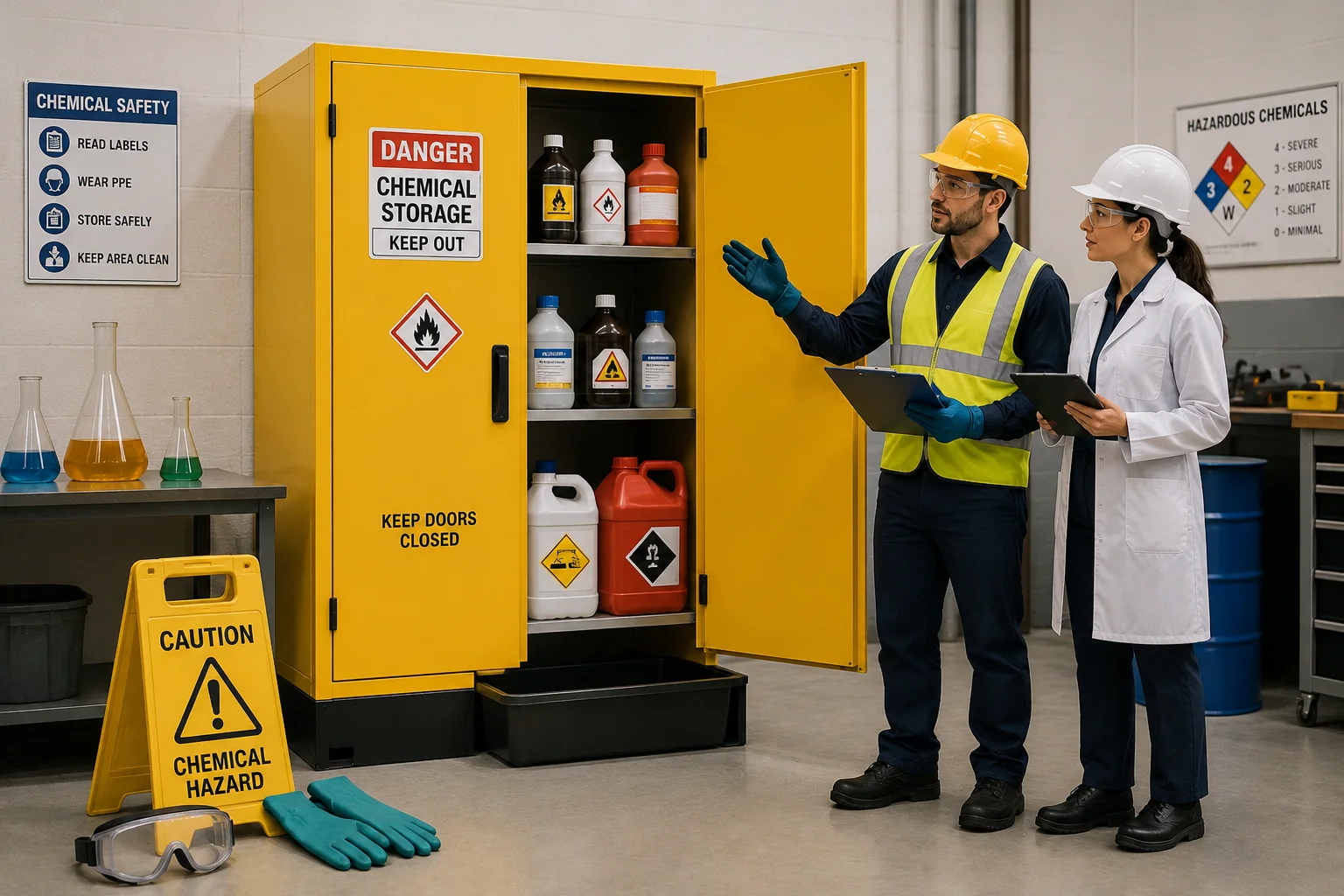
A leaking solvent container, an incompatible cleaner stored on the same shelf, or a cabinet blocked by pallets can turn ordinary inventory into an emergency. This chemical storage cabinet guide is designed for facility, EHS, laboratory, and operations teams that need a practical way to reduce those risks before they interrupt work, injure personnel, or create a release.
A storage cabinet is not simply a lockable metal box. It is part of a wider chemical management system that includes accurate inventory, compatible segregation, labels, secondary containment, ventilation decisions, spill response equipment, and staff training. Selecting the right cabinet starts with knowing exactly what will be stored inside it.
Start With the Chemical, Not the Cabinet
The most common purchasing mistake is choosing a cabinet by size or color alone. Start instead with the safety data sheet for every chemical planned for storage. Review its hazard classification, flash point where applicable, corrosive properties, incompatibilities, container size, and expected quantity on site.
Flammable liquids, acids, bases, oxidizers, toxic substances, pesticides, and general chemical containers do not all belong in the same cabinet. A cabinet suitable for flammable liquids may not be appropriate for corrosive acids. Likewise, an acid cabinet is not automatically suitable for storing every corrosive product, particularly where oxidizers or acid-reactive materials are involved.
For busy facilities, divide the review into three questions: What can catch fire? What can react? What can leak? The answers determine cabinet type, internal configuration, and whether separate storage locations are required.
Chemical Storage Cabinet Guide: Choose by Hazard Class
Cabinet selection should reflect the primary hazard of the stored material and the requirements of the authority having jurisdiction. Product labels and safety data sheets provide the starting point, while applicable fire, building, workplace safety, and environmental rules determine the final storage arrangement.
Flammable liquid storage cabinets
Flammable storage cabinets are intended for containers of flammable and combustible liquids. They are commonly used for solvents, fuels, paints, thinners, and similar products that present a fire risk. Quality cabinets typically feature double-wall construction, self-closing or manual-close doors depending on the model and site requirement, a raised sill to retain small leaks, adjustable shelves, and grounding provisions.
Capacity matters. Do not select a large cabinet simply because it appears more efficient. Larger quantities can trigger additional requirements for room design, fire protection, separation distances, or maximum allowable quantities. Smaller cabinets located near controlled points of use may be safer and more practical than one oversized unit across the facility.
Corrosive chemical storage cabinets
Acids and bases require corrosion-resistant storage solutions. Polyethylene-lined or all-polyethylene cabinets can help resist damage from corrosive vapors and drips that would quickly degrade ordinary steel surfaces. Shelves should include leak containment, and the cabinet interior must be easy to inspect and clean.
Segregate acids from bases. In addition, keep acids away from cyanides, sulfides, and other materials that can generate hazardous gases when mixed. Nitric acid and other oxidizing acids often require separate consideration because their behavior differs from non-oxidizing acids. Do not rely on a generic “corrosives” label as proof that products are compatible.
Cabinets for toxic and hazardous substances
Toxic chemicals, pesticides, and other controlled hazardous substances may need secure, clearly identified storage with restricted access. The cabinet should protect containers from damage, prevent unauthorized handling, and support orderly inventory checks. Depending on the chemical, secondary containment and local exhaust ventilation may also be necessary.
A cabinet cannot replace engineering controls for volatile or highly toxic materials. If a chemical produces harmful vapor, assess the entire storage room and work process rather than assuming an enclosed cabinet solves the exposure risk.
Confirm Cabinet Construction and Key Features
Once the hazard class is clear, review the cabinet as an engineered piece of safety equipment. Industrial-grade construction, durable hinges, secure door latches, and chemical-resistant finishes all affect service life in demanding environments.
Look closely at shelf load ratings and sump capacity. Shelves must support the full weight of stored containers without bowing, while the built-in sump should contain foreseeable drips or a small container failure. The sump is not a substitute for a spill pallet or secondary containment system where larger volumes are handled, but it provides essential first-level control inside the cabinet.
Door style is another operational decision. Self-closing doors can support safer day-to-day use in high-traffic areas because they reduce the chance of a cabinet being left open. Manual-close models may be permitted in some applications, but only work well when inspection and staff discipline are consistent.
Vent ports deserve a careful review. Venting a cabinet is not always required, and improper venting can reduce a cabinet’s fire performance or create a pathway for vapor migration. Where ventilation is necessary, it should be designed and approved for the chemical and facility conditions. Keep vent caps in place unless the system has been properly connected and assessed.
Size the Cabinet for Real Operations
Estimate storage capacity using actual container dimensions, not only total gallons or liters. A cabinet can meet its stated volume yet be difficult to use if tall drums, spray cans, jugs, and small bottles compete for the same shelf space.
Allow room for safe retrieval. Operators should be able to read labels, remove a container without knocking over adjacent stock, and identify leaks during routine checks. Overpacked cabinets conceal damaged packaging and encourage staff to store chemicals on floors, benches, or improvised shelves.
A good purchasing review also considers future use. If consumption is increasing, plan for an additional cabinet rather than filling every available space beyond a manageable level. This approach protects access and makes chemical segregation easier to maintain.
Place Cabinets Where They Reduce Risk
The right cabinet in the wrong location still creates exposure. Position cabinets on a stable, level surface away from direct heat, ignition sources, heavy vehicle traffic, drains, exits, stairways, and areas where they can obstruct emergency evacuation.
Point-of-use storage can reduce manual transport of flammable liquids and other hazardous materials, but it should not mean placing cabinets beside hot work, electrical panels, or process equipment without a risk assessment. Give personnel enough clearance to open doors fully and respond to a spill without being trapped between the cabinet and nearby equipment.
For areas with forklifts or pallet jacks, consider physical protection such as bollards or barriers. A cabinet struck by mobile equipment can release hazardous contents even when its construction is otherwise sound. In flood-prone areas, elevation and secondary containment may also be necessary.
Keep spill kits, suitable absorbents, waste containers, and appropriate fire or emergency response equipment accessible nearby. They should be close enough for a rapid response but not stored in a way that requires personnel to reach through the hazard area during a release.
Maintain Segregation Inside the Cabinet
A cabinet label does not make incompatible chemicals compatible. Use shelf labels, container labels, and a simple location map so staff can maintain separation during restocking. Store containers upright with caps closed, and place heavier containers on lower shelves whenever practical.
Avoid storing food, personal items, tools, or unrelated maintenance supplies in a chemical cabinet. These items reduce available space, complicate inspections, and can expose workers to contamination. Never place damaged or unidentified containers into a cabinet as a temporary fix. Isolate them, identify the contents where possible, and manage them through the site’s hazardous waste or incident procedure.
If several hazard groups must be held in one area, separate cabinets are usually the clearest control. Where that is not feasible, use documented compatibility information and physical segregation that prevents a leak from reaching incompatible products.
Build Inspection Into Routine Work
Chemical storage cabinets need routine attention, not just an annual compliance check. Assign ownership to a named role or department and set an inspection frequency that reflects the chemicals, quantities, and traffic in the area.
During an inspection, check for container leaks, corrosion, damaged labels, blocked doors, overloaded shelves, expired products, and accumulation of residue in the sump. Verify that cabinet doors close and latch correctly, grounding connections remain intact where required, and access routes are clear. Review inventory against what is actually on the shelves, especially after maintenance shutdowns, projects, or contractor work.
When a spill occurs inside a cabinet, do not return new stock until the affected materials have been assessed, the leak source removed, and the cabinet cleaned using a method suitable for the chemical involved. Dispose of used absorbents and contaminated materials through the correct waste stream.
Make Purchasing Part of Emergency Readiness
Cabinet procurement should be coordinated with spill response and containment planning. A facility storing flammable liquids may need compatible absorbents, drain protection, overpack drums, and fire response provisions. A corrosive storage area may require neutralizing agents selected for the specific chemicals, chemical-resistant PPE, and eyewash or emergency shower equipment based on the exposure assessment.
The most effective setup is one that staff can use correctly under pressure. Standardize cabinet types where practical, keep replacement supplies available, and make sure teams know which cabinet holds which hazard class. Clear identification saves time when operations are moving quickly or an incident requires immediate action.
A well-selected chemical storage cabinet protects more than inventory. It gives your team a controlled, visible place to manage hazardous materials – and makes safe work easier to repeat every day.