

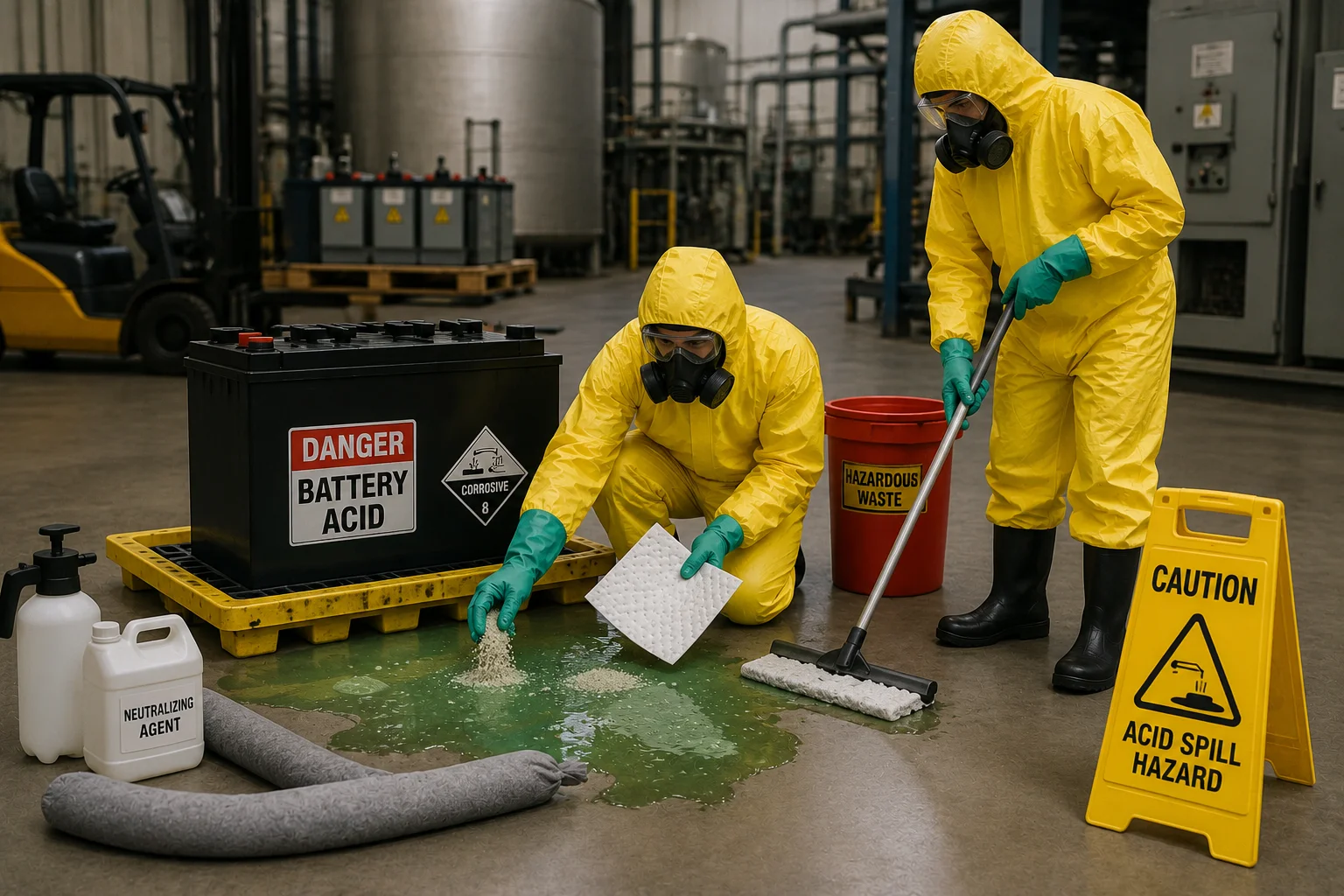
A battery leak beneath a forklift, inside a battery charging room, or on a maintenance bench can quickly become more than a housekeeping problem. Effective battery acid spill cleanup protects personnel from chemical burns, prevents damage to concrete and equipment, and keeps contaminated material from reaching drains or soil. The response must be deliberate: identify the battery type, isolate the area, use compatible materials, and manage the resulting waste correctly.
For most industrial sites, the concern is lead-acid battery electrolyte, which contains sulfuric acid. This guide focuses on that hazard. Lithium-ion battery incidents require a different emergency response because they may involve fire, toxic gases, thermal runaway, and re-ignition risk. Do not treat a damaged, hot, smoking, or burning lithium-ion battery as a routine acid spill.
Start With a Safe Spill Assessment
Before deploying absorbents, assess whether the spill can be handled by trained onsite personnel. A small, contained lead-acid electrolyte spill may be suitable for a site spill kit response. A large release, an unknown substance, a spill entering a drain, or an incident involving injury requires escalation under your emergency plan.
Keep people away from the affected area and restrict vehicle traffic. Forklift wheels and footwear can spread acid across a facility floor, while unprotected workers may not recognize the hazard until contact occurs. Barricade the area where practical and identify nearby drains, trenches, cracks, and doorways that could allow the liquid to migrate.
Review the battery or electrolyte safety data sheet before response whenever it is available. The SDS confirms the chemical identity, recommended personal protective equipment, first-aid requirements, and disposal considerations. In a well-managed facility, this information should be accessible near battery charging, maintenance, and storage areas rather than held only in an office file.
Confirm What Has Spilled
Lead-acid batteries used in forklifts, backup power systems, vehicles, marine equipment, and industrial machinery normally contain dilute sulfuric acid. This material is corrosive and can damage skin, eyes, clothing, metals, and concrete. It can also react with incompatible substances.
Do not assume every battery leak is the same. Nickel-cadmium and nickel-metal hydride batteries may involve alkaline electrolytes, while lithium-ion batteries may release flammable and hazardous components. The neutralizer and response method must match the chemical involved. Using the wrong response material can increase risk or leave a corrosive residue behind.
PPE for Battery Acid Spill Cleanup
Personnel should wear chemical-resistant gloves, chemical splash goggles, and protective clothing suitable for the exposure. A face shield provides additional protection when there is a risk of splashing during neutralization or handling of damaged batteries. Closed-toe chemical-resistant footwear is appropriate for floor spills and should be selected according to the facility risk assessment.
Standard work gloves, safety glasses, and disposable paper towels are not an adequate response setup for sulfuric acid. PPE is the final barrier, not the only control. A controlled work area, suitable tools, and a stocked acid spill kit reduce the chance that workers need to improvise during an urgent situation.
If acid has contacted skin or eyes, immediate flushing is the priority. Use an emergency shower or eyewash station where available, follow site first-aid procedures, and seek medical evaluation as required. Do not delay flushing while looking for a neutralizer or completing incident documentation.
Contain First, Then Neutralize
For a manageable spill, prevent the acid from spreading before beginning neutralization. Place compatible absorbent socks, booms, or barriers around the perimeter, especially on sloped floors or near drains. Drain covers may be needed as an added control, but they should not be the only containment measure.
Then apply a purpose-made acid neutralizer according to the product instructions. Commercial acid neutralizers are generally preferable to improvised materials because they are designed to control the reaction, improve visibility of the treated area, and support predictable cleanup. Some products change color to indicate whether acid remains active.
Apply the neutralizer gradually from the outside edge toward the center of the spill. This limits spread and gives the material time to react. Bubbling or fizzing can occur during neutralization, so avoid standing directly over the spill or adding excessive quantities all at once. Use non-sparking, chemical-compatible scoops, scrapers, and collection containers.
Baking soda may be used for very small, controlled acid spills when approved by your site procedure, but it is not a substitute for a properly stocked industrial acid spill kit. It can be difficult to apply evenly across larger releases, may create a vigorous reaction if added too quickly, and does not provide the clear process control that trained responders need. For battery rooms, workshops, warehouses, and fleet operations, dedicated neutralizer is the more reliable choice.
Check for Complete Neutralization
Allow sufficient contact time and confirm the acid has been neutralized as directed by the product label and SDS. A color indicator, pH test strips, or a site-approved verification method can help determine whether the affected surface is safe for final cleaning. Do not judge completion by appearance alone.
Once neutralized, use chemical absorbent pads, granules, or pillows to collect the remaining liquid and residue. For a small spill, neutralizer may absorb the liquid itself. Larger spills often require a combination of neutralizer and absorbent products. The goal is a dry, controlled collection process that does not push residue into floor drains or across the work area.
Collect, Package, and Dispose of Waste Correctly
Neutralized material, used absorbents, damaged PPE, and contaminated tools may require hazardous waste handling. The correct classification depends on the original chemical, the final pH, local regulations, and your facility’s waste program. Never place cleanup residue into ordinary trash, wash it into a drain, or discharge it outdoors simply because it appears dry.
Use compatible, clearly labeled containers or bags for the collected waste. Keep the container closed and staged in a designated area until collection or disposal. If a lead-acid battery is cracked or leaking, place it in an acid-resistant secondary containment tray or overpack that can contain further leakage. Damaged batteries should be isolated from ignition sources, protected from tipping, and handled through an approved recycling or waste route.
Document the incident, including the material released, estimated volume, response products used, personnel involved, and final waste disposition. This record supports compliance, helps identify recurring equipment failures, and gives supervisors the information needed to improve controls.
Build the Right Spill Response Station
A battery charging area should not depend on a general-purpose spill kit alone. General kits are often designed for non-hazardous liquids, oil, or coolants and may not include acid neutralizer or chemical-resistant PPE. A dedicated acid spill response station provides faster, safer access to the items responders actually need.
For many industrial locations, an acid spill kit should include acid neutralizer, chemical absorbent pads or granules, containment socks, chemical-resistant gloves, splash goggles, protective bags or containers, and non-metallic cleanup tools. The exact capacity depends on the largest credible spill, not the average leak. A site with multiple forklift batteries or a large battery room needs substantially more capacity than a small vehicle maintenance bay.
Storage location matters as much as kit contents. Position the kit outside the immediate spill zone but close enough for responders to retrieve it without walking through a release. Keep it visible, clearly labeled, and protected from damage. Inspect it routinely for missing PPE, expired products, saturated absorbents, or containers that have been removed for another task.
Ocean Safety Supplies supports industrial teams with acid spill kits, chemical absorbents, drain protection, secondary containment, and emergency response equipment selected for practical workplace readiness. For procurement teams, sourcing these categories from one dependable supplier can simplify routine replenishment and emergency planning.
Prevent the Next Battery Acid Spill
Battery acid spills often point to an avoidable issue: overcharging, poor ventilation, damaged casings, aging batteries, unsecured loads, or weak handling practices. Inspect batteries and charging equipment on a scheduled basis, paying attention to cracked cases, corroded terminals, swollen batteries, loose caps, and visible electrolyte residue.
Secondary containment trays, battery racks with spill control provisions, and portable bunds provide a valuable layer of protection in charging and maintenance areas. They do not eliminate the need for spill response supplies, but they can reduce the size of a release and prevent migration into drains. Training should cover both the cleanup procedure and the reason behind it, including when employees must stop work and call for specialist assistance.
A ready response is measured before an incident happens: the right kit at the right location, trained people on every shift, and a disposal process that is already defined. When a battery fails, those controls turn a corrosive release into a contained, manageable event.