

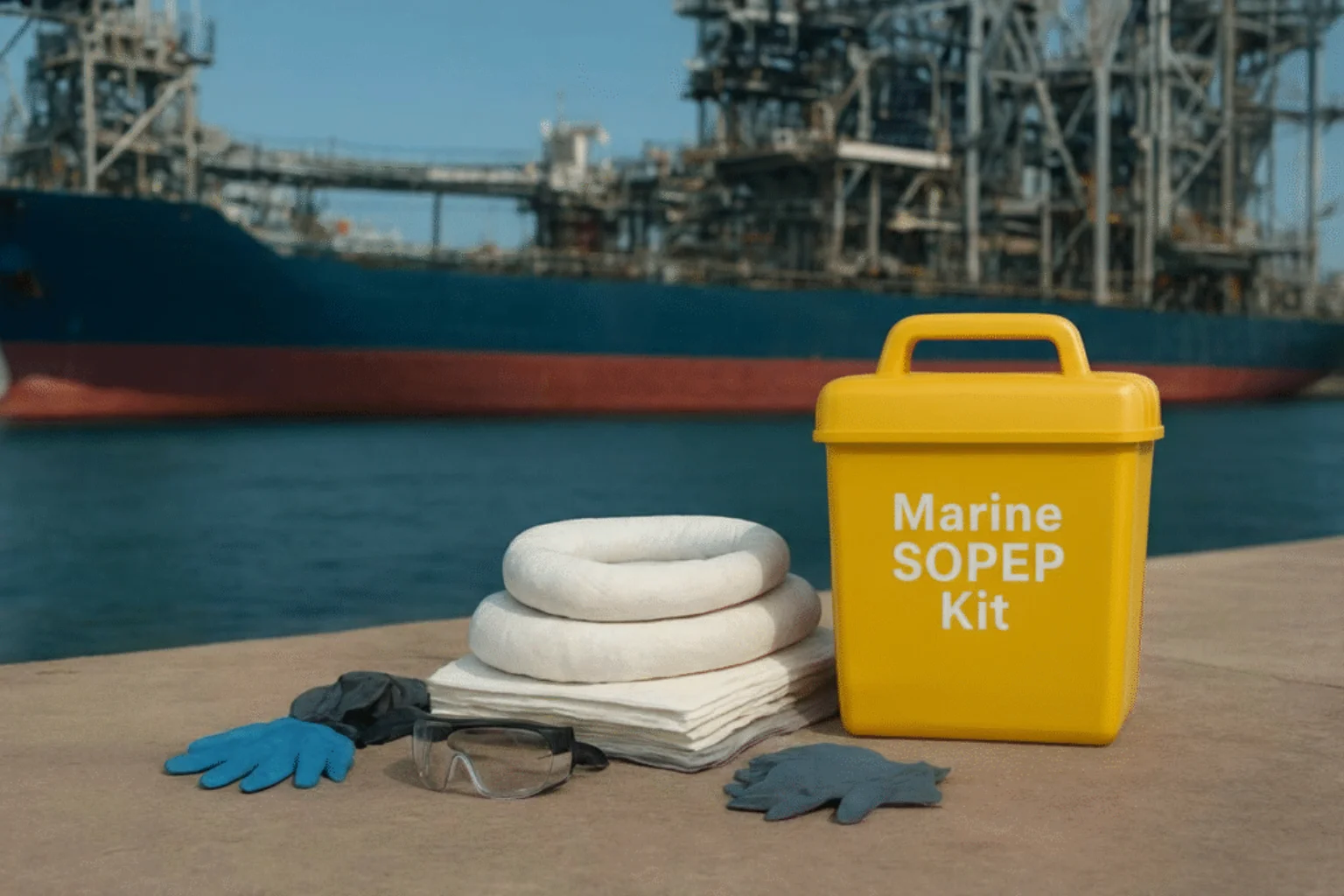
A spill response kit that looks complete on paper can still fail when oil reaches the deck, scuppers, or waterline. That is why understanding SOPEP kit contents matters. For marine operators, terminal teams, and procurement buyers, the right kit is not just about ticking off a checklist. It is about having the absorbents, containment tools, and disposal items needed to act fast, limit spread, and support a clean, organized response.
What SOPEP kit contents are meant to do
SOPEP stands for Shipboard Oil Pollution Emergency Plan, and the supporting spill kit is intended to help crews respond quickly to onboard oil spills before they escalate. In practical terms, SOPEP kit contents are selected to contain, absorb, recover, and safely dispose of oil-based spills in a marine environment.
That sounds straightforward, but the details matter. A kit built for a small machinery space leak may not be enough for bunkering operations or transfer points. A vessel operating offshore may need a different mix than a harbor-based workboat. The common thread is speed. Every item in the kit should help reduce response time and make deployment simple under pressure.
Core SOPEP kit contents
Most SOPEP kits are built around oil-only absorbents and basic containment accessories. Oil-only materials are essential because they absorb hydrocarbons while repelling water, which makes them suitable for marine use.
Oil absorbent pads
Pads are usually the first item reached for in a small spill. They are useful for wiping sheen, placing under leaks, and absorbing pooled oil on deck or around equipment. Good kits include enough pads to handle minor incidents without exhausting the stock immediately.
The trade-off is that pads are fast and versatile, but they are not your main containment tool for a spreading spill. They work best once the source is controlled or when used alongside socks and booms.
Oil absorbent socks or mini booms
Socks are used to contain and direct spills on deck. They can be placed around leaking equipment, along drainage paths, or around the edge of a spill to stop it from traveling. On vessels, they are especially useful near scuppers and transfer areas.
Some buyers under-specify socks because they focus only on absorbency volume. That is a mistake. Control is just as important as capacity. A spill that is contained early is usually much easier to clean up.
Floating absorbent booms
For any kit intended for marine exposure, floating booms are one of the most important SOPEP kit contents. These are deployed on water to contain floating oil and absorb hydrocarbons at the surface. They are critical where a spill may reach the side of the vessel, dock edge, or surrounding water.
Boom length and diameter should match the likely risk. Smaller vessels may carry compact booms for quick deployment, while higher-risk operations often require larger and multiple sections. If your operation includes fuel transfer near open water, this is not the area to cut corners.
Absorbent pillows
Pillows are useful where oil collects in sumps, drip trays, bilges, or tight corners. They hold more liquid than standard pads and are well suited to slower leaks that continue for a period of time. In many kits, they provide the extra capacity needed once initial containment is in place.
Disposal bags and ties
Used absorbents need to be contained immediately after cleanup. Disposal bags are a basic item, but they are often overlooked when kits are packed informally. Heavy-duty bags with ties or closures help keep contaminated waste controlled and reduce secondary mess during handling and transfer.
Personal protective equipment
Gloves are standard, and some kits also include goggles, coveralls, or protective masks depending on the risk profile. PPE should reflect the liquids likely to be encountered and the environment where the kit will be used. A simple deck spill may need only chemical-resistant gloves, while enclosed-space response or mixed contamination may justify a more complete PPE set.
Drain covers and sealing accessories
On vessels and marine-adjacent sites, preventing discharge into drains and overboard pathways is a priority. Some SOPEP kits include drain covers, scupper plugs, or sealing putty to block flow routes quickly. These items do not absorb oil, but they can be the difference between an internal cleanup and an environmental incident.
Non-sparking tools
Depending on the application, a kit may include tools such as scoops, scrapers, or dustpans. In certain hazardous areas, non-sparking construction is preferred. These tools help collect contaminated solids or recover saturated absorbents efficiently.
What is often missing from basic kits
A low-cost spill kit can appear well stocked because it contains many pads, but quantity alone does not equal readiness. Buyers should check whether the kit includes floating booms, disposal bags, clear labeling, and appropriate PPE. If the kit is meant for vessel use, portability and weather-resistant storage also matter.
Instructions are another missing piece. Even experienced teams benefit from a simple, visible guide inside the container. During a real event, a clear sequence helps crews deploy the right items first instead of wasting time sorting through contents.
How to choose the right SOPEP kit contents for your operation
The best kit starts with your exposure, not a generic volume rating. If your main risk is hydraulic oil leaks in an engine room, your mix may favor pads, socks, and pillows. If the highest consequence event is a transfer spill over water, floating booms and external deployment capability should take priority.
Storage location also affects content choice. A compact bag or cabinet-mounted kit may work for quick access near a known risk point. A larger wheeled bin makes sense where more capacity is needed and movement across the site is practical. On board, the kit needs to be easy to identify, protected from damage, and positioned where crews can get to it fast.
Another consideration is replenishment. After even a small spill, the kit may no longer be response-ready. Standardized contents make reordering simpler and help procurement teams maintain consistent stock across vessels or facilities.
SOPEP kit contents and compliance expectations
Compliance requirements vary by vessel type, operator procedures, flag state, and local authority expectations, so there is no single kit layout that suits every case. What buyers can control is whether the kit is aligned with the risk assessment and the response plan already in place.
That means the contents should support realistic spill scenarios, not just inspection appearances. If your plan references on-water containment, the kit should include suitable floating booms. If the procedure calls for safe waste collection, disposal bags and handling PPE should be present. Practical alignment matters more than a generic packing list.
Questions procurement teams should ask before ordering
Commercial buyers usually need fast answers, especially when ordering for multiple assets or replacing expired stock. Start with the spill type, likely spill size, and deployment area. Then confirm whether the kit is oil-only, whether it includes marine-use booms, and whether refill packs are available.
It is also worth asking how the kit is packed. A durable container protects the contents and helps with identification during an emergency. For offshore, marine, and exposed industrial settings, this is not a cosmetic detail. Packaging affects readiness.
If you are standardizing across a fleet or multiple locations, ask whether the same format is available in different capacities. Consistency helps with training, inspections, and replenishment.
Why content quality matters as much as content quantity
Two kits can carry the same stated absorbency and perform very differently. Higher-quality absorbents tend to handle oil more effectively, shed less, and hold together better during recovery. Stronger bags reduce the chance of rupture during disposal. Better booms deploy faster and stay more manageable in rougher conditions.
For operations teams, this comes down to reliability under pressure. A spill response kit is not used every day, but when it is needed, there is no room for improvised substitutions or missing components. Trusted by professionals across industries, suppliers who understand marine spill response can help specify kits that are built for actual use rather than minimum appearance.
Building a better buying specification
If you are writing or updating a purchasing specification, define the intended use clearly. Identify whether the kit is for onboard machinery spaces, bunkering stations, dockside use, or mobile response. Specify oil-only absorbents, include both deck containment and on-water response where relevant, and require disposal and PPE items as standard.
This is where a practical supply partner adds value. Ocean Safety Supplies supports industrial and marine buyers with stocked spill response equipment, dependable product availability, and technical guidance that helps teams order the right kit the first time.
The right SOPEP kit contents should make response faster, cleaner, and easier to manage when time is tight. If the kit on hand does not match the spill risk on your vessel or site, that gap is worth fixing before the next incident tests it.