

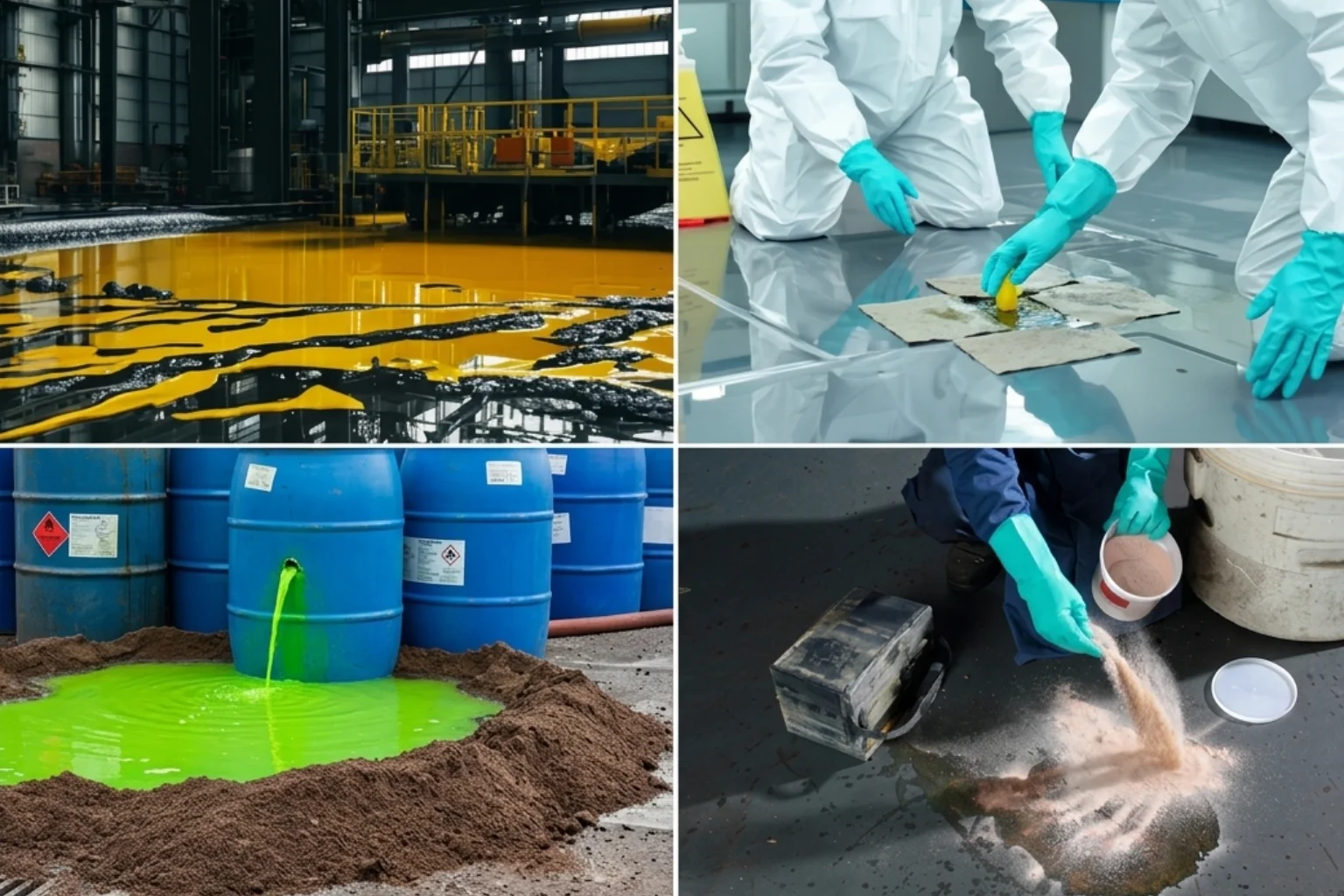
A leaking drum in a production area can shut down a line faster than most equipment failures. The best spill response equipment for factories is not just about cleanup speed – it is about protecting workers, containing risk, reducing downtime, and keeping operations compliant when liquids end up where they should not be.
For most facilities, the right setup is a combination of response tools, containment products, and site planning. A factory handling oils, coolants, solvents, chemicals, or mixed liquids will rarely solve every spill scenario with one kit. What works on a loading dock may not be enough for a chemical storage room, and what fits a maintenance bay may be the wrong choice for a food or pharmaceutical area. That is why selection should start with the liquids on site, the likely spill size, and the speed at which teams need to respond.
What the best spill response equipment for factories includes
In practical terms, the best spill response equipment for factories usually begins with spill kits. These give teams immediate access to absorbents, disposal bags, socks, pads, and basic protective gear at the point of need. The most effective factories place kits where spills are most likely to happen, not just where storage space is convenient.
General purpose spill kits are suitable for water-based liquids, coolants, mild oils, and routine housekeeping incidents. Oil-only spill kits are a better fit where hydrocarbons are common and water rejection matters, such as outdoor yards, loading areas, or maintenance operations exposed to rain. Chemical spill kits are the right choice when aggressive or unknown liquids are present, because the absorbents and PPE need to match a higher hazard level.
The kit size matters as much as the kit type. Small portable kits are useful for forklifts, maintenance teams, and local response points. Larger wheeled kits support broader factory coverage and are often a better choice near bulk storage, transfer areas, and receiving zones. If a site stores multiple drums or IBCs, relying only on small kits can leave teams underprepared for anything beyond a minor leak.
Absorbent pads, rolls, and socks
Absorbents do most of the physical work in a spill response. Pads are ideal for fast pickup of drips, splashes, and smaller pooled liquids. Rolls work well when a larger surface area needs to be covered quickly, especially along walkways, under machinery, or across production zones where spread needs to be controlled.
Socks are essential for containment. They create a fast perimeter around a spill, stop liquid from reaching drains, and help isolate leaking equipment until maintenance can intervene. In many factories, socks are the difference between a manageable cleanup and a much larger contamination event. For uneven floors or around machinery bases, they are often more effective than flat absorbents alone.
Pillows and loose absorbents also have a place, particularly under persistent leaks or in tray and sump areas. The trade-off is that they are more specialized. A site that deals mostly with occasional floor spills may get more value from a heavier stock of pads and socks than from niche absorbent formats.
Containment equipment is as important as cleanup equipment
Factories often focus on what absorbs a spill and overlook what stops it from spreading in the first place. Secondary containment pallets, drip trays, and portable bunds reduce the chance that a spill becomes an emergency. They are not a replacement for response equipment, but they lower the burden on it.
Spill pallets are a strong choice for drums and IBCs containing oils, chemicals, or process liquids. If a container fails, the leaked liquid is already captured, which means response teams are handling a controlled incident rather than chasing a moving spill across the floor. Drip trays are useful under pumps, valves, dispensing stations, and smaller transfer points where repeated minor leaks can create slip risks and housekeeping issues.
Portable bunds are especially useful during temporary work, maintenance shutdowns, equipment servicing, and liquid transfer tasks. They create a flexible containment zone without requiring permanent infrastructure changes. For factories with changing layouts or project-based operations, that flexibility can be more valuable than fixed containment alone.
Drain protection and area isolation
If a spill can reach a drain, it can quickly become an environmental issue rather than just a housekeeping problem. Drain covers and drain protection mats are a critical part of factory spill response, especially in loading zones, washdown areas, and external hardstands. They buy valuable time while a team contains and recovers the liquid.
Barrier tape, warning signs, and temporary floor marking products also deserve a place in the response plan. Cleanup is only one part of incident control. Isolating the affected area protects pedestrians, forklift traffic, and nearby operations while the spill is being managed.
PPE and emergency equipment should match the hazard
The best spill response equipment for factories is not complete without suitable personal protective equipment. Gloves, goggles, coveralls, and chemical-resistant aprons may be enough for low-risk liquids, but hazardous chemicals often require more specific protection. Selection should always align with the SDS and the actual exposure risk.
This is where many sites either overbuy or underprepare. Overbuying high-spec PPE for every spill point can make routine response slower and more expensive. Underpreparing exposes staff to avoidable harm. A sensible approach is to match basic kits to routine liquid risks and place higher-protection PPE near chemical stores, decanting areas, and labs.
Emergency showers and eyewash stations also matter where corrosives or harmful chemicals are handled. They are not spill cleanup tools, but they are part of the response system. If a splash incident occurs during containment or cleanup, immediate decontamination can be just as urgent as stopping the spill itself.
Choosing equipment by factory risk profile
A metalworking plant dealing with oils and coolants will typically need general purpose or oil-focused absorbents, spill kits near machine clusters, drip trays under known leak points, and larger mobile kits near bulk fluid storage. The priority is quick response to recurrent operational spills and preventing slip hazards or line disruption.
A chemical processing site needs a more controlled setup. Chemical spill kits, compatible absorbents, drain protection, higher-spec PPE, and secondary containment are all core requirements. Here, compatibility matters more than convenience. The wrong absorbent or inadequate PPE can create a bigger problem during response.
Warehousing and logistics facilities often need equipment positioned around loading docks, battery charging areas, fuel handling points, and external yards. Mobile access is important because spills may happen over a wide footprint. Wheeled kits and outdoor-capable absorbents are often the better choice than relying on fixed stations alone.
Food, beverage, and pharmaceutical environments may have stricter hygiene and segregation requirements. Response equipment must control liquids quickly without creating avoidable contamination risks. In these sites, placement, visibility, and disciplined replenishment are as important as the product itself.
What buyers should look for before purchasing
Industrial buyers should assess three things first: liquid type, spill volume, and response location. Those answers usually narrow the product choice quickly. A site with mixed hazards may need more than one spill kit type, and that is normal. Standardizing everything into a single kit can simplify purchasing, but it often weakens real-world readiness.
Stock availability is another practical factor. Spill response products are not helpful if lead times delay deployment or replacement. For factories managing ongoing compliance and operational risk, dependable supply is part of the product value. That is one reason many buyers prefer working with a supplier that can cover spill kits, absorbents, containment, PPE, and emergency wash equipment in one place.
It is also worth checking replenishment needs. A well-placed spill kit that has been partially used and never restocked gives a false sense of readiness. Facilities with frequent minor spills benefit from a replenishment plan, not just a one-time equipment purchase. Ocean Safety Supplies supports this kind of operational readiness with broad stockholding and practical product guidance for industrial sites that cannot afford delays.
Best spill response equipment for factories is the equipment people can use fast
The strongest spill response setup is not always the most complex. It is the one that matches the liquids on site, sits close to the risk, and gives staff the tools to contain and recover a spill without hesitation. Factories that combine spill kits, absorbents, drain protection, containment pallets, portable bunds, and hazard-matched PPE are usually in a much better position than those relying on one oversized kit in a distant corner.
If you are reviewing your facility, start with the spill points you already know about: transfer stations, drum storage, loading areas, maintenance bays, and drains. The right equipment in the right place turns spill response from a disruption into a controlled task, and that is where safer, faster operations begin.