

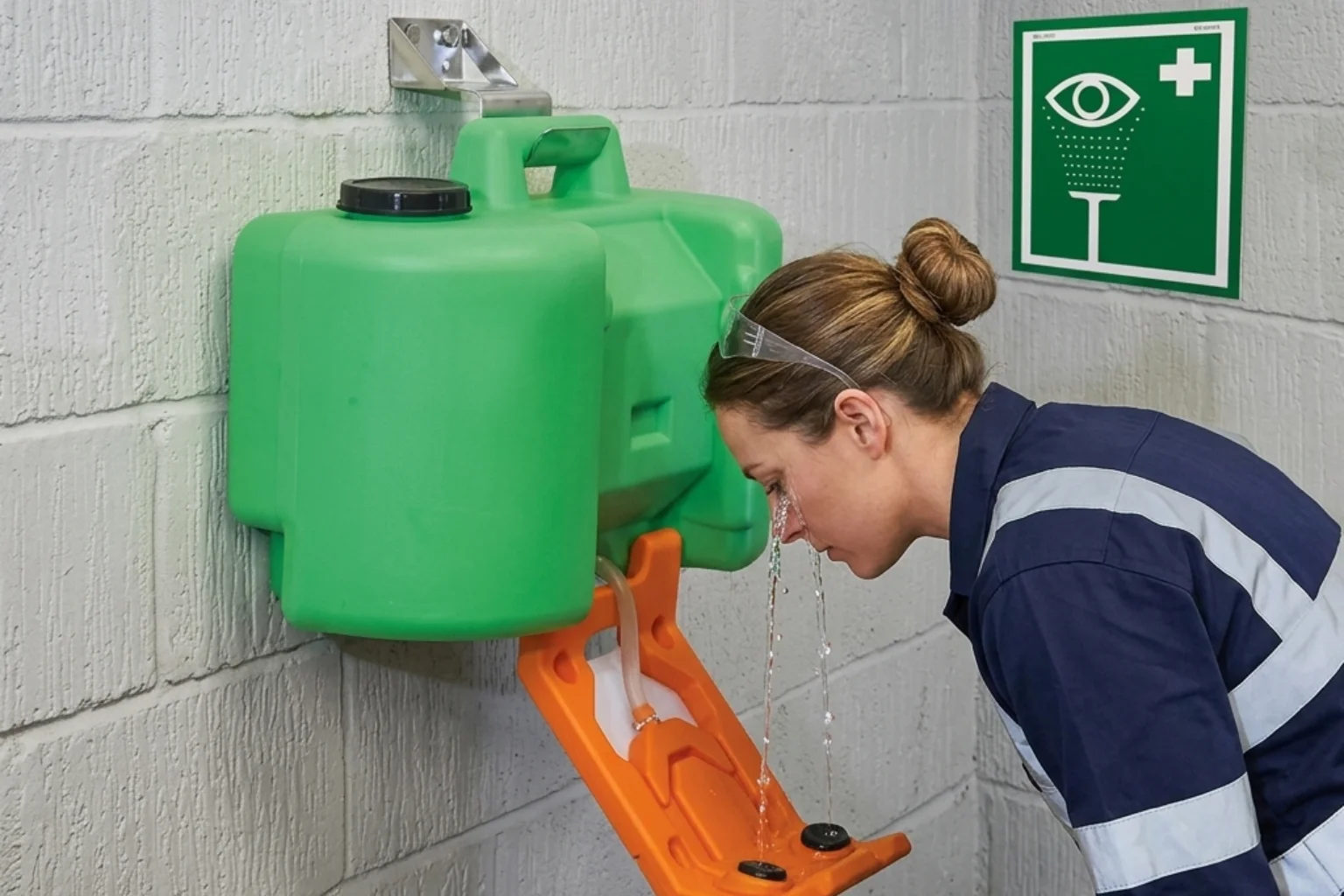
When a chemical splash happens, there is no time to search for instructions, unlock a room, or wait for maintenance. Portable eyewash station requirements matter because the equipment has to work immediately, be easy to reach, and deliver a reliable flush long enough to protect vision and reduce injury severity.
For facility managers, EHS teams, lab supervisors, and procurement buyers, the question is usually not whether an eyewash station is needed. The real question is whether a portable unit is the right fit for the hazard, the location, and the operating conditions on site. That decision affects compliance, worker safety, inspection routines, and replacement planning.
What portable eyewash station requirements actually cover
A portable eyewash station is generally used where plumbed equipment is not practical, not available, or not close enough to the hazard. That can include construction zones, temporary work areas, remote maintenance points, loading areas, marine environments, warehouses, and mobile operations. In these settings, a self-contained unit can provide immediate first response if it is selected and managed correctly.
Portable eyewash station requirements are not limited to buying a tank with nozzles and placing it on a wall. They cover suitability for the hazard, location, activation, flushing performance, inspection, water preservation, cleaning, and user training. In practice, that means the unit must be positioned where exposed workers can reach it fast, activate it without difficulty, and use it continuously for the required duration.
The standard most buyers look to is ANSI/ISEA Z358.1, which is widely used as the benchmark for emergency eyewash and shower equipment. Local legal obligations and site-specific EHS policies may add further expectations, especially in higher-risk industries. For buyers managing multiple sites, the safest approach is to treat ANSI performance criteria as the baseline and then account for any local regulatory or customer-specific requirements.
Placement and access requirements
The first issue is travel distance. If workers handle corrosives, irritants, or other eye hazards, the eyewash station should be located so it can be reached quickly, typically within 10 seconds. That rule is simple on paper and harder in real operations. Obstructions, doorways, ramps, stacked inventory, and vehicle routes can turn a compliant layout into a poor one.
Portable units are often chosen because they solve a gap in coverage, but they still need a permanent designated position while in service. If the station is moved frequently or shared between work zones without clear control, availability becomes uncertain. For most sites, a portable eyewash should be assigned to a defined hazard area, marked clearly, and kept on the same level as the exposure risk whenever possible.
Visibility also matters. Workers under stress will not stop to read small labels or search behind storage racks. The station should be highly visible, identified with proper signage, and illuminated if the area may be used in low light. If personal protective equipment, pallets, hoses, or waste containers can block access, the placement needs to be reconsidered.
Performance expectations for portable eyewash stations
A portable unit must deliver a controlled flow to both eyes at the same time and continue that flow for the full flushing period. The widely recognized benchmark is a minimum 15-minute flush. That is one of the most important portable eyewash station requirements because short-duration units may create a false sense of preparedness.
Not every self-contained model performs equally. Tank size, valve quality, nozzle design, and internal pressure method all affect actual use. A lower-cost unit may appear suitable until you assess whether it can maintain proper flow for the full duration under site conditions. For industrial buyers, this is where product specification matters more than appearance.
The flushing fluid also needs attention. In self-contained units, the water supply is stored, which introduces maintenance responsibilities that plumbed systems do not have in the same way. Stagnation, contamination, or expired additives can make the station unsuitable when needed most. A portable eyewash is only compliant in practical terms if the stored solution remains clean and ready for use.
Water quality, temperature, and preserved fluid
One of the most overlooked requirements is fluid condition. Portable eyewash stations use potable water or a preserved flushing solution depending on the design. If a preservative is required by the manufacturer, the maintenance team has to follow the stated replacement interval exactly. Skipping that schedule to stretch operating cost is a poor trade when the unit may be needed in an emergency.
Temperature is another factor that procurement teams should not ignore. Tepid flushing fluid is generally expected because water that is too hot or too cold can discourage the user from completing the full 15-minute rinse. In climate-controlled facilities, this is easier to manage. In outdoor yards, marine settings, hot process areas, or non-air-conditioned warehouses, fluid temperature can become a real performance issue.
That does not always mean a portable unit is the wrong choice. It means the selected model and its installation environment need to be considered together. In some cases, insulated units, more frequent replacement, shading, or alternate station placement may be necessary to keep the unit usable.
Inspection and maintenance requirements
Portable eyewash station requirements do not end at installation. Ongoing inspection is what keeps the unit from becoming a compliance checkbox instead of a functioning emergency device. A self-contained station should be checked regularly for fluid level, cleanliness, activation readiness, visible damage, and expiry dates for preserved solution or treatment additives.
A formal inspection record is good practice and often essential for internal compliance programs. It shows that the station was available, maintained, and monitored over time. For facilities with audits, contractor activity, or customer inspections, that documentation can be just as important as the equipment itself.
Maintenance intervals vary by model, and that is where buyers need to follow manufacturer instructions rather than rely on assumptions. Some units require scheduled fluid replacement every few months. Others use sealed cartridges or preservative systems with different service timelines. Procurement teams should consider the true maintenance burden before standardizing across a site or group of sites.
This is also where product quality has a direct operational cost impact. Durable industrial-grade units with straightforward servicing are usually easier to keep compliant than low-spec alternatives that leak, clog, crack, or need frequent replacement parts.
Training and emergency response readiness
Even a fully compliant station can fail in practice if workers are not trained. Employees need to know where the eyewash is, what hazards require immediate flushing, how to activate the unit, and why rinsing must continue for the full duration. In real incidents, hesitation is common, especially if the exposure seems minor at first.
Sites with contractors, rotating crews, or temporary labor should pay extra attention here. Portable stations are often used in non-permanent work areas, which means personnel may be less familiar with the setup than they would be in a fixed laboratory or production room. Quick orientation and visible instructions help reduce that risk.
Training should also cover escalation. Using the eyewash station is the first response, not the complete medical response. Supervisors and first aid teams need clear procedures for incident reporting, medical evaluation, and replacement of any station that has been activated.
When a portable eyewash is the right choice
Portable units make sense where hazards exist but plumbing does not, where operations are mobile, or where temporary risk points change with the job. They are often a practical solution for construction, turnaround maintenance, marine operations, tank cleaning, loading points, outdoor handling areas, and remote storage locations.
Still, there are trade-offs. If a hazard is permanent and severe, a plumbed eyewash or combination shower may be the better long-term option. A portable station can fill a gap, but it should not be used to avoid installing fixed equipment where fixed protection is clearly more suitable.
For many buyers, the best approach is layered coverage. A facility may use plumbed units in core process areas and portable eyewash stations for secondary hazard points, temporary jobs, and remote tasks. That gives operations teams flexibility without reducing protection.
Buying with compliance and uptime in mind
Choosing the right unit starts with the hazard assessment, but the purchasing decision should also reflect refill method, maintenance interval, tank capacity, mounting or mobility needs, and environmental exposure. A good product fit reduces service burden and improves readiness across the life of the unit.
For procurement teams managing multiple requirements at once, speed of supply matters too. Emergency equipment is often ordered because a site inspection found a gap, a new work area opened, or a project changed scope. In those situations, working with a supplier that understands industrial compliance and can deliver reliable stock quickly makes a measurable difference.
Ocean Safety Supplies supports buyers who need practical, ready-to-deploy emergency equipment without guesswork. The right portable eyewash station is not just a product line item. It is part of a site’s response capability, and it needs to be selected, placed, and maintained with the same discipline as any other critical safety control.
If your site uses chemicals, cleaning agents, fuels, or process materials that can injure the eyes, the best time to review your eyewash coverage is before the next audit, project mobilization, or incident puts that decision under pressure.