

A small leak under a machine can turn into a bigger problem fast – slip hazards, stained floors, damaged stock, and avoidable downtime. That is why knowing how to choose oil absorbent pads matters for maintenance teams, warehouse managers, marine operators, and EHS buyers who need the right product on hand before a spill becomes an incident.
Oil absorbent pads are not all the same. Some are designed for hydrocarbon spills only. Others are built for higher traffic, outdoor use, or fast deployment from spill kits. Choosing correctly means matching the pad to the liquid, the environment, and the way your team actually responds on site.
How to choose oil absorbent pads for your site
The first question is simple: what exactly are you trying to absorb? Oil-only pads are made to pick up hydrocarbons while repelling water. That makes them the right choice for fuel, diesel, lubricants, hydraulic oil, and marine sheen where water is present. If the spill may include water-based liquids, coolants, or mixed chemicals, an oil-only pad may not be the right fit.
This distinction matters in workshops, loading bays, ports, offshore areas, and plant rooms where water exposure is common. If your team uses oil absorbent pads on a rainy outdoor surface or over bilge water, oil-only material helps avoid wasted absorbency. If they are used indoors around mixed liquids, you may need a different absorbent category altogether.
The next issue is volume. A light pad for routine drips under pumps or hoses is very different from a high-capacity pad intended for active leak response. Buyers often focus on pack price first, but the better measure is total absorbency and replacement frequency. Lower-cost pads can become more expensive if crews need to use twice as many to control the same spill.
Pad weight is usually a practical indicator here. Lightweight pads suit minor leaks, wipe-up tasks, and daily housekeeping. Medium-weight pads work well for general maintenance and common spill response. Heavyweight pads are better for larger releases, prolonged use, and high-demand industrial environments. If spills are frequent or the source cannot be isolated immediately, heavier absorbents usually offer better control.
Match the pad construction to the work area
Construction affects performance more than many buyers expect. A bonded or laminated pad gives extra strength and can hold together better during cleanup, especially on rough floors or when saturated. That durability matters in factories, marine settings, and outdoor yards where surfaces are abrasive and response conditions are less controlled.
Perforated pads can also improve efficiency. They let teams tear off only what is needed instead of using a full sheet for a small leak. Over time, that reduces waste and helps keep spill stations properly stocked. For high-usage sites, perforation is a practical feature rather than a minor convenience.
Consider whether your team needs pads primarily for response or prevention. For active response, quick absorption and easy deployment are the priority. For prevention, such as placing pads under machinery, drums, valves, or vehicle maintenance points, strength and dwell time matter more. A pad left in place for hours or days needs to resist tearing and stay intact when removed.
Surface conditions also influence the right choice. Smooth indoor floors may allow standard pads to perform well. Uneven concrete, grated platforms, dock areas, and marine decks can be harder on the material. In those environments, tougher pads reduce tearing and fiber shedding, which helps keep cleanup faster and more controlled.
Size and format affect response speed
Standard pad sheets are the most common format because they are easy to store, deploy, and replace. But sheet size still matters. Larger pads cover more area quickly and suit broader spills. Smaller sheets are easier to position in tight spaces, around equipment bases, and inside spill kits.
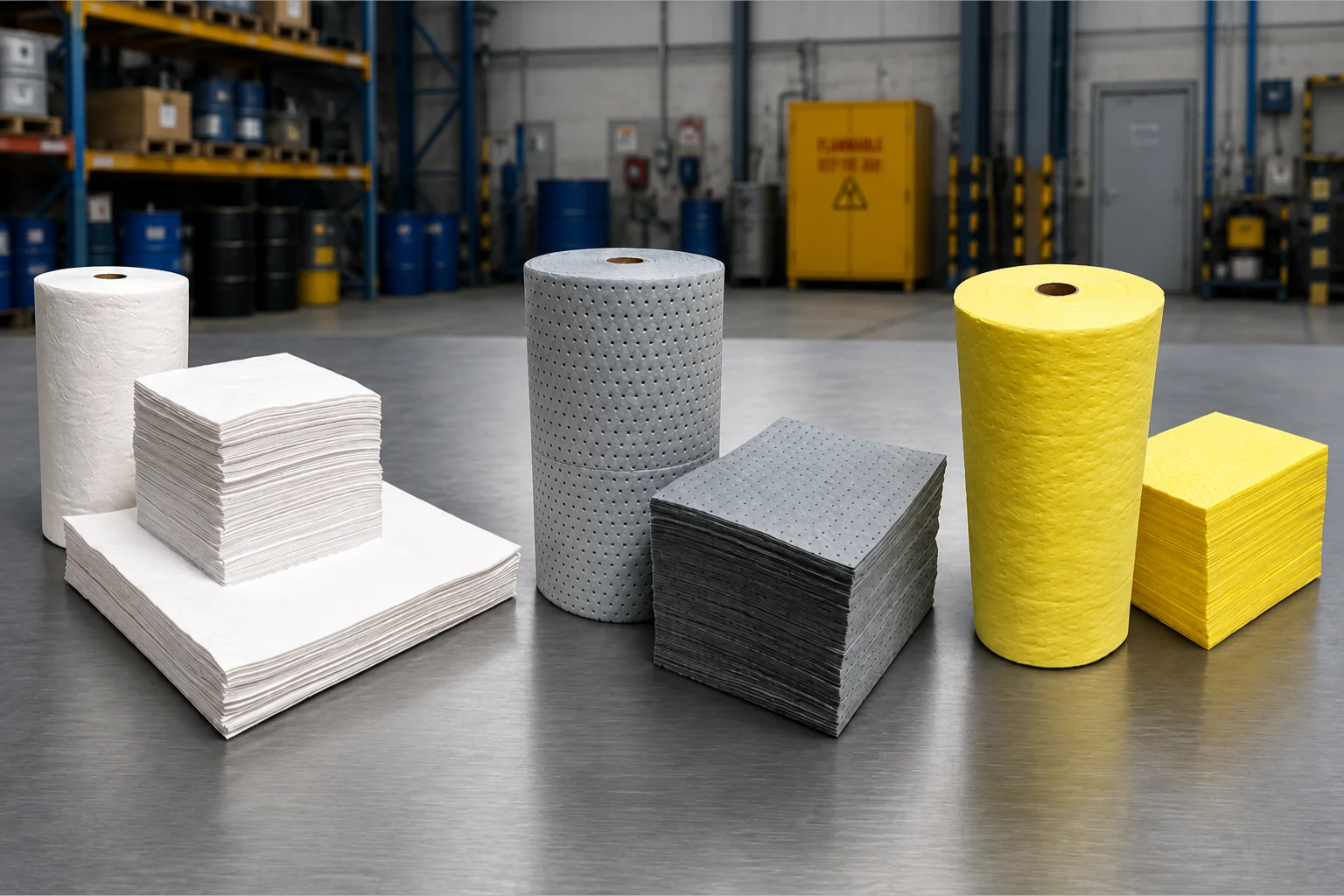
Rolls may be the better option when spills are spread over longer pathways or when teams need to line walkways and work zones as a preventive control. Rolls can be cut to suit the area, which gives more flexibility for maintenance departments managing recurring leaks across multiple points.
If your operation relies on grab-and-go spill kits, check whether the pad dimensions fit the container and support quick use by non-specialist staff. The best absorbent is not always the highest spec on paper. It is the one your team can identify, deploy, and replace without hesitation during an actual event.
Color coding helps avoid mistakes
In many facilities, color is not just visual preference. It supports faster decision-making. Oil-only absorbents are commonly white, which helps crews identify them quickly and also makes absorbed hydrocarbons more visible. That can be useful for monitoring leak severity and knowing when replacement is needed.
Where multiple absorbent types are stocked in the same area, clear differentiation reduces misuse. This is especially important in mixed industrial sites where workers may encounter oil, water-based liquids, and chemicals in the same shift. Choosing a product that fits your site labeling and spill response system can improve compliance and reduce response errors.
How to choose oil absorbent pads by application
For machine shops and manufacturing plants, the priority is usually routine control of hydraulic oil, lubricants, and maintenance drips. Medium- to heavy-weight pads with strong surface bonding are often the most practical choice because they can handle both prevention and cleanup.
For warehouses and logistics facilities, ease of storage and speed of deployment tend to matter most. Standard pads packed in accessible cartons or spill kits are often ideal, especially when incidents happen around forklifts, loading equipment, or dock areas.
For marine and offshore applications, oil-only performance is essential because water repellency is part of the job. Pads should absorb hydrocarbons efficiently without becoming waterlogged. Durability also carries more weight in these environments because handling conditions are harsher and replacement may not be immediate.
For contractors and mobile response teams, portability can outweigh some premium features. A pad that performs well and is easy to transport in vehicles or compact spill kits may be more useful than a bulkier product designed for static storage.
Do not ignore disposal and compliance realities
The right pad does not stop at absorption. You also need to consider what happens after use. Once saturated with oil or fuel, pads may need to be handled and disposed of as contaminated waste according to local requirements and site procedures. That affects how many pads you can practically use in one response and how you stage waste handling nearby.
This is where over-specifying can work against you. If a heavyweight pad is unnecessary for the actual spill risk, you may end up increasing disposal volume and cost. On the other hand, under-specifying creates its own problem if crews need multiple replacements during one incident. The right balance depends on likely spill size, response time, and waste management arrangements.
Procurement teams should also think beyond single-order pricing. Consistent supply, standardized specifications, and compatibility with existing spill kits and response plans often matter more than chasing the lowest unit cost. Industrial buyers need products that can be reordered easily and perform the same way across sites and shifts.
A practical buying standard for oil absorbent pads
If you are setting a purchasing standard, start with four checks: the liquid type, expected spill volume, surface conditions, and whether the pads are for prevention or emergency response. Those factors usually narrow the field quickly.
After that, compare absorbency rating, pad weight, bonded construction, perforation, and pack format. If your site handles both routine drips and larger spill events, it may make sense to stock more than one grade rather than force one product to do every job. That approach is often more efficient and easier for teams in the field.
For buyers managing multiple facilities or urgent replenishment needs, working with a supplier that understands spill control categories can save time and reduce purchasing errors. Ocean Safety Supplies supports industrial and marine customers with stocked spill response products designed for fast operational use, not guesswork.
The best choice is usually not the broadest or the cheapest option. It is the pad that fits your spill profile, your response process, and the pressure your team works under when every minute counts.